Ajanta & Ellora Caves
Stone Stories Carved Deep in Indian Hills
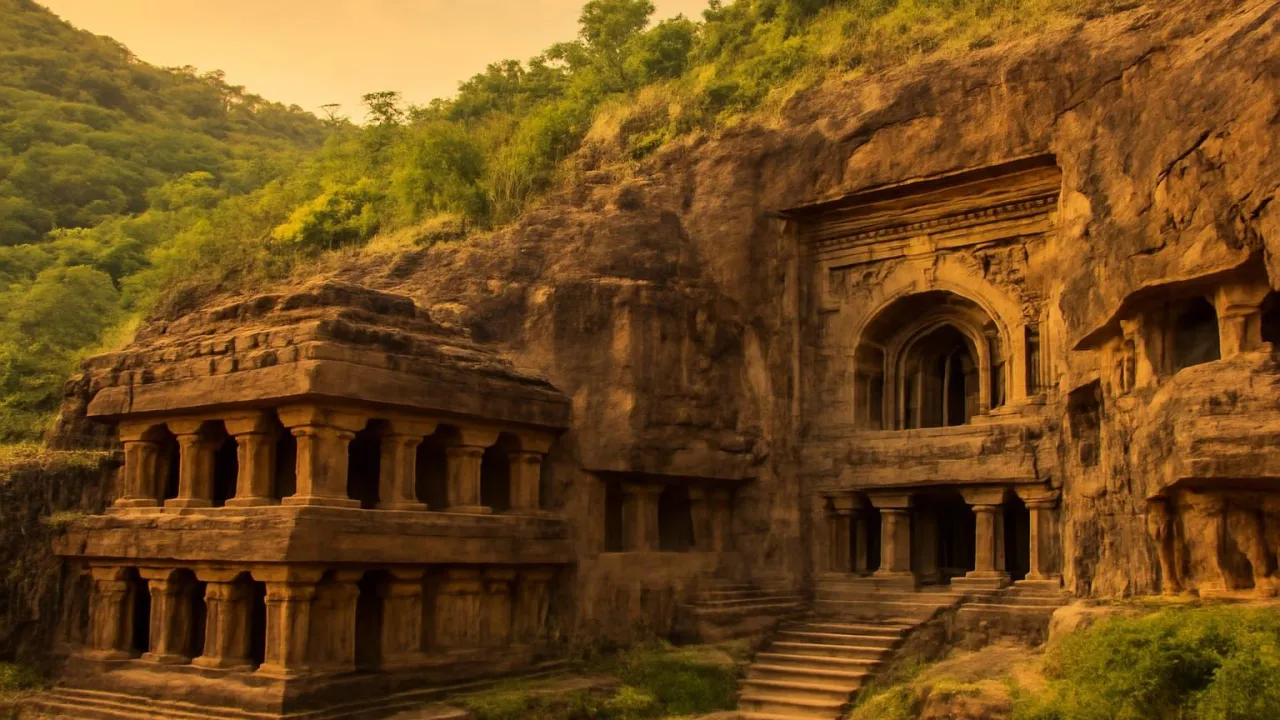
The Kailasa Temple at Ellora is twice as tall as a giraffe and carved from a single rock!
1 Hidden Marvels in Stone
Nestled in the lush Sahyadri hills, the Ajanta and Ellora Caves reveal a world of ancient creativity. Over centuries, Buddhist, Hindu, and Jain artists carved entire temples, halls, and shrines from volcanic rock. These rock-cut monuments are famous for their intricate sculptures and vivid . Echoes of chanting monks and the steady tap of chisels once filled these cool, shadowy chambers.
2 Engineering Feats and Artistic Wonders
The caves were not built but sculpted directly into the cliff faces, using simple iron tools. At Ellora, the Kailasa Temple stands out as the largest structure, carved from the top down to prevent collapse. Ajanta’s walls are covered with ancient , using natural pigments that have lasted for centuries. The precise geometry and resonance inside some halls show advanced planning and architectural skill.
3 History Carved in Rock
Ajanta’s caves date back to the 2nd century BCE, while Ellora’s were created between the 6th and 10th centuries CE. Each cave tells a story about the people, religions, and rulers of ancient India. The paintings at Ajanta depict scenes from the life of Buddha and show daily life long ago. Ellora’s caves celebrate Hindu gods, Jain saints, and Buddhist teachers, reflecting India’s diverse spiritual history.
4 A Global Treasure
Today, the Ajanta and Ellora Caves are UNESCO World Heritage sites, visited by scholars and tourists from across the globe. They are studied for their art, engineering, and cultural importance, helping us understand ancient civilizations. The caves inspire artists, architects, and historians even now. Exploring these stone wonders is like traveling through time, discovering stories that have lasted for over a thousand years.
1. Why did artists carve from the top down at Ellora?
2. What do Ajanta’s murals show?