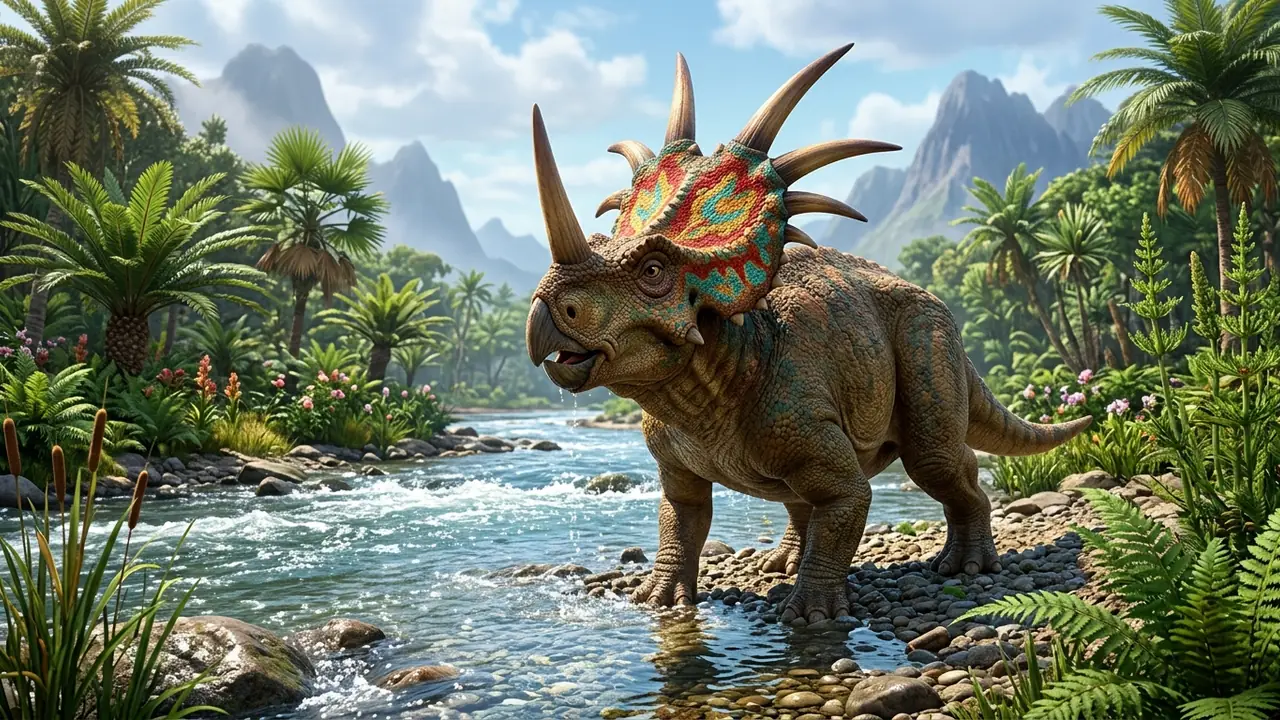
Meet the Legend: Prehistoric Unicorn!
Say hello to Styracosaurus (sty-RAK-oh-SOR-us)! Its name means spiked lizard. Picture a sturdy four-legged tank built like a giant unicorn! One straight two-foot pointed up from its nose. Behind its head flared a wide bony crowned with six long spikes like a royal sunburst!
Lost World Habitat: Sunny River Plains
Seventy-five million years ago, Styracosaurus lived in western Canada. Today Alberta has chilly winters, yet every leaf shows it was once warm and green! Wide rivers wound past shady swamp trees and lush fern meadows. Each noisy Styracosaurus splashed across muddy banks beside turtles and duck-billed dinosaurs.
What's on the Prehistoric Menu?
With so many sharp spikes, did Styracosaurus hunt meat? Not at all! This peaceful munched green plants all day long. Holding its nose low near the ground, it snipped tough palms, ferns, and woody bushes with a curved parrot-like beak. Sharp back teeth sliced stems cleanly!
Superpowers & Anatomy: Light Spiky Crown
How did Styracosaurus lift a six-spiked bony without getting a sore neck? Nature gave its skull a smart secret! Two big windows inside the bone kept the wide frill light and easy to swing. Tough colorful skin stretched over those openings while its nose gleamed ahead!
Flight vs. Fight Arena! Herd Shield Wall
Hungry tyrannosaur Daspletosaurus hunted along those same shady rivers! Styracosaurus was too heavy to outrun danger fast, so this brave stood on Team Fight. Grown-ups in the locked shoulders in a tight circle around their babies. Aiming every sharp forward sent big hunters backing away!
Fossil Detective Secrets: Crowded Bonebeds
In 1913, explorer Charles Sternberg dug up the first spiky Styracosaurus skull in Alberta, Canada. Later, scientists found giant rock layers packed with dozens of bones from one big ! Each skull had slightly different spike curves, just like human fingerprints, helping friends tell each other apart!