Meet the Legend: Blueprint for Giants!
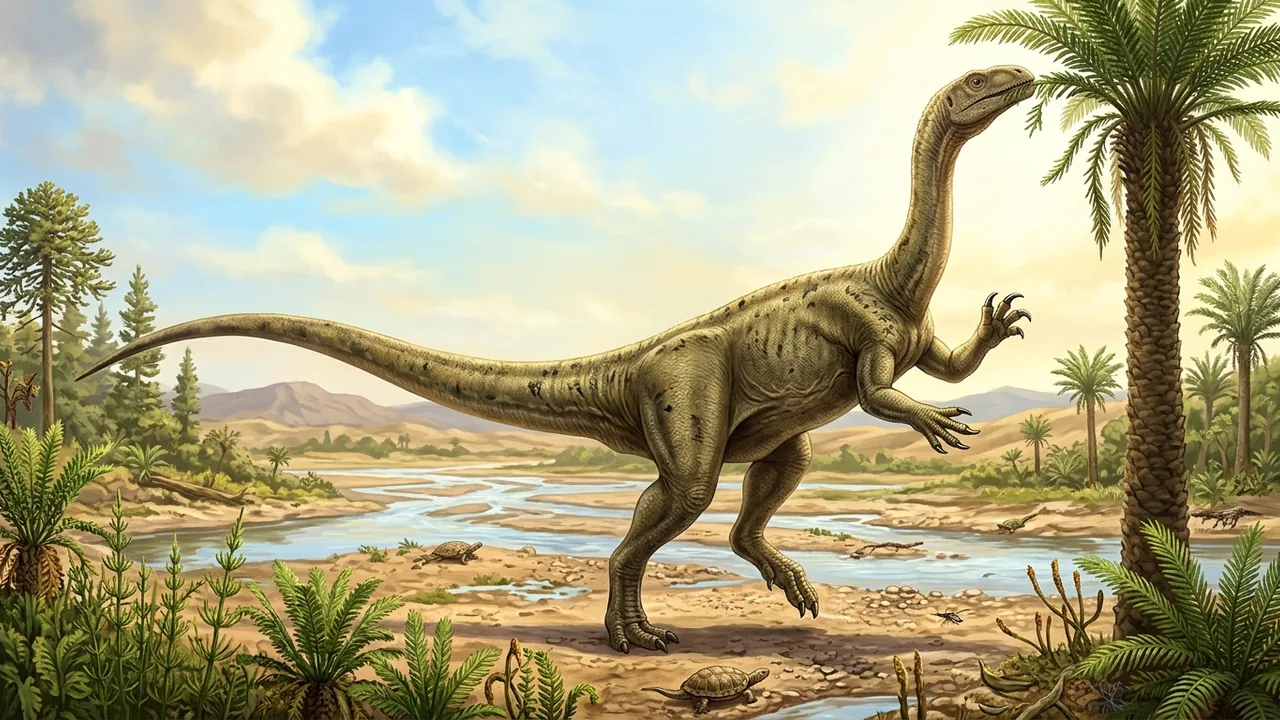
Fifty million years before giant Brachiosaurus or Diplodocus ever existed, an amazing pioneer in the Late Triassic Period tested out the long-neck lifestyle first! Plateosaurus (PLAY-tee-oh-SOR-us), meaning broad lizard, stretched anywhere from sixteen feet—about as long as a family minivan—all the way up to thirty-three feet like a yellow school bus!
Unlike later four-legged giants, Plateosaurus stood, walked, and ran upright on two sturdy hind legs as a nimble across ancient , launching the great dynasty of long-necked plant eaters across sunny valleys.
Lost World Habitat: Across Supercontinent Pangaea
Around 210 million years ago, you could have walked from Virginia straight to Germany without crossing an ocean because Earth's continents formed one giant landmass called ! Central Europe featured warm river valleys where sunny dry spells alternated with sudden summer monsoon floods.
Along winding streams grew tough groves, green horsetails, and tall conifers bordered by slick red clay plains. Every passing Plateosaurus had to step carefully around each wet where deep, sticky mud waited like natural glue after heavy rainstorms!
What's on the Prehistoric Menu?
Earlier Triassic plant eaters stayed low near the ground, so Plateosaurus unlocked a brand-new leafy buffet twelve feet overhead! Balancing on its two hind legs as a tall , it gripped prickly trunks and evergreen conifer branches between strong five-fingered hands armed with big curved thumb claws.
Once a tall branch was pulled close, rows of serrated, leaf-shaped teeth snipped coarse fronds into neat pieces before its long muscular belly digested tough plant fibers into steady energy for walking across sunny valleys.
Superpowers, Senses & Anatomy
For more than a century, museum paintings showed Plateosaurus dropping down onto all fours like a bear. When modern scientists scanned its arm bones in 3D, they discovered a funny surprise: its forearm bones locked its palms facing inward like hands ready to clap, proving it walked 100 percent of the time as a two-legged !
Even cooler, microscope slices of bone rings revealed flexible growth across —dinosaurs in rich valleys grew twice as long as cousins in drier spots!
Flight vs. Fight Arena: Outrunning Liliensternus!
Stalking the shady edges of Triassic conifer woods was Liliensternus—a sleek, seventeen-foot predator sporting twin head crests and razor-sharp teeth! Built as an athletic with powerful thigh muscles and a long counterbalancing tail, Plateosaurus belonged firmly to Team Flight.
Across dry ground beside a river , brisk two-legged strides carried healthy adults swiftly away from hungry hunters—and if a bold predator lunged too close, muscular arms swung wickedly curved thumb claws to drive the attacker right back into the bushes!
Fossil Detective Secrets: Mystery of the Mud Traps!
Why did towns like Trossingen in Germany and Frick in Switzerland preserve more than one hundred complete skeletons of Plateosaurus? Fossil detectives solved the riddle by studying the ancient red clay packed around their upright hind legs!
After heavy monsoon rains, two-ton adult dinosaurs venturing across slick mud sank belly-deep into sticky clay traps, while lighter turtles and small reptiles walked right past! Over millions of years on , burying river silt turned those trapped pioneers into world-famous stone treasures.