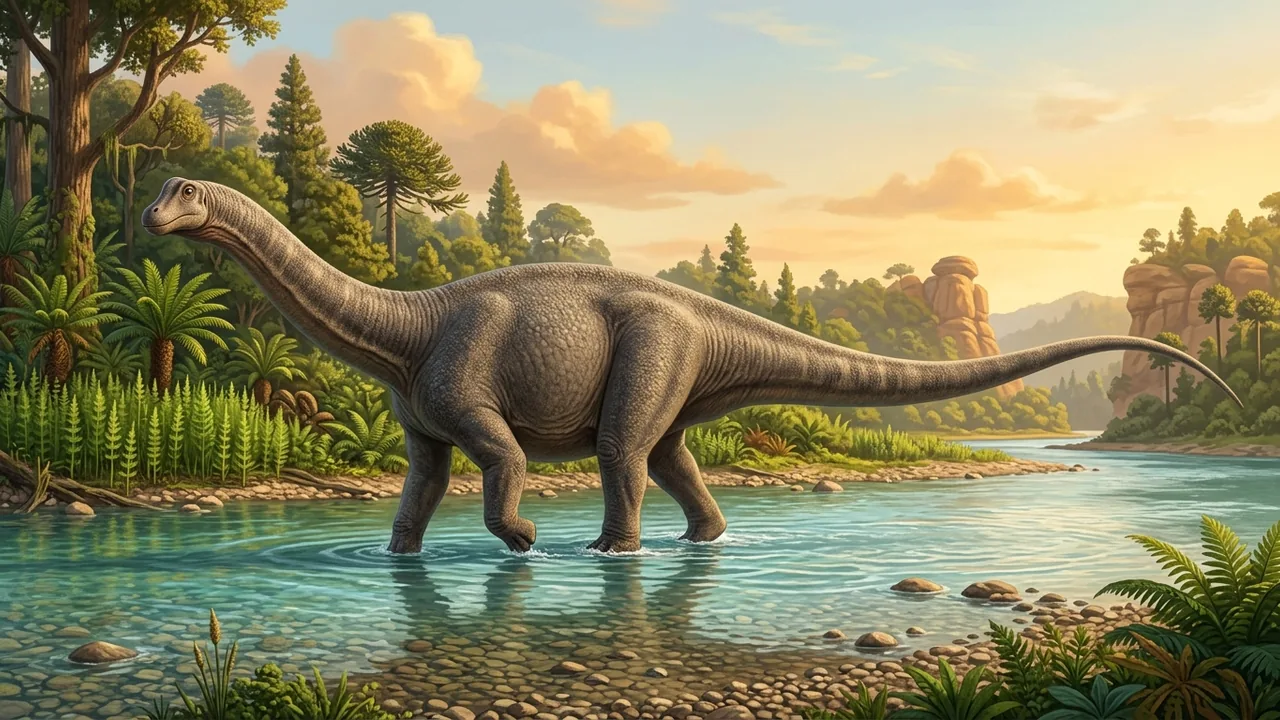
Meet the Legend: Thunder Lizard Redeemed
When paleontologist Othniel Charles Marsh examined giant dinosaur bones from Como Bluff, Wyoming, in 1879, he named the creature Brontosaurus excelsus—meaning noble thunder lizard! Stretching more than seventy feet long and weighing sixteen tons, this magnificent quickly became the most famous long-necked dinosaur on Earth.
Yet in 1903, another scientist argued Brontosaurus looked too similar to Marsh's earlier discovery Apatosaurus, so textbooks dropped Brontosaurus as an official for 112 years! Generations of students heard that their favorite dinosaur name was just a scientific mix-up.
Everything changed in 2015 when paleontologist Emanuel Tschopp led a five-year investigation measuring every neck , shoulder blade, and ankle bone, proving Brontosaurus truly earned its own spot on the dinosaur family tree!
Today, families visiting science museums can cheer knowing the legendary thunder lizard stands once again as its very own Late Jurassic giant.
Lost World Habitat: Marshy Lakes & Rivers
Between 154 and 150 million years ago, Brontosaurus inhabited lush river valleys, oxbow lakes, and seasonal marshes across ancient Wyoming, Colorado, and Utah. Warm rains swelled meandering rivers that deposited fertile silt across wide floodplains, nourishing dense thickets of horsetails, tree ferns, cycads, and riverside conifers for every hungry .
Over millions of years, that mud and river sand compressed into colorful layers of rock called the Morrison Formation. Inside those stone layers, fossil hunters find Brontosaurus bones alongside freshwater clams, lungfish, turtles, and armored crocodiles.
Across North America in Virginia's Culpeper and Taylorsville Basins, older Mesozoic sedimentary sandstones preserve thousands of real three-toed and four-toed tracks, showing how watery basins on both sides of the continent recorded dinosaur life in stone!
Whenever dry summers shrank smaller streams, permanent oxbow lakes kept tall reedbeds green so Brontosaurus herds always found fresh water and shade.
What's on the Prehistoric Menu?
Inside its Late Jurassic ecosystem, lakeside horsetails and evergreens acted as sunlit producers, while Brontosaurus functioned as a sixteen-ton consumer. Fueling that massive body required stripping hundreds of pounds of fibrous greenery between sunrise and dusk!
Rather than chewing mouthfuls with flat cheek molars, Brontosaurus evolved a streamlined skull featuring pencil-like peg teeth arranged across the front of a gently rounded snout. Clamping onto marsh reeds, fern fronds, or low conifer twigs, it raked off leafy shoots and swallowed them whole.
Deep inside its barrel-shaped ribcage, a giant fermentation gut teeming with helpful microbes broke down tough plant cell walls over several days, allowing Brontosaurus to extract steady energy while sharing woodlands peacefully with higher-browsing Brachiosaurus.
New replacement teeth grew continuously inside its jawbones so gritty lakeside horsetails never left this hungry titan unable to snip fresh greens!
Superpowers, Senses & Anatomy
Looking closely at each neck reveals how Brontosaurus combined power with lightness. Hollow air-sac pockets connected to bird-like lungs lightened the inside of its spine, while forked neural spines on top cradled a thick elastic ligament that helped hold its neck horizontally above the ground.
Unlike slender Diplodocus, however, Brontosaurus grew stout, bumpy projections along the underside of its neck bones! Scientists study this intriguing as attachment points for heavy neck muscles—possibly used in shoving contests between rivals.
Four pillar-straight legs supported its deep chest, with cushioned heel pads softening every thunderous step across muddy lakeshores and a sharp, curved thumb claw on each front foot ready for traction or close defense.
Fossil trackways confirm its long, whip-tipped tail floated cleanly off the ground behind its hips as a smooth counterbalance during long riverside marches.
Flight vs. Fight Arena: Lakeshore Defenders
Shady gallery forests bordering Jurassic rivers hid giant ambush predators—including Allosaurus and thirty-three-foot Torvosaurus, the largest meat eater of the Morrison waterways! Because sixteen-ton legs could never gallop away at high speed, an adult Brontosaurus relied on a powerful defensive on Team Fight.
Stretching roughly thirty-five feet behind its hips, its tapering tail ended in a slender bullwhip lash capable of snapping sideways with stinging force! Meanwhile, stout forelimbs armed with curved inner thumb claws made frontal attacks far too risky for lone hunters.
Behavioral teamwork mattered just as much: multi-age herds stayed alert together along open lakeshores so massive adults formed a protective ring around every young calf.
Outweighed four to one by a healthy adult thunder lizard, smart predators quickly backed away whenever whip tails began cracking across the muddy riverbank!
Fossil Detective Secrets: How Science Self-Corrects
The story of Brontosaurus is a masterclass in how fossil detectives test evidence! First came the case of the wrong head: because Marsh's 1879 skeleton from Wyoming rocks lacked a skull, museums mounted a tall, boxy Camarasaurus-style head on Brontosaurus for almost a century until researchers Jack McIntosh and David Berman proved in 1978 that diplodocids wore long, low snouts.
Next came the 2015 comeback! Paleontologist Emanuel Tschopp and his colleagues measured 477 distinct bone features across eighty-one museum skeletons—checking every , shoulder bone, and ankle joint.
Computer family-tree maps proved Brontosaurus differed consistently from Apatosaurus, officially restoring the beloved thunder lizard and proving science grows stronger whenever researchers look closer!
Three species now belong to Brontosaurus, turning a century-old museum mystery into one of paleontology's greatest detective victories.