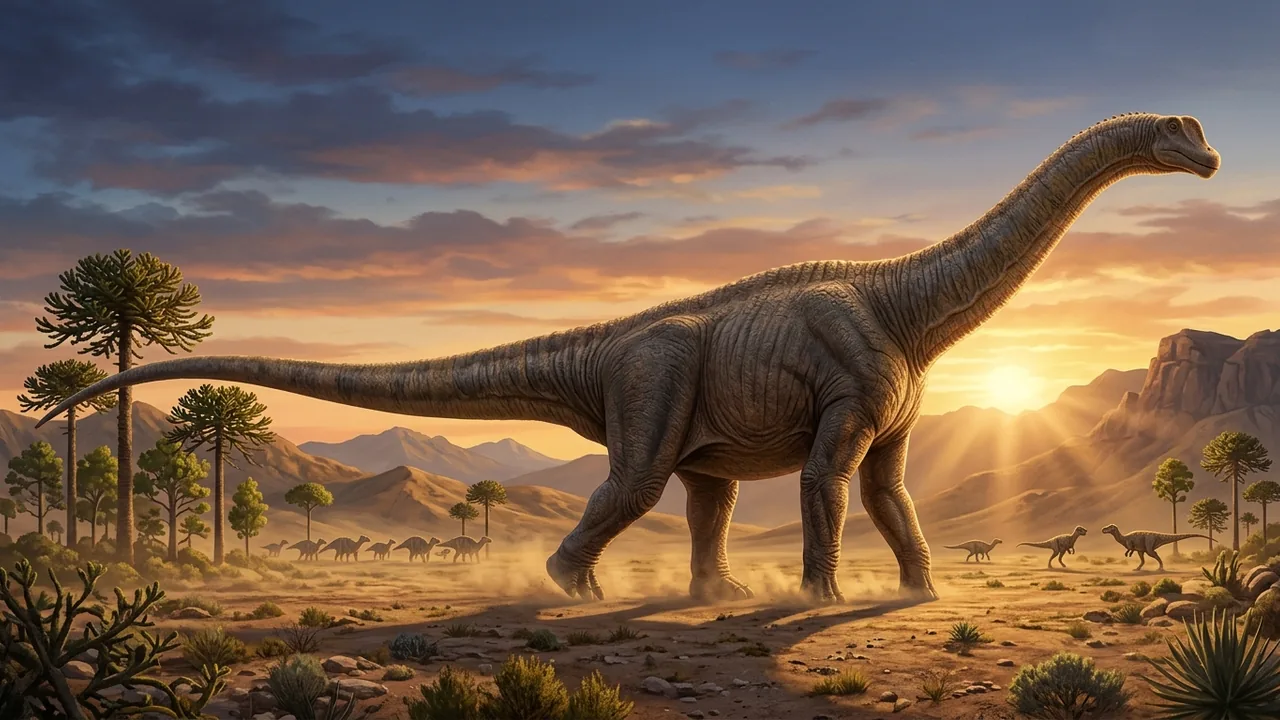
Meet the Legend: Record Holder of Land Giants
Step back ninety-four million years to meet Argentinosaurus huinculensis, the heaviest terrestrial animal known to science! Named by Argentine paleontologists José Bonaparte and Rodolfo Coria in 1993, this Late Cretaceous stretched roughly 110 to 115 feet from snout to tail tip while weighing between seventy and eighty tons.
Earlier Jurassic giants like Brachiosaurus and Diplodocus were enormous, yet South America's wide-bodied family pushed land animal size to an even grander limit—weighing as much as twelve African elephants combined!
Every single bone and joint in its colossal skeleton worked together as a structural engineered to carry mountain-sized weight safely across solid river ground.
Even one fossilized dorsal vertebra from its middle back towered more than five feet tall—higher than many third-grade classroom bookshelves and heavier than a boulder after turning to stone!
Lost World Habitat: Cretaceous Conifer Plains
Between ninety-six and ninety-two million years ago, Argentinosaurus roamed warm, sunlit river valleys across Patagonia in southern Argentina. Braided streams carried sand and mud down from rising western mountains, building thick red and yellow rock layers known today as the Huincul Formation.
Towering araucaria conifers, tree ferns, horsetails, and early flowering shrubs carpeted moist floodplains, supporting an extraordinary community of giant browsers and swift carnivore hunters.
Earth scientists compare those South American river sandstones with slightly older Early Cretaceous sedimentary beds right in Virginia—where the Potomac Formation along the Fall Line preserves fossilized conifer trunks and sauropod tracks from North America's own age of titans!
Sharing Patagonia's shaded waterways were duck-billed ornithopods, fast small runners, burrowing lungfish, armored land crocodylians, and freshwater river turtles basking on warm sandbars.
What's on the Prehistoric Menu?
Inside Patagonia's Late Cretaceous food chain, evergreen conifers, ferns, and early flowering plants captured solar energy as producers, while Argentinosaurus fed as the ultimate primary consumer ! Fueling seventy-five tons of muscle and bone demanded stripping more than one thousand pounds of tough needles and fronds every single day.
Like earlier long-necked relatives, this giant carried small, chisel-tipped teeth restricted to the front of its jaws. Chewing half a ton of prickly branches would have taken far too long and required heavy cheek bones impossible to hold forty feet forward!
Instead, Argentinosaurus swallowed mouthfuls whole and relied on multi-day microbial inside a cavernous gut chamber as its key digestive .
Billions of helpful gut bacteria unlocked rich nutrients from woody conifer shoots while wide neck sweeps conserved precious walking energy.
Superpowers, Senses & Anatomy
How did nature build a land animal heavier than ten school buses without crushing its own skeleton? Inside each five-foot spine bone, tiny sponge-like air cells connected to bird-style lungs replaced solid bone—a lightweight breathing that also cooled its massive body during warm sunny afternoons!
Unlike narrower-stanced Jurassic sauropods, every giant stood with wide-set hips and broad chest bones so four tree-trunk legs planted wide apart like sturdy bridge pilings. Surprisingly, its front feet completely lacked finger bones and claws, resting directly on a cushioned horseshoe circle of upright wrist pillars!
Meanwhile, its vast barrel ribcage held the huge vat that fueled nonstop daily growth.
Life began inside nests of dozens of porous, grapefruit-sized eggs buried in warm river sand, from which ten-pound babies grew rapidly toward giant adulthood.
Flight vs. Fight Arena: Fortress Against the Pack
Patagonian floodplains were no quiet garden—prowling the same Huincul woodlands was Mapusaurus roseae, a forty-foot predator armed with serrated, blade-shaped teeth! Fossil bonebeds containing several Mapusaurus individuals of different ages suggest these hunters sometimes gathered in groups around giant herds.
Young juveniles weighed far less than adults and relied on rapid yearly growth plus dense forest cover to avoid hungry packs. Once an adult reached seventy to eighty tons, however, sprinting away was impossible and unnecessary—placing Argentinosaurus squarely on Team Fight!
Outweighing a single six-ton Mapusaurus more than twelve times over, sheer titanic size served as its ultimate defensive .
A thunderous forelimb stomp or sweeping blow from its heavy muscular tail made attacking a healthy adult titan far too risky even for coordinated groups of hungry predators.
Fossil Detective Secrets: From Ranch Bone to Laser Scan
Our scientific adventure began in 1987 when sheep rancher Guillermo Heredia noticed a five-foot cylinder jutting out of red rock near Plaza Huincul and reported what he thought was petrified wood! Museum director Rodolfo Coria and legendary paleontologist José Bonaparte soon realized they were excavating the fibula, femur shaft, sacrum, and towering five-foot backbones of a brand-new .
Even when parts of a skeleton are missing, fossil detectives compare matching bones from close South American relatives like Patagotitan and Puertasaurus to reconstruct full body proportions accurately.
In 2013, paleontologist Bill Sellers and Argentine colleagues laser-scanned a 130-foot museum skeleton and ran forty thousand computer walking steps!
Their physics simulation proved this colossal strode steadily across Cretaceous floodplains at nearly five miles per hour without overloading its massive joints or leg muscles!