Meet the Legend: Linebacker of Giants
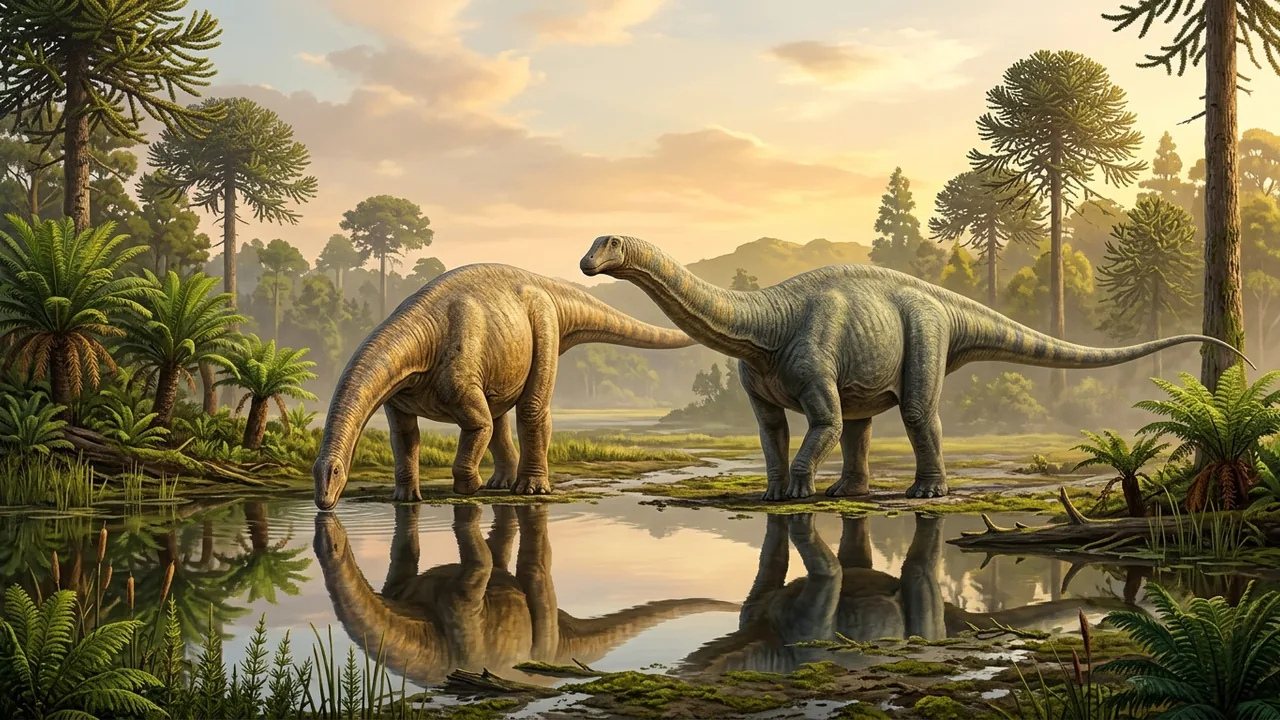
If Diplodocus was the slender marathon walker of the Late Jurassic Period, Apatosaurus (uh-PAT-oh-SOR-us) was the brawny heavyweight wrestler! Stretching seventy to seventy-five feet long—longer than two school buses—this thick-set weighed up to twenty-five tons, as heavy as four full-grown elephants.
When scientist Othniel Charles Marsh studied its first bones from Morrison, Colorado, in 1877, its V-shaped tail bones reminded him of ocean reptiles. That funny surprise inspired the name deceptive lizard for one of North America's strongest forest plant eaters!
Lost World Habitat: Watering Hole Oases
Around 151 million years ago, western North America cycled between sunny dry months and drenching monsoon rains. Out across dusty plains, winding rivers fed cool, shady strips of evergreens, tree ferns, and palm-like cycads called forests.
Apatosaurus herds followed those green gallery corridors from one mirror-like watering hole to the next. Each giant shared the shade with spiked Stegosaurus, small leaping mammals, and freshwater turtles basking on fallen logs while giant footprints pressed deep puddles into the muddy banks.
What's on the Prehistoric Menu?
Powering twenty-three tons of muscle took nearly half a ton of tough cycad fronds, horsetails, and conifer shoots every day! Using chisel-like peg teeth at the front of its rounded snout, Apatosaurus nipped leafy branches clean off and gulped them without chewing.
Occasionally this big swallowed smooth river pebbles—each polished stone is called a ! Even more important were billions of tiny helpers living inside its huge belly, slowly fermenting woody fibers into rich energy day and night.
Superpowers, Senses & Anatomy
Look at an Apatosaurus skeleton from the front and its neck looks almost as wide as a kitchen refrigerator! Heavy bony ribs jutted underneath its neck vertebrae to anchor thick slabs of muscle, yet airy honeycomb pockets inside the upper spine kept this balanced cleanly above strong shoulders.
Meanwhile, its barrel-shaped chest held a giant digestive tank packed with every helpful it needed, and each elephant-like front foot carried a stout curved thumb claw to grip slick clay beside shady riverbanks during rainy afternoon storms.
Flight vs. Fight Arena: Heavyweight Shield
Crouching among tall reeds in shady woods lurked Ceratosaurus—a twenty-foot predator sporting a sharp blade horn on its nose! Against a healthy adult Apatosaurus weighing over twenty tons, however, a lone hunter stood almost zero chance of winning.
Firmly on Team Fight, this muscular could slam its heavy neck sideways like a battering ram, slash downward with sharp front thumb claws, or crack its forty-foot whip tail across the clearing, keeping young herd calves safe inside a towering wall of giants!
Fossil Detective Secrets: Named for Louise!
In August 1909, paleontologist Earl Douglass discovered an amazing articulated Apatosaurus skeleton high on a sunny sandstone cliff in northeastern Utah. Philanthropist Andrew Carnegie named the species Apatosaurus louisae to honor his wife, Louise Whitfield Carnegie!
That famous cliff became Dinosaur National Monument, where visitors can still see over a thousand real dinosaur bones—and even an occasional smooth pebble—preserved inside tilted rock walls! Douglass also uncovered the dinosaur's real slender skull nearby, solving a decades-long museum puzzle for curious kids.