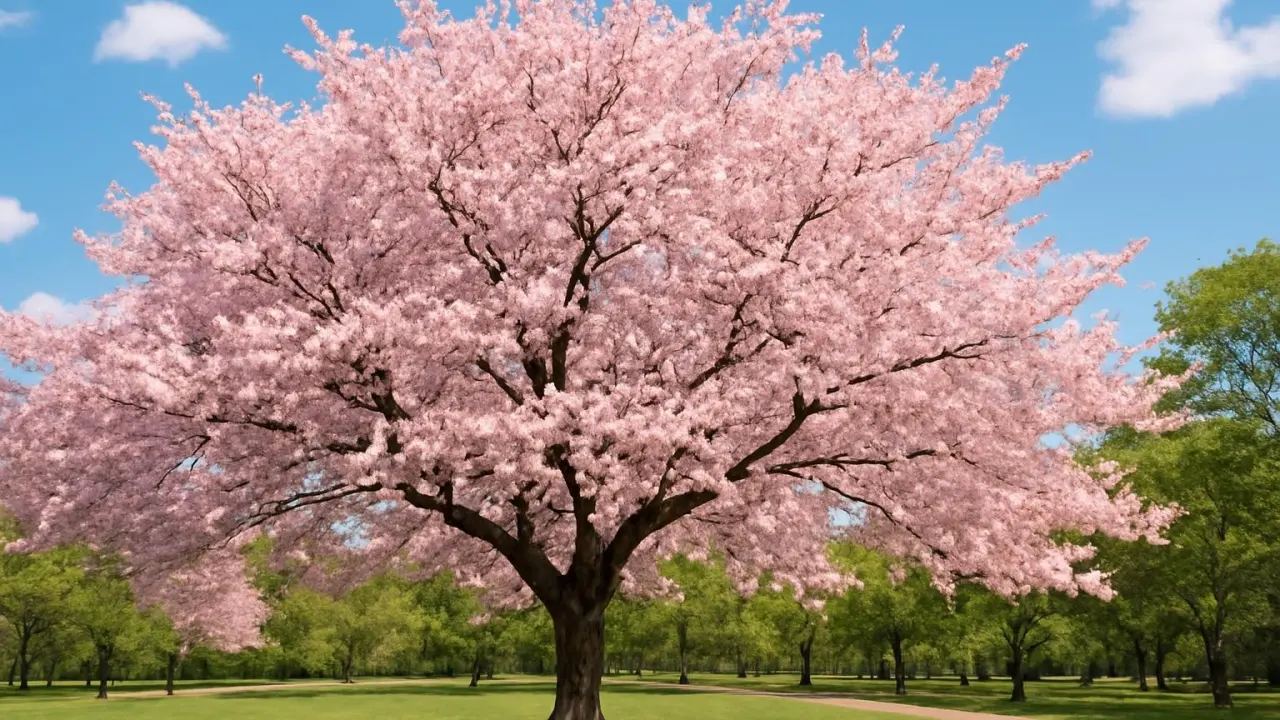
Yoshino Cherry Blossoms bloom for only about one week, making their beauty very special and brief!
✨ Word Sparks (Grade 2 Glossary)
Tap 🔊 to hear
blossoms
Flowers that open on trees or plants in spring
sunlight
Light that comes from the sun to help plants grow
branches
Parts of a tree that grow out from the trunk
🪝
Have you ever seen a tree covered in soft pink clouds of flowers?
1
Beautiful Pink Blossoms
Yoshino Cherry bloom in early spring and cover the tree in pale pink flowers. The petals are thin and soft, and they flutter gently in the breeze. Many people enjoy visiting places where these trees grow to watch the blossoms.
2
Where They Live and Grow
These cherry trees grow best in warm, sunny places like parks and gardens. They need plenty of and water to grow healthy and strong. The trees usually reach heights between 20 and 40 feet as they mature.
3
Special Tree Features
The Yoshino Cherry has many that spread wide and create a lovely shape. Its bark is smooth and grayish, and the tree produces small green leaves after the flowers fall. This tree is famous for its beautiful springtime display.
1. What helps Yoshino Cherry trees grow healthy and strong?
2. How long do Yoshino Cherry Blossoms usually bloom?
🤯 Mind-Blowing Fact • Grade 3
Yoshino Cherry Blossoms are a symbol of fleeting beauty because they bloom only one week each year.
✨ Word Sparks (Grade 3 Glossary)
Tap 🔊 to hear
pollination
When pollen moves to help flowers make seeds
adaptation
A change that helps a plant or animal survive
canopy
The top layer of leaves and branches on a tree
🪝
Did you know Yoshino Cherry Blossoms create a pink cloud that covers whole parks?
1
The Pink Cloud of Blossoms
Yoshino Cherry Blossoms bloom in early spring, creating a soft pink cloud over the trees. Their petals are delicate and thin, helping them flutter gently in the wind. This fluttering helps spread pollen for by bees and insects. The blossoms only last about one week before falling.
2
Where They Thrive
These trees grow best in temperate climates with full sunlight and moist soil. They are native to Japan but also grow in Korea and parts of China. The trees adapt to their environment by shedding leaves after flowering to conserve nutrients. They prefer parks and gardens where people can admire their beauty.
3
Tree Structure and Adaptations
The Yoshino Cherry has many spreading branches that help support the heavy clusters of flowers. Its smooth bark protects the tree from pests and diseases. The broad provides shade and shelter for birds and small animals. After blooming, the tree grows green leaves that help it gather sunlight for food.
4
Why They Matter
Yoshino Cherry Blossoms play an important role in local ecosystems by supporting pollinators. Their brief blooming period signals the start of spring for many people. The trees also help prevent soil erosion with their roots. They are a symbol of beauty and renewal in many cultures.
1. What helps spread pollen from Yoshino Cherry Blossoms?
2. Why do Yoshino Cherry trees shed leaves after flowering?
🤯 Mind-Blowing Fact • Grade 4
Yoshino Cherry Blossoms have inspired festivals and art worldwide because of their fleeting beauty and cultural importance.
✨ Word Sparks (Grade 4 Glossary)
Tap 🔊 to hear
ecosystem
A community of plants and animals living together
pollinators
Animals that help flowers make seeds by moving pollen
conservation
Protecting nature to keep plants and animals safe
🪝
How do Yoshino Cherry Blossoms shape ecosystems and human culture alike?
1
Spring’s Pink Explosion
Yoshino Cherry Blossoms burst into bloom each spring, creating spectacular pink displays that attract visitors worldwide. This blooming is caused by warming temperatures and longer daylight hours, triggering the tree’s flowering cycle. The blossoms last about one week before petals fall, signaling the season’s change. Their brief beauty encourages people to appreciate nature’s fleeting moments.
2
Ecosystem Roles and Relationships
These cherry trees support such as bees and butterflies, which rely on the blossoms for nectar. The trees also provide shelter and food for birds and small mammals, creating a balanced food web. Their roots help prevent soil erosion by stabilizing the ground in parks and gardens. In return, healthy support the tree’s growth and reproduction.
3
Human Impact and Cultural Significance
Humans plant Yoshino Cherry trees in cities and parks to celebrate spring and beauty, especially in Japan and the United States. Festivals like Japan’s Hanami encourage people to gather under blooming trees and enjoy their splendor. However, urban development and climate change can threaten these trees’ habitats and blooming cycles. efforts aim to protect and preserve these iconic trees.
4
Geographic Distribution and Growth
Originally native to Japan, Yoshino Cherry trees are now found in Korea, China, and parts of the United States. They thrive in temperate zones with well-drained soil and full sunlight. The trees typically grow 20 to 40 feet tall and can live for about 40 years. Their adaptability allows them to flourish in many park and garden environments worldwide.
1. What causes Yoshino Cherry Blossoms to bloom each spring?
2. Why do humans celebrate Yoshino Cherry Blossoms?
🤯 Mind-Blowing Fact • Grade 5
The 1912 gift of Yoshino Cherry trees to Washington, D.C., started a global love for these blossoms.
✨ Word Sparks (Grade 5 Glossary)
Tap 🔊 to hear
hybrid
A plant made by mixing two different kinds
photoperiod
The length of daylight that affects plant growth
pollinators
Animals that help flowers make seeds by moving pollen
🪝
What makes Yoshino Cherry Blossoms a scientific and cultural marvel across continents?
1
Taxonomy and Botanical Classification
The Yoshino Cherry Blossom, scientifically known as Prunus × yedoensis, is a species derived from Prunus speciosa and Prunus pendula. It belongs to the Rosaceae family, which includes many fruit-bearing trees. This hybridization results in the tree’s characteristic pale pink flowers and rapid blooming cycle. Understanding its taxonomy helps scientists study its growth and reproduction.
2
Physiological Mechanics of Blooming
Yoshino Cherry Blossoms bloom in response to temperature changes and , the length of daylight exposure. The tree’s buds develop during winter dormancy and burst open as spring temperatures rise above 50 degrees Fahrenheit. The petals’ delicate structure allows them to flutter and catch wind, aiding in pollen dispersal. This brief flowering period typically lasts seven to ten days.
3
Cultural History and Conservation Efforts
Yoshino Cherry trees have been culturally significant in Japan for centuries, symbolizing the transient nature of life. The famous Hanami festival celebrates their bloom and attracts millions annually. In the United States, the 1912 gift of these trees from Japan to Washington, D.C., sparked widespread planting and appreciation. Conservation programs now monitor climate impacts and urban threats to preserve these iconic trees.
4
Ecological Role and Environmental Adaptations
Ecologically, Yoshino Cherry Blossoms provide nectar for early spring such as bees and butterflies, supporting biodiversity. Their root systems stabilize soil and prevent erosion in urban and natural landscapes. The tree’s adaptability to diverse temperate environments allows it to thrive in various soil types and climates. These adaptations contribute to its widespread cultivation worldwide.
5
Quantitative Comparisons and Growth Data
Yoshino Cherry trees typically reach heights between 20 and 40 feet and live around 40 years in optimal conditions. Their bloom period lasts about one week, during which temperatures ideally range from 50 to 68 degrees Fahrenheit. The trees produce clusters of 5-petaled flowers, each about one inch wide. Compared to other cherry species, Yoshino blooms earlier and more profusely, making it a favorite for ornamental planting.