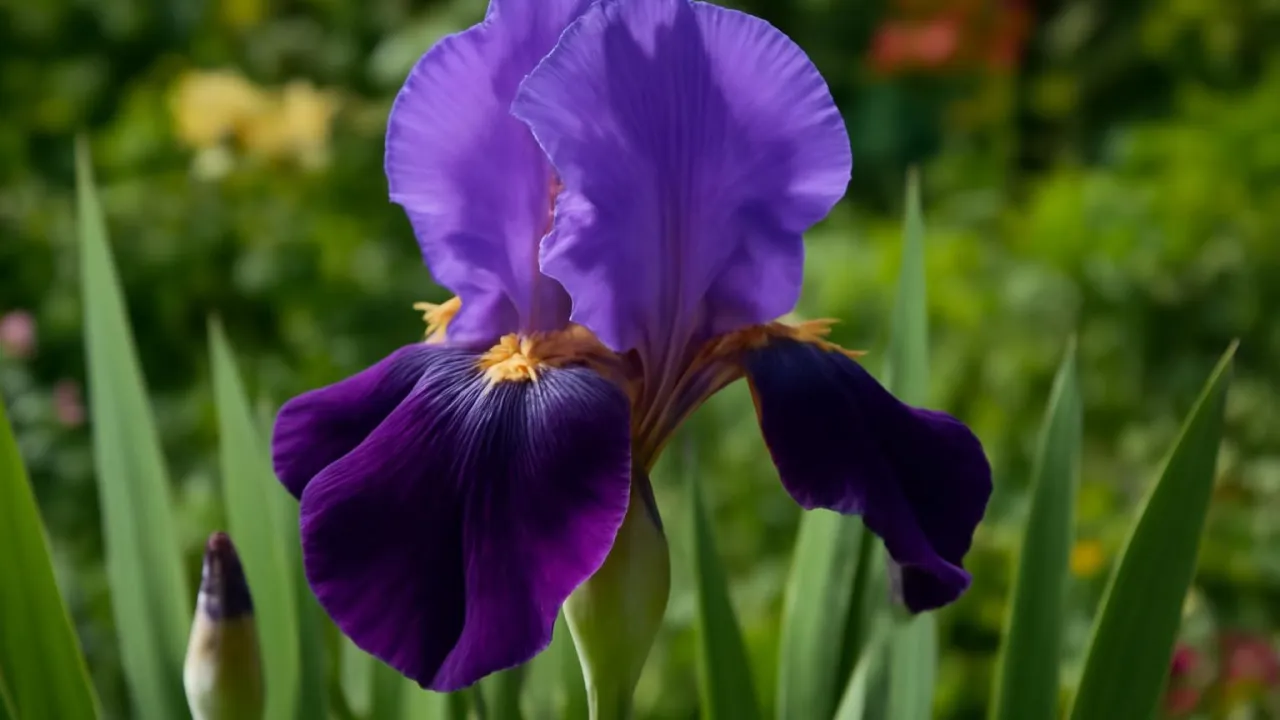
The fuzzy beard on the iris petals guides bees right to the nectar!
✨ Word Sparks (Grade 2 Glossary)
Tap 🔊 to hear
pollinators
Animals like bees that help flowers make seeds
nectar
Sweet juice inside flowers for animals to eat
soil
The dirt where plants grow
🪝
Have you ever seen a flower with a fuzzy beard on its petals?
1
Bright and Fuzzy Petals
The bearded iris has bright petals that can be purple, blue, or white. Its fuzzy beard runs along the petals’ center. This beard helps attract bees and other to the flower.
2
Growing Tall in Gardens
Bearded irises grow tall in gardens and fields with full sun. They prefer well-drained and moderate watering to stay healthy. These flowers bloom in late spring or early summer.
3
A Special Flower Feature
The fuzzy beard on the petals is soft and colorful. It helps bees find inside the flower. This feature also protects the flower’s pollen from rain and wind.
2. What does the fuzzy beard on the iris petals do?
🤯 Mind-Blowing Fact • Grade 3
The fuzzy beard on the iris petals not only attracts bees but also protects pollen from rain.
✨ Word Sparks (Grade 3 Glossary)
Tap 🔊 to hear
pollination
When pollen moves from one flower to another
rhizomes
Thick underground stems that store food
adaptation
A way plants change to survive better
🪝
Did you know the bearded iris uses a fuzzy beard to attract pollinators?
1
Colorful Petals and Fuzzy Beard
The bearded iris has large, colorful petals with a fuzzy strip called a beard. This beard acts as a guide for pollinators like bees. The bright colors and fuzzy texture help the flower stand out in gardens.
2
How It Grows and Survives
This flower grows from thick underground that store nutrients. It prefers full sun and well-drained soil to avoid root rot. The plant’s tall stalks help it reach sunlight and avoid shade from other plants.
3
Pollination and Adaptation
Bees land on the fuzzy beard and follow it to the nectar deep inside the flower. This process helps the plant reproduce by spreading pollen. The beard also protects pollen from rain, which could wash it away.
4
Where It Lives and Thrives
Bearded irises are native to Europe and the Mediterranean region but grow worldwide in gardens. They adapt well to temperate climates and can survive cold winters with proper care. Gardeners prize them for their beauty and hardiness.
1. What part of the bearded iris stores nutrients underground?
2. How does the fuzzy beard help the flower?
🤯 Mind-Blowing Fact • Grade 4
The fuzzy beard on bearded irises protects pollen from rain and guides bees to nectar, boosting reproduction.
✨ Word Sparks (Grade 4 Glossary)
Tap 🔊 to hear
rhizomes
Underground stems that store food and nutrients
pollinators
Animals like bees that spread pollen between flowers
biodiversity
Many different kinds of plants and animals in one place
🪝
How does the bearded iris’s fuzzy beard help it survive in different environments?
1
Physical Features and Survival
The bearded iris displays large, vividly colored petals with a distinctive fuzzy beard that attracts effectively. This beard acts as a landing strip guiding bees to the nectar deep within the flower’s structure. By protecting pollen from rain, the beard ensures successful pollination even in wet climates. These adaptations increase the flower’s chances of reproducing successfully in its environment.
2
Growth and Habitat Preferences
Native to temperate regions of Europe and the Mediterranean, the bearded iris thrives in full sun and well-drained soils. Its store nutrients that help the plant survive cold winters and dry spells. Gardeners cultivate this flower worldwide because it adapts well to various climates and soil types, contributing to its widespread distribution.
3
Role in Ecosystems and Gardens
Bearded irises serve as important nectar sources for bees and butterflies, supporting local pollinator populations. Their presence in gardens also contributes to and aesthetic value. Through pollination, they help maintain healthy ecosystems by enabling seed production for future plant generations.
4
Human Impact and Cultivation
Humans have cultivated bearded irises for centuries, selecting varieties with diverse colors and sizes. This cultivation supports horticulture industries and garden enthusiasts worldwide. However, habitat loss and climate change could affect wild populations, making conservation efforts important to preserve native species.
Tiny hair-like parts on plants that help protect and guide
rhizomes
Underground stems storing food for plant survival
pollination
Transfer of pollen to help plants make seeds
🪝
What makes the bearded iris a fascinating example of plant adaptation and human cultivation?
1
Scientific Classification and Origins
The bearded iris, scientifically named Iris germanica, belongs to the Iridaceae family and is native to temperate Europe and the Mediterranean basin. It is a perennial flowering plant characterized by its rhizomatous root system and distinctive petal morphology. The genus Iris contains over 300 species, but the bearded iris is especially prized for its ornamental value and unique fuzzy beard feature.
2
Physiological Mechanics of the Fuzzy Beard
The fuzzy beard on the iris petals consists of dense, hair-like structures called that serve multiple functions. These trichomes act as visual and tactile guides for pollinators, directing them toward the flower’s nectar while also protecting pollen from environmental factors like rain. Additionally, the beard’s texture helps ensure that visiting bees come into contact with reproductive parts, facilitating effective .
3
Growth, Habitat, and Environmental Adaptations
Bearded irises grow from thick that store carbohydrates, enabling survival through winter dormancy and drought conditions. They thrive in full sun with well-drained soils, preferring temperate climates with moderate rainfall. Their tall stalks, ranging from 12 to 40 inches, allow them to compete for sunlight, while their broad leaves reduce water loss through transpiration.
4
Conservation and Botanical History
Cultivated since ancient times, bearded irises have a rich horticultural history, with many cultivars bred for color and size variations. While widely grown in gardens globally, wild populations face threats from habitat destruction and climate change. Conservation efforts focus on preserving native habitats and maintaining genetic diversity through seed banks and botanical gardens.
5
Quantitative Comparisons and Ecological Role
The bearded iris’s flowering stalk can reach up to 40 inches tall, supporting blooms that last about two weeks in spring or early summer. Its fuzzy beard contains thousands of per square centimeter, optimizing pollinator attraction. Ecologically, it provides nectar to bees and butterflies, contributing to networks essential for ecosystem health and agricultural productivity.