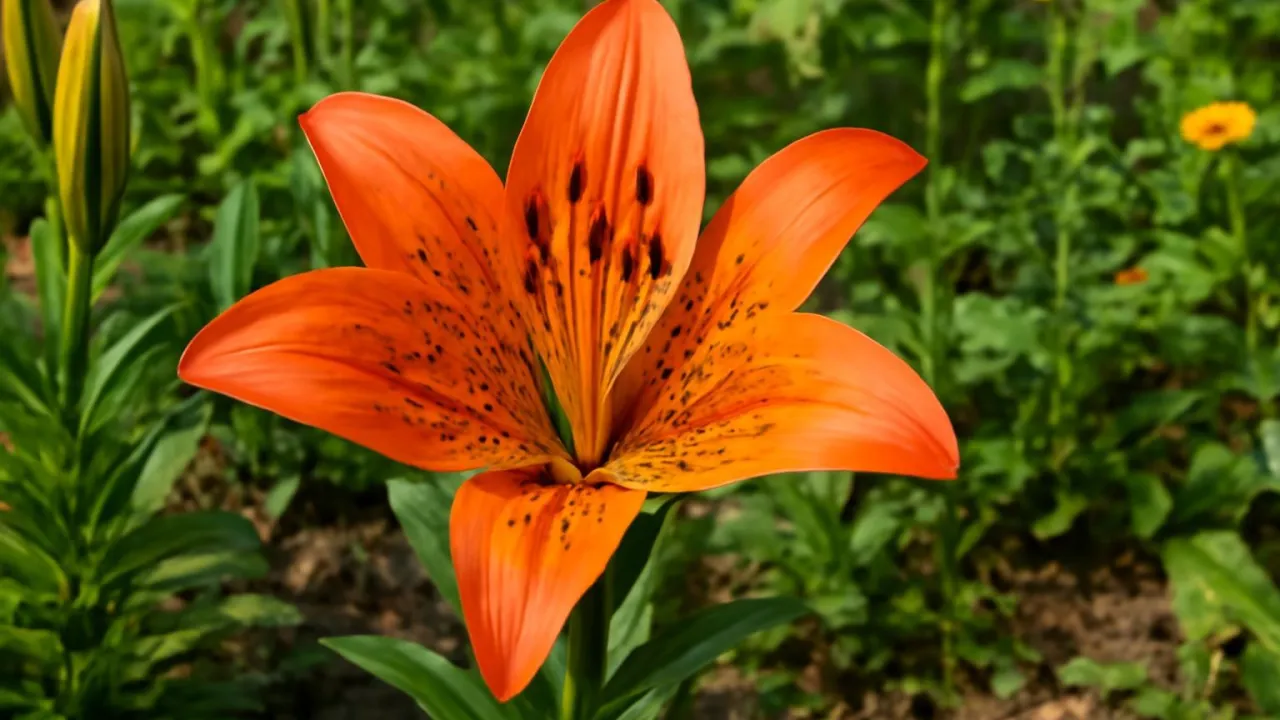
Asiatic lilies are special because they bloom brightly without a strong smell.
✨ Word Sparks (Grade 2 Glossary)
Tap 🔊 to hear
nectar
Sweet juice inside flowers for insects
pollinator
An animal that helps flowers grow seeds
petal
The colorful part of a flower
🪝
Have you ever seen a flower that grows tall and shows bright colors?
1
Colorful Flowers
Asiatic lilies bloom in bright colors like red, orange, and yellow. Their open wide in the sunlight. These flowers do not have a strong scent.
2
Growing Tall
This flower grows tall, reaching up to four feet in height. Its strong green stems hold the flowers up. Asiatic lilies grow best in warm places with good soil.
3
Pollinators Visit
Bees and butterflies visit Asiatic lilies to collect . These animals help the flowers make seeds. The flowers need sun and regular watering to grow well.
Asiatic lilies are unique because they bloom in many colors without using scent to attract pollinators.
✨ Word Sparks (Grade 3 Glossary)
Tap 🔊 to hear
pollination
When pollen moves to help flowers make seeds
adaptation
A change that helps plants survive better
camouflage
Colors or patterns that help hide plants
🪝
Did you know Asiatic lilies use bright colors to attract helpful pollinators?
1
Bright Colors and Petals
Asiatic lilies have brightly colored petals that attract pollinators like bees and butterflies. The petals are smooth and open wide to show their vivid colors. These flowers do not produce a strong scent, which is unusual for lilies. Their bright colors help them stand out in their environment.
2
Growth and Habitat
These lilies grow in temperate climates and prefer full sun to thrive. They can reach heights of two to four feet tall with sturdy green stems supporting the flowers. Asiatic lilies grow well in well-drained soil, which provides the nutrients they need. Their to sunny spots helps them survive and reproduce.
3
Pollination and Seeds
Pollinators visit Asiatic lilies to collect nectar, which helps the plants reproduce. When insects brush against the flower's pollen, they carry it to other flowers for . This process allows the lilies to produce seeds and grow new plants. Pollination is a key survival strategy for these flowers.
4
Unique Features
Unlike some lilies, Asiatic lilies do not have a strong fragrance but rely on their bright colors. Their petals can be spotted or striped, adding to their in nature. This helps protect them from predators that might eat the flowers. Their bold appearance is an important .
2. What helps Asiatic lilies survive in sunny places?
🤯 Mind-Blowing Fact • Grade 4
Asiatic lilies use bright colors instead of scent to attract pollinators, a unique survival strategy.
✨ Word Sparks (Grade 4 Glossary)
Tap 🔊 to hear
ecosystem
A place where plants and animals live together
pollinator
An animal that helps plants make seeds
adaptation
A change that helps plants survive better
🪝
How do Asiatic lilies’ bright colors help them survive in their ecosystems?
1
Color and Survival
Asiatic lilies display bright colors that attract such as bees and butterflies, which are essential for their reproduction. Because they lack a strong fragrance, their vivid petals serve as a visual signal to pollinators searching for nectar. This cause-and-effect relationship ensures that the flowers are pollinated effectively. Without pollinators, the lilies would struggle to produce seeds and continue their life cycle.
2
Ecosystem Role
These lilies provide nectar that supports , playing a key role in local food webs by supporting insects. In turn, these pollinators help other plants reproduce, maintaining health. Asiatic lilies also contribute to garden biodiversity and attract beneficial insects. Human cultivation has spread these lilies worldwide, impacting many ecosystems positively.
3
Geographic Distribution
Originally native to East Asia, Asiatic lilies now grow in temperate regions worldwide due to human gardening. They adapt well to various climates, provided they receive full sun and well-drained soil. This wide distribution shows their ecological flexibility and importance. Their ability to thrive in many areas helps gardeners enjoy their bright blooms globally.
4
Physical Adaptations
The lilies’ tall, sturdy stems support large flowers that maximize visibility to . Their petals sometimes have spots or stripes that help camouflage them from predators while still attracting insects. These balance protection and attraction, increasing survival chances. Such physical traits demonstrate how the Asiatic lily fits into its environment.
1. Why do Asiatic lilies have bright colors instead of strong smells?
2. Where did Asiatic lilies originally grow?
🤯 Mind-Blowing Fact • Grade 5
Asiatic lilies use bright colors, not scent, to attract pollinators, showing a unique evolutionary path.
✨ Word Sparks (Grade 5 Glossary)
Tap 🔊 to hear
taxonomy
The science of naming and classifying living things
photosynthesis
How plants make food using sunlight
pollination
When pollen moves to help flowers make seeds
🪝
What makes Asiatic lilies a fascinating example of plant adaptation and global cultivation?
1
Scientific Classification and Origin
Asiatic lilies belong to the genus Lilium within the family Liliaceae, scientifically named Lilium asiaticum. They are native to East Asia, including regions of China, Korea, and Japan, where they evolved in temperate climates. These lilies have been cultivated worldwide due to their striking appearance and adaptability. Their taxonomic classification helps botanists understand their relationships with other lily species.
2
Physiological Mechanics and Growth
These lilies grow from bulbs underground that store nutrients, allowing rapid spring growth. Their tall stems, reaching up to four feet, support large flowers with six tepals each, which are petal-like structures. Asiatic lilies perform efficiently in full sun, producing energy to fuel flowering and seed production. Their vascular system transports water and nutrients, enabling them to thrive in various soils.
3
Pollination and Reproductive Strategies
Unlike many fragrant lilies, Asiatic lilies rely on vivid colors to attract pollinators such as bees and butterflies, which transfer pollen between flowers. This visual adaptation compensates for the lack of scent and increases success in their native habitats. Their flowers produce nectar as a reward, encouraging repeated visits by pollinators. Successful pollination results in seed capsules that disperse seeds for new plant growth.
4
Conservation and Botanical History
While Asiatic lilies are widely cultivated, wild populations face habitat loss in some native regions due to urbanization and agriculture. Conservation efforts focus on protecting natural habitats and promoting sustainable gardening practices. Historically, these lilies have been prized in horticulture for centuries, influencing garden design worldwide. Their popularity has led to many hybrid varieties with diverse colors and patterns.
5
Quantitative Comparisons and Environmental Needs
Asiatic lilies typically grow between two and four feet tall, with flowers measuring three to five inches wide. They thrive in temperatures ranging from 60 to 75 degrees Fahrenheit and require well-drained soil with moderate moisture. Their bulbs store enough energy to survive winter cold down to 20 degrees Fahrenheit. Compared to other lilies, Asiatic lilies bloom earlier in the season and tolerate a wider range of garden conditions.