1. Where can your body make vitamin D when you play outdoors?
2. Which bone mineral needs vitamin D like a helper key?
🤯 Mind-Blowing Fact • Grade 2
Mushrooms sitting in sunshine act just like human skin—turning light into fresh vitamin D!
✨ Word Sparks (Grade 2 Glossary)
Tap 🔊 to hear
Ultraviolet
Invisible sun rays triggering skin vitamin D
Fortified
Food with extra helpful vitamins added in
Skeleton
Full framework of bones supporting your body
🪝
Why could you drink three glasses of milk a day and still miss out on strong bones without vitamin D?
1
Sunbeams Meet Skin Cells
Plants use sunlight to make sugar, and humans have a solar trick too! Invisible rays in outdoor sunshine tap a natural oil-like helper in your skin and turn it into vitamin D.
2
Unlocking the Gut Door
Imagine calcium packages waiting inside your tummy after you eat yogurt or cheese. Without vitamin D holding open the doorway in your small intestine, most of that calcium slips right past without ever reaching your !
3
Sun Safety and Food Sources
Brief outdoor play gives skin a boost, though sunscreen and hats are super important before long summer sunburns can happen. milk, cereals, salmon, tuna, and sun-grown mushrooms help fill your vitamin D tank safely!
1. What happens to most food calcium if your body lacks vitamin D?
2. Which grocery food is often fortified with extra vitamin D for growing kids?
🤯 Mind-Blowing Fact • Grade 3
Adding vitamin D to everyday milk in the 1930s worked so well that childhood rickets nearly vanished across North America!
✨ Word Sparks (Grade 3 Glossary)
Tap 🔊 to hear
UVB Rays
Midday sunlight wavelengths sparking skin vitamin D
Rickets
Childhood condition of soft bones lacking vitamin D
Melanin
Natural pigment giving skin and eyes color
🪝
Why does freshly made sunshine vitamin have to visit two different organs before it can actually work?
1
Three-Stop Relay Race
Making active vitamin D is a three-organ relay race! First, from outdoor sunlight strike a cholesterol cousin in your skin to create raw vitamin D3. Still, that starter molecule is asleep until two organs wake it up.
2
Liver First, Kidneys Second
Blood carries starter vitamin D to your liver for its first chemical upgrade. Next, it travels to your kidneys for a final upgrade that switches vitamin D fully ON so cells across your body listen to its signals!
3
Preventing Soft Bones
Active vitamin D helps your small intestine absorb both calcium and phosphorus. Over a century ago, city children playing mostly in smoky, sunless alleys sometimes developed soft, bowed leg bones called until scientists added vitamin D to milk.
4
Seasons, Shade, and Melanin
Darker skin rich in protective acts like natural shade, and northern winters slant sunbeams sharply. Eating fatty fish like salmon, eggs, and fortified foods keeps vitamin D steady in every season!
1. Which two organs team up to switch raw skin vitamin D fully ON?
2. What bone-hardening mineral partner besides calcium does vitamin D help absorb?
🤯 Mind-Blowing Fact • Grade 4
Furry mammals and birds cannot let much sunlight reach skin, so they coat feathers or fur with skin oils, bask in the sun, and groom themselves to swallow newly formed vitamin D!
✨ Word Sparks (Grade 4 Glossary)
Tap 🔊 to hear
Cholecalciferol
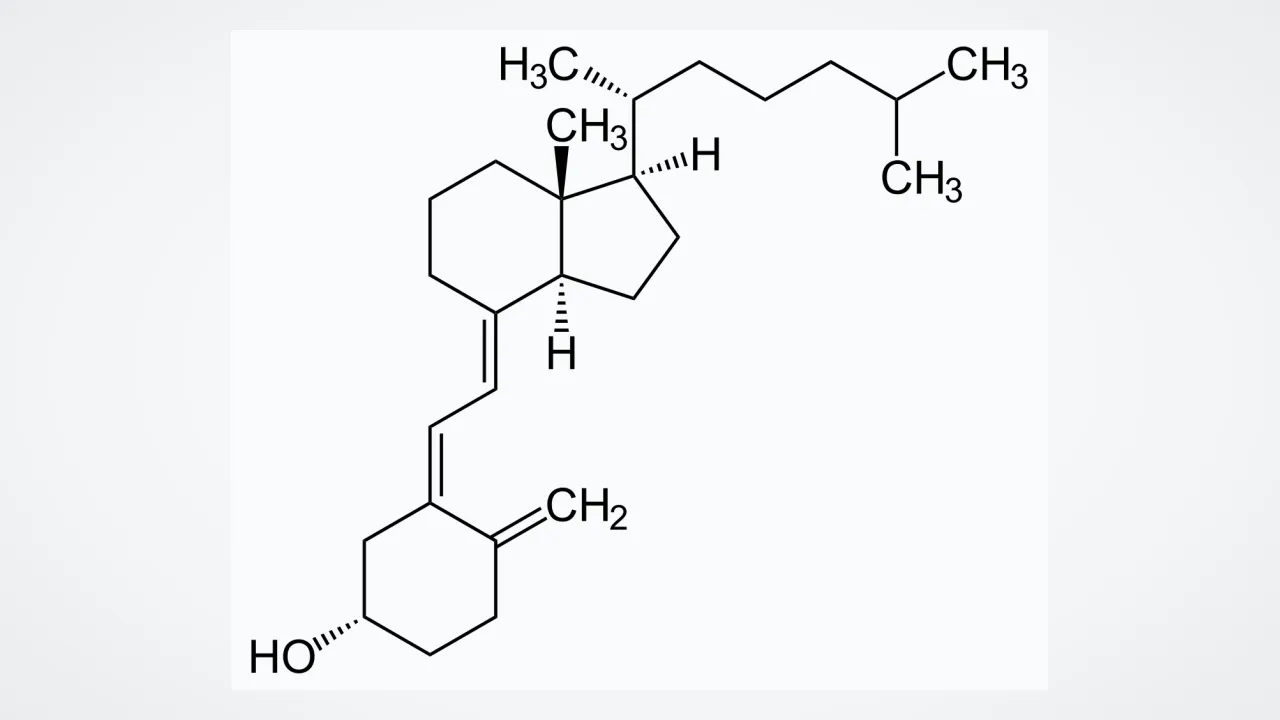
Vitamin D3 made in skin by sunlight
Calcitriol
Fully activated hormone form of vitamin D
Osteoblast
Builder cell laying down fresh hard bone
🪝
Why do doctors say 'vitamin D' is actually a disguised hormone rather than an ordinary vitamin?
1
A Vitamin That Acts Like a Hormone
By strict textbook rules, a true vitamin cannot be built by the human body—you must eat it. Vitamin D breaks that rule! When outdoor UVB wavelengths (290–315 nanometers) strike 7-dehydrocholesterol in epidermal skin cells, photon energy snaps open a carbon ring to form , or vitamin D3. Because your own body manufactures it and sends it through blood to command distant organs, endocrinologists classify activated vitamin D as a hormone!
2
Two-Step Activation Pipeline
Whether vitamin D3 comes from sunshine or salmon—or vitamin D2 comes from UV-exposed mushrooms—it starts out biologically quiet. First, liver enzymes convert it into calcidiol, the steady storage form doctors measure in blood tests. Whenever blood calcium dips slightly, kidneys convert calcidiol into super-active .
3
Multiplying Calcium Absorption
Without , your small intestine absorbs a measly ten to fifteen percent of dietary calcium. Once calcitriol arrives and switches on calcium-transporter genes in gut cells, calcium absorption jumps to thirty or forty percent—giving plenty of mineral bricks to harden growing growth plates!
4
Immune Coaches and Muscle Strength
Scientists have found vitamin D receptors on muscle fibers and white blood cells too! Adequate vitamin D helps muscles contract crisply and coaches immune cells to craft germ-fighting proteins while calming runaway inflammation.
1. Why do scientists consider activated vitamin D (calcitriol) a hormone?
2. How much dietary calcium does a healthy gut absorb WITH active vitamin D compared to without it?
🤯 Mind-Blowing Fact • Grade 5
You can never get vitamin D poisoning from sunshine alone, because extra sunlight automatically recycles surplus previtamin D in your skin into harmless inactive molecules!
✨ Word Sparks (Grade 5 Glossary)
Tap 🔊 to hear
Prohormone
Starter molecule converted into an active hormone
Hydroxyapatite
Rock-hard calcium-phosphate crystal inside bones
Keratinocyte
Main outer skin cell producing vitamin D3
🪝
How did Industrial Revolution smog, ultraviolet lamps, and a Nobel Prize-winning ring-opening reaction reveal evolution's link between latitude, skin tone, and human skeletons?
1
Solving the Mystery of Industrial Rickets
During the nineteenth-century Industrial Revolution, coal smoke choked European skies while children labored indoors, unleashing an epidemic of rickets—unmineralized, bowed bones. Researchers stood puzzled before two seemingly unrelated cures: cod-liver oil worked, yet bathing children in mercury-vapor ultraviolet light worked equally well! In the 1920s, Adolf Windaus unraveled the steroid structure behind this photochemistry—earning the 1928 Nobel Prize—while Harry Steenbock patented UV food irradiation to fortify milk and virtually eradicate rickets.
2
Photochemistry to Endocrine Activation
Biochemically, vitamin D is a secosteroid . When solar UVB photons (290–315 nm) penetrate epidermal , they cleave a carbon-carbon bond in 7-dehydrocholesterol, rearranging into cholecalciferol (vitamin D3). Bound to carrier proteins, D3 travels to the liver for hydroxylation into 25-hydroxyvitamin D—the circulating reservoir—before renal proximal tubules stimulated by parathyroid hormone perform a second hydroxylation, yielding potent 1,25-dihydroxyvitamin D, or calcitriol.
3
Genomic Control of Mineral Homeostasis
Entering intestinal enterocytes, calcitriol binds intracellular Vitamin D Receptors (VDR) on DNA, upregulating calcium channels and calbindin shuttle proteins so calcium and phosphate absorption surges to mineralize bone matrix alongside osteoblasts.
4
Immunomodulation and Self-Limiting Skin Safety
Nearly every immune leukocyte expresses VDR: calcitriol stimulates macrophages to manufacture antimicrobial cathelicidin peptides while tempering excessive inflammation. Cleverly, prolonged sun exposure never causes vitamin D toxicity because extra UV photons harmlessly degrade excess skin previtamin D3 into inactive isomers, though UV DNA damage still warrants smart sun protection!
5
Latitude, Melanin, and Human Adaptation
Anthropologist Nina Jablonski demonstrated that human skin pigmentation reflects an evolutionary balancing act: melanin shields equatorial folate vitamins from intense UV, whereas populations migrating above 37° latitude evolved lighter pigmentation or marine-fish diets (rich in salmon, mackerel, and seal oils) to harvest scarce winter UVB.