Timbuktu Sankore Madrasah
The Ancient Learning Lighthouse of the Sahara
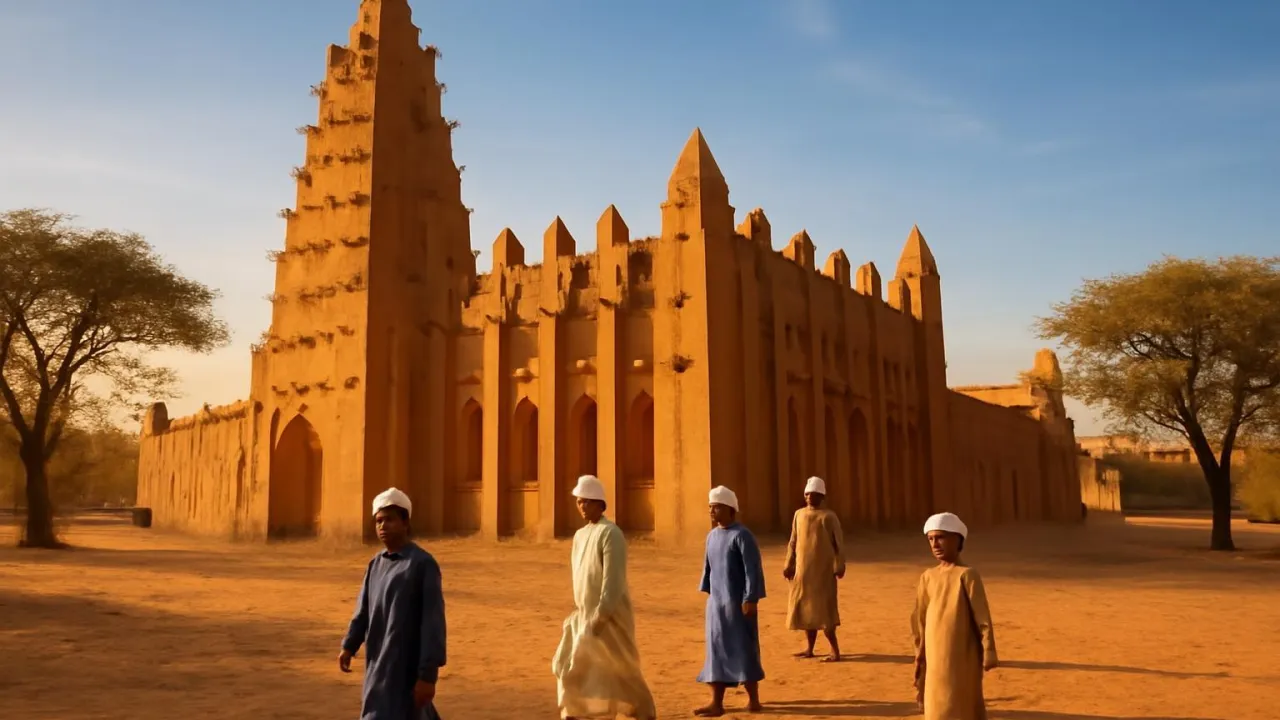
Sankore’s library once held over 700,000 handwritten manuscripts in many languages.
1 The Heart of Ancient Timbuktu
In the golden light of the Sahara, Sankore Madrasah stands as a symbol of learning and culture. Built from sun-dried mud bricks, its thick walls and pointed towers rise above the sandy streets. The madrasah’s design uses arches, courtyards, and shaded halls to create a cool, welcoming space for study. For centuries, it was the heart of a city famous for knowledge and trade.
2 Ingenious Earth-Brick Engineering
Builders used local river clay to form bricks, which were dried in the intense sun. These earth bricks were stacked to make walls over three feet thick, providing from the desert’s extreme heat. The pointed arches and open courtyards allowed air to circulate, creating natural and comfort for scholars. This sustainable design has helped Sankore withstand centuries of harsh weather and erosion.
3 A Global Center of Knowledge
During its golden age, Sankore attracted thousands of students and teachers from across Africa and beyond. Scholars studied science, mathematics, law, and poetry, and the madrasah’s library held countless handwritten . Knowledge was shared through lively discussions, lectures, and debates held in the shaded courtyards. The influence of Sankore’s scholars reached distant lands, making Timbuktu a legendary name in world history.
4 Legacy in the Modern World
Today, Sankore Madrasah is protected as a UNESCO World Heritage site and remains a powerful symbol of Africa’s scholarly traditions. Its architecture continues to inspire modern builders in hot climates, who study its natural cooling techniques. Visitors from around the globe come to see its unique earth-brick structure and learn about its remarkable past. The madrasah’s are still studied by researchers, preserving the wisdom of ancient Timbuktu.
1. How do thick earth-brick walls help Sankore last?
2. Why did students come from far away to Sankore?