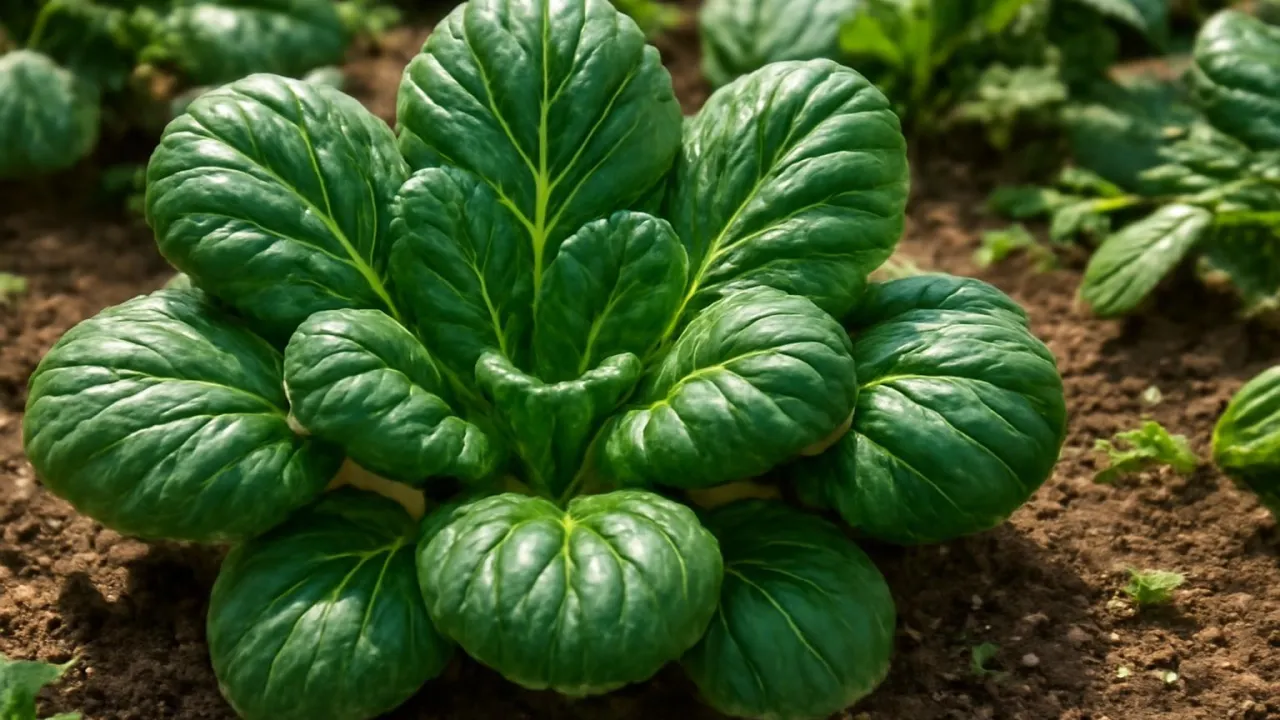
Tatsoi’s bowl-shaped leaves collect water to help the plant stay fresh and healthy.
✨ Word Sparks (Grade 3 Glossary)
Tap 🔊 to hear
adaptation
A special trait that helps a plant survive
nutrient
A part of food that helps plants or animals grow
predator
An animal that eats other animals or plants
🪝
Did you know tatsoi’s bowl-shaped leaves help it survive in cool gardens?
1
Tatsoi’s Unique Leaves
Tatsoi has dark green leaves shaped like small spoons or bowls that hold water well. This shape helps the plant collect moisture and from rain. The smooth leaves also protect it from drying out quickly. This helps tatsoi live in cooler climates.
2
Where Tatsoi Grows Best
Tatsoi thrives in temperate gardens with moist, fertile soil and plenty of sunlight. It grows low to the ground, which helps protect it from strong winds and . Farmers usually plant tatsoi in spring or fall when temperatures are mild. This plant is a cool-season vegetable.
3
How Tatsoi Helps People
Tatsoi is rich in vitamins A and C, which help keep people healthy and strong. It is often eaten raw in salads or cooked in soups and stir-fries. Its mild, slightly sweet flavor makes it popular in many dishes. Tatsoi also provides important like calcium and iron.
4
Tatsoi in the Garden
In the garden, tatsoi plays a role in the food web by providing food for insects and small animals. It can grow quickly and cover soil, helping to prevent weeds. This leafy green also helps keep the soil healthy by adding back when it decomposes. Gardeners value tatsoi for its fast growth and nutrition.
Tatsoi’s leaf shape helps it collect water and protect soil, supporting garden life.
✨ Word Sparks (Grade 4 Glossary)
Tap 🔊 to hear
ecosystem
A community of living things and their environment
biodiversity
Many different kinds of plants and animals living together
bolting
When a plant grows tall and flowers too soon
🪝
How does tatsoi’s bowl-shaped leaf design help it thrive in garden ecosystems?
1
Leaf Shape and Water Collection
Tatsoi’s bowl-shaped leaves collect rainwater and dew, which helps the plant stay hydrated during dry spells. This leaf design reduces water loss by trapping moisture near the plant’s surface, allowing it to survive in temperate climates with variable rainfall. The smooth texture also minimizes evaporation. These adaptations increase tatsoi’s chances of survival.
2
Role in Garden Food Webs
Tatsoi provides food for various insects, including pollinators and herbivores, which in turn support birds and small mammals. This leafy green contributes to the garden’s and helps maintain a balanced . By growing quickly and covering the soil, tatsoi also suppresses weeds that compete for nutrients. Its presence supports healthy soil organisms.
3
Growing Conditions and Distribution
Tatsoi grows best in temperate regions of East Asia and has spread worldwide to home gardens and farms. It prefers fertile, moist soils with good drainage and thrives in full sunlight or partial shade. Farmers plant tatsoi in spring and fall to avoid hot summer temperatures that can cause or bitterness. Its adaptability makes it popular globally.
4
Human Impact and Agriculture
Tatsoi’s fast growth and nutritional value have made it a valuable crop for sustainable agriculture. It requires fewer pesticides because its leaves are less attractive to many pests. This reduces chemical use and benefits the environment. Additionally, tatsoi’s ability to grow in cooler seasons helps extend the harvest period for farmers. It plays an important role in healthy diets worldwide.
Tatsoi’s unique leaf shape and fast growth make it a vital vegetable for healthy diets worldwide.
✨ Word Sparks (Grade 5 Glossary)
Tap 🔊 to hear
Brassicaceae
The plant family that includes cabbage and mustard greens
transpiration
How plants lose water through their leaves
chlorophyll
The green pigment that helps plants make food from sunlight
🪝
What makes tatsoi a unique leafy vegetable with important ecological and nutritional roles?
1
Taxonomy and Botanical Classification
Tatsoi, scientifically known as Brassica rapa subsp. narinosa, belongs to the family, which includes mustard greens and cabbages. It is a subspecies of Brassica rapa, a species widely cultivated for its edible leaves and stems. Tatsoi is classified as a leafy Asian green vegetable, often used in salads and cooked dishes. Its close relatives share similar nutritional profiles and growth habits.
2
Physiological Adaptations and Growth
Tatsoi’s bowl-shaped leaves are an evolutionary adaptation that efficiently collects and retains moisture, reducing loss in temperate climates. The plant grows low to the ground, which minimizes exposure to harsh winds and helps conserve energy. It completes its life cycle quickly, usually within 40 to 50 days, allowing multiple harvests per growing season. Its dark green leaves indicate high content for photosynthesis.
3
Nutritional and Culinary Importance
Rich in vitamins A, C, and K, as well as minerals like calcium and iron, tatsoi supports human health by boosting immunity and bone strength. Its mild, slightly sweet flavor makes it versatile in culinary uses, from raw salads to stir-fries and soups. The leaves contain antioxidants that help reduce oxidative stress. Tatsoi is increasingly popular in global cuisines due to its nutritional density and quick growth.
4
Ecological Role and Agricultural Impact
Tatsoi contributes to sustainable agriculture by requiring fewer pesticides, thanks to its natural resistance to many pests. It supports garden biodiversity by providing habitat and food for beneficial insects, including pollinators. The plant’s rapid growth helps suppress weeds, improving soil health and reducing erosion. Cultivated worldwide, tatsoi adapts well to various temperate climates, aiding food security.
5
Quantitative Growth and Environmental Preferences
Tatsoi typically grows between 6 and 12 inches tall, reaching maturity in about 40 to 50 days under optimal conditions. It prefers soil temperatures between 50 and 75 degrees Fahrenheit and requires consistent moisture for best growth. Compared to other leafy greens, tatsoi’s growth rate is relatively fast, making it ideal for quick harvest cycles. Its adaptability to cooler temperatures extends its growing season in many regions.