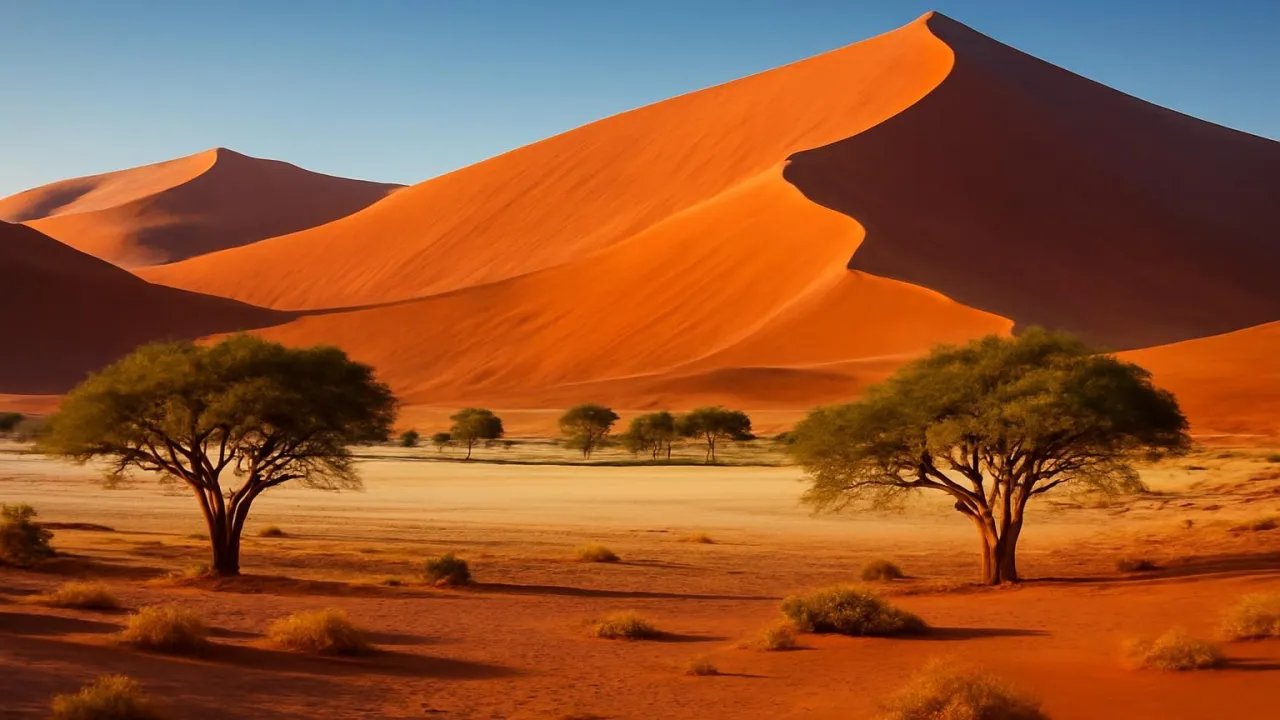
Can you imagine running on the tallest sand hills in the world?
1
Tall Red Sand Mountains
The Sossusvlei dunes look like giant red waves. The sand is soft, and the wind blows it into new shapes. People visit to see the bright colors and climb the hills.
2
How Dunes Are Made
Strong push sand into piles called dunes. Over many years, the sand turns red from . Some dunes are taller than and stretch far across the desert.
3
A Place of Sun and Silence
The sun shines hot on the sand. Shadows change as the day goes by. The desert is quiet, except for the sound of wind moving the sand.
Some Sossusvlei dunes make a deep, booming sound called 'singing sand' when you slide down!
✨ Word Sparks (Grade 3 Glossary)
Tap 🔊 to hear
oxidize
To change color by mixing with air
ridge
A long, high line on a hill
singing sand
Sand that makes a humming sound
🪝
What would it feel like to hear the sand sing beneath your feet?
1
A Sea of Red Giants
The Sossusvlei dunes rise like giant waves in the Namib Desert. Their bright red color comes from iron rusting in the sand over millions of years. These dunes are some of the tallest on Earth, with Big Daddy standing over 1,000 feet high. Visitors come from all over the world to climb and explore these sandy mountains.
2
How the Dunes Form and Move
Desert winds blow sand grains into huge piles called dunes. Over time, the wind shapes the dunes’ sharp and smooth slopes. The sand’s red color deepens as iron in the grains , or rusts. Even though the dunes look still, they slowly move as the wind keeps blowing.
3
Life and Sound in the Sand
In the early morning, the sand feels cool under your feet. Sometimes, when you walk or slide, the sand makes a low humming sound called '.' Small plants and animals survive here by hiding from the hot sun and finding water deep below.
4
A Place Shaped by Time
The Namib Desert is one of the oldest deserts on Earth. The dunes have grown and changed for over five million years. Each sunrise paints the sand with new colors and shadows. Sossusvlei’s beauty comes from its age, its size, and the way it keeps changing.
The Namib Sand Sea is the only coastal desert in the world with large, shifting dunes formed entirely by wind.
✨ Word Sparks (Grade 4 Glossary)
Tap 🔊 to hear
UNESCO
A group that protects special places
easterlies
Strong winds blowing from the east
adapted
Changed to live in a tough place
🪝
Imagine standing atop a dune so high, you can see the desert stretch forever—how did these red sand giants form?
1
The Ancient Namib and Its Dunes
The Sossusvlei dunes are part of the Namib Sand Sea, a region recognized by for its unique beauty and ancient history. These dunes began forming over five million years ago as winds carried sand from the Orange River far inland. Over time, minerals like iron oxidized, giving the sand its deep red color and making the dunes some of the oldest and most visually striking on Earth.
2
How Wind and Sun Shape the Dunes
Powerful desert winds, called , constantly move sand grains, building and reshaping the dunes. The tallest dunes, such as Big Daddy and Dune 7, can reach heights over 1,000 feet. The sun heats the sand during the day, causing sharp temperature changes that help break down rocks and create even more sand. This ongoing process means the dunes are always changing shape and size.
3
Life Among the Red Sand Hills
Despite the harsh environment, plants like camelthorn trees and small animals have to survive. Some creatures burrow deep into the sand to escape the heat, while others collect dew for water. Early morning and late afternoon are the best times to visit, when the sun casts dramatic shadows and the sand feels cool underfoot.
4
A Global Wonder and Scientific Treasure
Sossusvlei’s dunes attract scientists and travelers from around the world, eager to study their unique formation and beauty. The Namib Desert’s age and stability make it an important place for learning about Earth’s climate history. Each visit reveals new patterns, colors, and the quiet power of nature’s slow, steady work.
The Sossusvlei dunes’ iron-rich sands have been oxidizing for millions of years, making them some of the oldest and most vividly colored dunes on Earth.
✨ Word Sparks (Grade 5 Glossary)
Tap 🔊 to hear
oxidation
A slow change when minerals mix with air
arid
Very dry, with almost no rain
eco-tourism
Travel that helps protect nature
🪝
If you could measure the age of every grain beneath your feet, what stories would the Sossusvlei dunes tell about Earth’s past?
1
Origins of the Namib Sand Sea
The Sossusvlei dunes are part of the Namib Sand Sea, a UNESCO World Heritage site and one of the planet’s oldest continually regions. Over five million years ago, sand from the Orange River was swept inland by persistent coastal winds. The sand’s distinct red hue results from a long process, where iron minerals react with oxygen, gradually turning each grain a deeper shade of orange and red over millions of years.
2
Dune Formation and Dynamic Movement
The Namib Desert’s dunes are classified as star, linear, and crescent (barchan) types, with Sossusvlei hosting some of the tallest and most complex. Wind velocity, direction, and seasonal patterns drive the constant reshaping of these dunes, with some moving several meters each year. The tallest, known as Big Daddy, towers approximately 325 meters (1,066 feet) above the salt pan, while Dune 45 is famous for its climbable, sharply defined ridge.
3
Extreme Survival and Ecological Adaptations
Despite extreme aridity, life thrives through remarkable adaptations. The Namib Desert beetle collects water by condensing fog on its bumpy back, while camelthorn trees send roots deep below the surface to reach hidden moisture. Many species are nocturnal, using the cooler night air to hunt, feed, or conserve water. These survival strategies make the Namib a living laboratory for biologists studying adaptation and resilience.
4
Scientific and Cultural Significance
Sossusvlei’s dunes are not just natural wonders but also valuable scientific archives. Their layered sands preserve evidence of ancient climates, wind patterns, and even fossilized plant material. For local communities and Namibia as a nation, these dunes are symbols of endurance and beauty, drawing visitors worldwide and supporting initiatives that protect the fragile desert ecosystem.
5
Changing Landscapes and Global Impact
The Namib Sand Sea’s unique combination of coastal fog, wind-driven dune movement, and ancient geology provides critical insights into Earth’s environmental history. As climate change threatens regions globally, scientists use data from Sossusvlei to model desertification and resilience. Each sunrise over the red dunes reminds us of the delicate balance between natural forces, living organisms, and human stewardship.