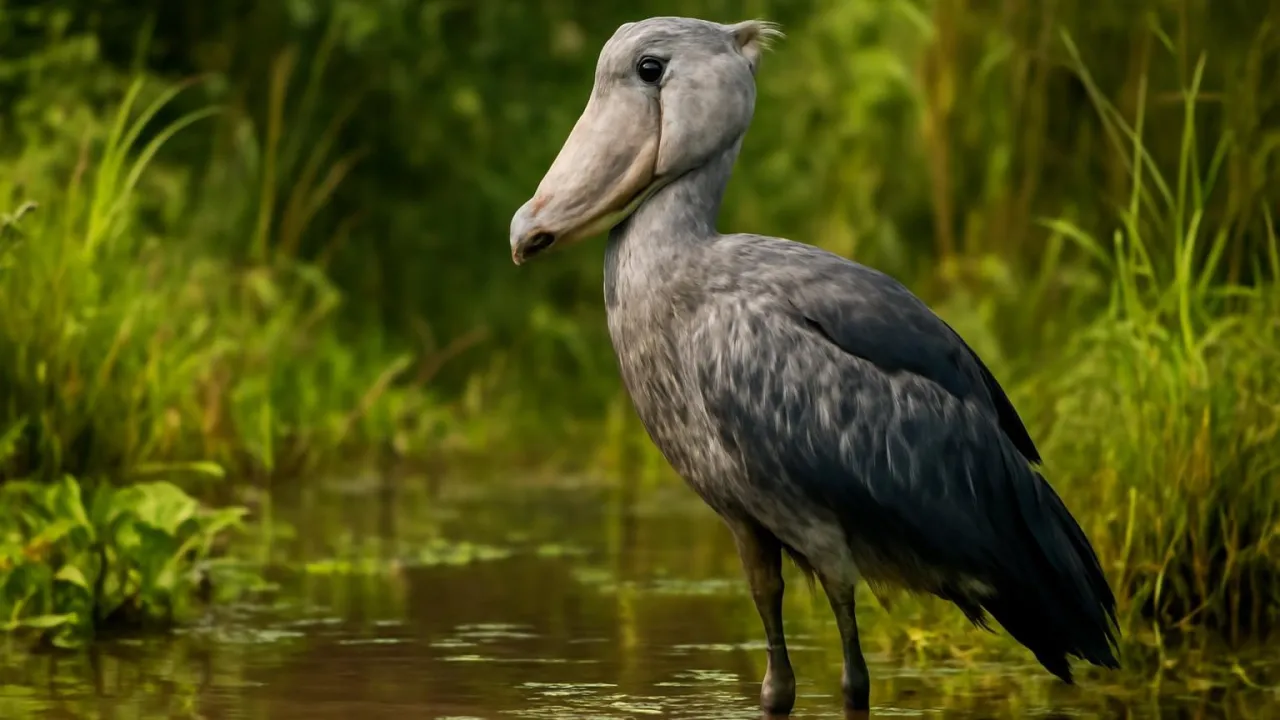
A shoebill’s beak can be 7 inches wide and very strong for catching prey!
✨ Word Sparks (Grade 2 Glossary)
Tap 🔊 to hear
wetlands
Land with lots of water and plants
prey
Animals that other animals eat for food
patient
Waiting calmly without moving or rushing
🪝
Have you ever seen a bird with a beak shaped like a big shoe?
1
Amazing Big Beak
The shoebill has a huge beak shaped like a shoe, which helps it catch fish easily. It uses its strong beak to grab slippery from the water. This big beak is unique and helps the bird survive well.
2
Swamp Home
Shoebills live in swamps and in Central Africa where water and tall plants grow. They stand very still in the water to wait for fish and frogs to come close. These wet places give the shoebill plenty of food and shelter.
3
What It Eats
Shoebills eat fish, frogs, and small reptiles like baby crocodiles, which they catch with their big beaks. They are hunters and wait quietly before striking fast. Their diet helps keep the swamp ecosystem balanced.
Shoebills can stand still for hours, waiting silently to catch their prey!
✨ Word Sparks (Grade 3 Glossary)
Tap 🔊 to hear
adaptation
A body change that helps survival
camouflage
Colors that help hide from others
predator
An animal that hunts other animals
🪝
Did you know the shoebill’s giant beak helps it catch slippery fish in swamps?
1
Unique Beak Adaptation
The shoebill’s beak is shaped like a shoe and is very wide and strong. This helps it catch slippery fish and small reptiles easily. Its hooked tip can grab prey tightly, preventing escape. This beak is a perfect tool for hunting in watery habitats.
2
Habitat and Camouflage
Shoebills live in Central African swamps and wetlands full of tall grasses and water. Their gray feathers help them blend in with the muddy, watery environment. This protects them from and helps them sneak up on prey. They often stand motionless for long times to avoid being seen.
3
Diet and Hunting
Shoebills mainly eat fish like lungfish and catfish, but also frogs and baby crocodiles. They use their sharp beak to catch and kill prey quickly. Their hunting style is patient and quiet, waiting for the perfect moment to strike. This helps them survive in a competitive ecosystem.
4
Role in the Ecosystem
As a top in its wetland habitat, the shoebill helps control fish and amphibian populations. This balance supports a healthy ecosystem. The shoebill’s presence indicates a clean and thriving wetland environment. Protecting its habitat is important for many other species too.
Shoebills can stay perfectly still for hours, blending into their wetland homes to catch prey!
✨ Word Sparks (Grade 4 Glossary)
Tap 🔊 to hear
ecosystem
All living and nonliving things in one place
symbiosis
When animals help each other live well
conservation
Protecting nature and animals from harm
🪝
How does the shoebill’s huge beak shape affect its life in African wetlands?
1
Beak Shape and Hunting Success
The shoebill’s enormous, shoe-shaped beak allows it to catch large fish and small reptiles efficiently, which is crucial for its survival in wetlands. Its hooked tip and sharp edges help it grip slippery prey tightly, preventing escape during hunting. This specialized beak shape evolved to solve the problem of catching elusive aquatic animals in dense swamp waters. Without this adaptation, the shoebill would struggle to find enough food.
2
Wetland Habitat and Camouflage
Shoebills inhabit freshwater swamps and marshes across Central Africa, especially in countries like Uganda, South Sudan, and Zambia. Their gray-blue feathers blend perfectly with the muddy water and tall grasses, providing excellent camouflage. This camouflage helps them avoid predators and sneak up on prey unnoticed. The health of these wetlands directly affects shoebill populations and the overall biodiversity of the region.
3
Ecosystem Role and Food Web
As a top predator, the shoebill controls populations of fish, frogs, and reptiles, maintaining balance in the wetland food web. By regulating prey numbers, it prevents overpopulation that could damage aquatic plants and water quality. Shoebills also benefit from symbiotic relationships with other species, such as sharing habitats with waterbirds that help alert them to danger. Human activities like wetland drainage threaten these delicate and the shoebill’s survival.
4
Geographic Distribution and Conservation
Shoebills are found mainly in Central African countries with large wetlands, but their populations are fragmented and declining due to habitat loss. efforts focus on protecting wetland habitats and raising awareness about the shoebill’s ecological importance. International cooperation is vital to preserve these birds and their unique environments. Protecting shoebills also helps safeguard many other species that share their habitat.
The shoebill’s beak is so large and strong it can catch baby crocodiles and large lungfish!
✨ Word Sparks (Grade 5 Glossary)
Tap 🔊 to hear
taxonomy
The science of naming and grouping living things
apex predator
Top animal hunter with no natural enemies
morphology
The shape and structure of an animal’s body
🪝
What makes the shoebill stork’s giant beak a remarkable evolutionary tool in wetland ecosystems?
1
Taxonomy and Scientific Classification
The shoebill stork, scientifically named Balaeniceps rex, belongs to the order Pelecaniformes and family Balaenicipitidae. It is a large, solitary bird native to the freshwater swamps and marshes of Central Africa. Its unique sets it apart from other stork species, with a stout body and an enormous bill shaped like a wooden shoe. This taxonomic classification reflects its evolutionary adaptations to a specialized wetland niche.
2
Physiological Mechanics of the Beak
The shoebill’s beak can measure up to 9.4 inches (24 centimeters) in length and 7 inches (18 centimeters) in width, making it one of the largest among birds. Its robust, hooked tip and sharp edges enable it to grasp and immobilize slippery prey such as lungfish, catfish, and baby crocodiles. The beak’s strong musculature allows precise control during hunting, while its broad shape aids in scooping prey from water and mud.
3
Conservation Status and Historical Context
Currently classified as Vulnerable by the IUCN, the shoebill faces threats from habitat destruction, wetland drainage, and human disturbance. Conservation programs focus on protecting critical wetland habitats across Uganda, South Sudan, and Zambia. Historically, the shoebill was first described scientifically in the 19th century, capturing the fascination of explorers and ornithologists due to its unusual appearance and hunting behavior.
4
Ecological Role and Quantitative Comparisons
As an in wetland ecosystems, the shoebill regulates fish and amphibian populations, contributing to ecological balance. It can remain motionless for up to three hours, a hunting strategy that maximizes prey capture success. Adult shoebills stand between 4 and 5 feet tall (1.2 to 1.5 meters) and weigh approximately 10 to 14 pounds (4.5 to 6.5 kilograms). Their wingspan ranges from 7.7 to 8.6 feet (2.3 to 2.6 meters), enabling slow, deliberate flight over wetlands.
5
Human Impact and Future Conservation
Human activities such as wetland drainage for agriculture and urban development threaten shoebill habitats and population stability. Conservation efforts include habitat protection, community education, and ecotourism initiatives that promote sustainable coexistence. Scientific research continues to monitor shoebill populations and study their ecological roles to inform effective conservation strategies. Protecting the shoebill also safeguards broader wetland biodiversity and ecosystem services.