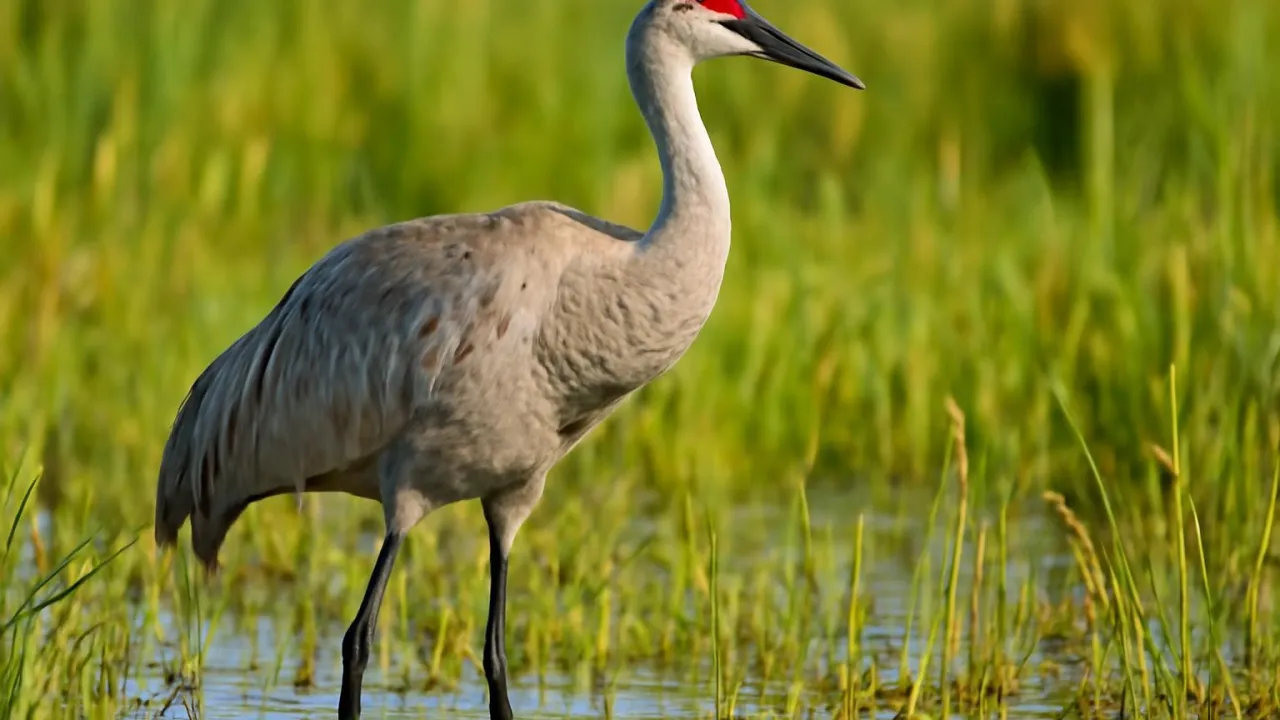
Sandhill cranes can fly over 1,000 miles in one day during migration!
✨ Word Sparks (Grade 2 Glossary)
Tap 🔊 to hear
wetlands
Land with water and plants growing there
migration
Birds flying far to find warm homes
flock
A group of birds flying or walking
🪝
Have you ever seen a bird that dances and flies far?
1
Tall Birds with Long Legs
Sandhill cranes have very long legs and necks. They live in and grasslands. These birds walk slowly to find food. They eat plants, insects, and small animals.
2
Loud Calls and Bright Red Heads
Their heads have bright red patches that help them talk. Sandhill cranes make loud calls to find each other. They also dance by jumping and bowing. Dancing helps them meet new friends.
3
Flying Long Distances
Every year, sandhill cranes fly thousands of miles to warmer places. They travel in big groups called . Flying helps them escape cold weather. They rest in safe along the way.
Sandhill cranes can fly up to 60 miles per hour during migration flights!
✨ Word Sparks (Grade 3 Glossary)
Tap 🔊 to hear
camouflage
Colors that help animals hide from others
migration
Long trips animals take to find warm homes
ecosystem
A place where plants and animals live together
🪝
Did you know sandhill cranes use dance and loud calls to survive?
1
Tall Birds with Long Legs and Necks
Sandhill cranes have long legs and necks that help them wade through wetlands. Their long legs keep their bodies above water while searching for food. They eat plants, insects, and small animals to get nutrients. These birds use their height to watch for predators nearby.
2
Bright Red Head and Loud Calls
The sandhill crane’s bright red patch on its head is a form of and communication. Loud calls help cranes find each other in large flocks during . Their calls also warn predators and keep the flock together. Dancing is a special adaptation to attract mates and strengthen bonds.
3
Migration and Flying in Flocks
Sandhill cranes migrate thousands of miles each year to warmer climates. Flying in flocks helps them save energy and protect against predators. They stop at wetlands to rest and feed during their long journey. is a vital survival strategy for these birds.
4
Wetlands and Ecosystem Role
Sandhill cranes live in wetlands that provide food and shelter. They help spread seeds and control insect populations, benefiting the . Their presence indicates healthy wetlands with good water quality. These birds are an important part of wetland food webs.
Sandhill cranes’ migration routes can cover over 2,500 miles each way every year!
✨ Word Sparks (Grade 4 Glossary)
Tap 🔊 to hear
adaptation
A body change that helps animals survive
migration
Long trips animals take to find warm homes
ecosystem
A place where plants and animals live together
🪝
How do sandhill cranes’ dances and calls affect their survival in wetlands?
1
Physical Adaptations for Wetlands
Sandhill cranes have long legs and necks that allow them to wade through deep wetlands without difficulty, which helps them access food sources unavailable to other animals. Their sharp beaks are perfect for catching insects, small fish, and plants, providing a varied diet. These physical traits are important that help them survive in their specific habitat. Their red crown is a distinctive feature that plays a role in communication and mate selection.
2
Communication and Social Behavior
The loud, trumpeting calls of sandhill cranes can be heard over long distances, which helps maintain contact among flock members during and in breeding areas. Their elaborate dances, which include bowing and jumping, strengthen pair bonds and help attract mates. This social behavior is essential for their reproductive success and survival. These behaviors also help reduce conflicts within flocks by establishing social order.
3
Migration and Ecosystem Impact
Sandhill cranes migrate thousands of miles from northern breeding grounds to southern wintering areas, using wetlands as critical stopover sites for rest and feeding. This helps balance by controlling insect populations and spreading plant seeds across regions. Their presence in wetlands indicates healthy ecosystems, as they rely on clean water and abundant food. Human activities like wetland destruction threaten their migration routes and survival.
4
Geographic Range and Conservation
Sandhill cranes are found across much of North America, from Alaska to Mexico, and parts of Siberia. Conservation efforts focus on protecting wetland habitats and corridors to ensure their survival. Wetland restoration projects help maintain the these birds depend on. Understanding their geographic range helps scientists monitor population health and address environmental threats.
2. Why are wetlands important for sandhill cranes?
🤯 Mind-Blowing Fact • Grade 5
Sandhill cranes can migrate over 2,500 miles each year, flying up to 60 miles per hour!
✨ Word Sparks (Grade 5 Glossary)
Tap 🔊 to hear
physiology
How a living thing’s body works and moves
migration
Long trips animals take to find warm homes
conservation
Protecting animals and places from harm
🪝
What amazing adaptations let sandhill cranes thrive across vast wetlands and long migrations?
1
Scientific Classification and Physical Traits
The sandhill crane, scientifically named Antigone canadensis, belongs to the family Gruidae, known for tall, long-legged birds. Adults typically stand between 3.9 and 4.5 feet tall and weigh from 6.6 to 14 pounds. Their long legs and necks facilitate wading in wetlands, while their wingspan of up to 7 feet enables powerful flight. The red crown is a unique physiological trait used in social signaling and mate recognition.
2
Physiological Mechanics of Flight and Feeding
Sandhill cranes use strong flight muscles and aerodynamic wing shapes to migrate thousands of miles annually, reaching speeds up to 60 miles per hour. Their beaks are adapted for probing soil and catching small animals, while their digestive systems efficiently process plant matter and insects. Their long legs help them forage in shallow water without disturbing sediment too much. These physiological features optimize survival in diverse wetland habitats.
3
Migration Patterns and Conservation Challenges
These birds undertake extensive from breeding grounds in northern North America to wintering sites in the southern United States and Mexico. Migration routes can exceed 2,500 miles one way, requiring stopovers in critical wetlands for rest and nourishment. Habitat loss due to wetland drainage and urban development threatens these migratory pathways. efforts focus on protecting these habitats and maintaining migration corridors to support population stability.
4
Ecological Role and Human Impact
Sandhill cranes play a vital role in wetland ecosystems by controlling insect populations and dispersing seeds, which promotes plant diversity. Their presence indicates healthy wetland conditions, making them important bioindicators. Human activities such as agriculture and construction disrupt wetlands, affecting crane populations negatively. Efforts to restore wetlands and create protected areas help mitigate these impacts and support biodiversity.
5
Quantitative Comparisons and Historical Context
Sandhill cranes can fly at speeds up to 60 miles per hour and weigh up to 14 pounds, making them among the largest North American flying birds. Their distances surpass 2,500 miles, comparable to traveling across several states. Historically, these birds were hunted extensively, but legal protections and habitat have helped populations recover. Understanding these quantitative details highlights their impressive endurance and ecological importance.