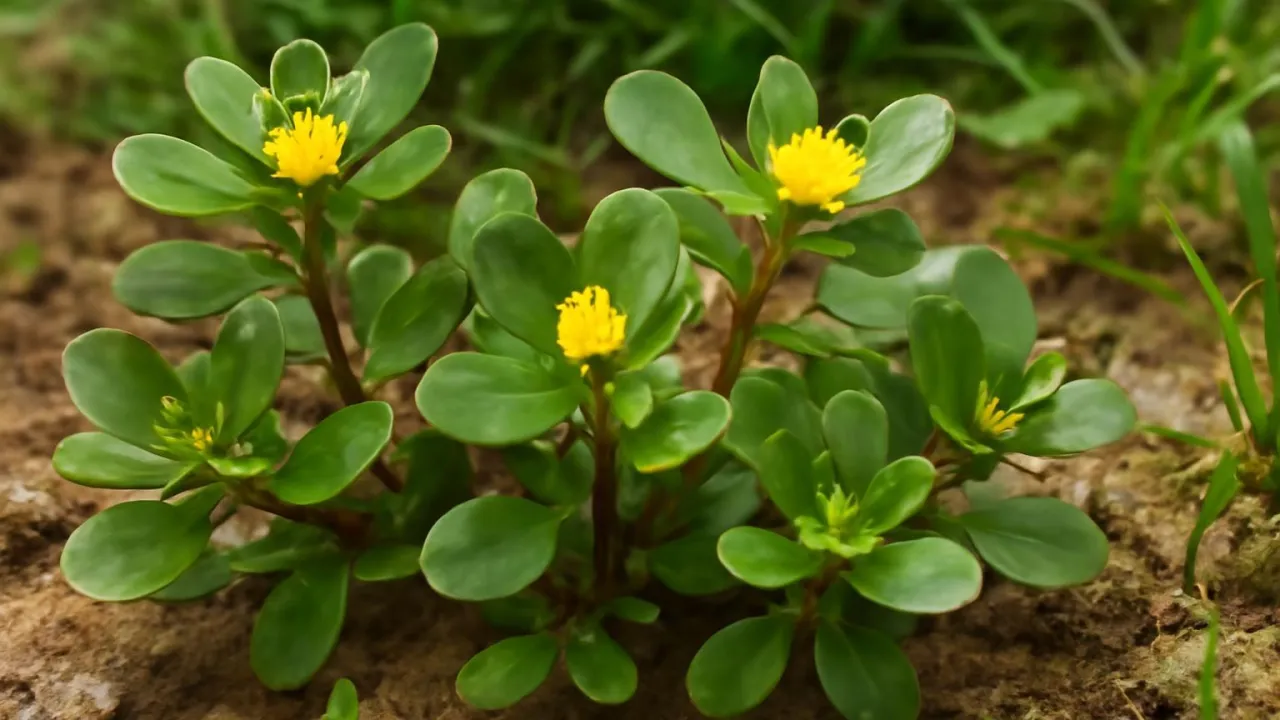
Purslane contains more omega-3 fatty acids than many leafy greens!
✨ Word Sparks (Grade 2 Glossary)
Tap 🔊 to hear
stems
Parts that hold up leaves and carry water
seeds
Tiny parts that grow into new plants
sunlight
Light from the sun that plants need to grow
🪝
Have you ever tasted a weed that is also a superfood?
1
Purslane’s Leaves and Stems
Purslane has thick, green leaves and reddish that grow low to the ground. These parts store water well to survive dry weather. The leaves taste a little sour and fresh, making them good to eat raw or cooked.
2
Where Purslane Lives
Purslane grows in warm places like gardens, roadsides, and fields. It can live in poor soil and sunny spots that many plants avoid. It spreads quickly in summer and can grow almost anywhere in the world.
3
How It Grows and Grows
Purslane starts from tiny planted in the soil. It grows fast using and water from rain or soil. It can survive dry times easily because it stores water in its leaves and .
Purslane contains more omega-3 fatty acids than spinach and kale combined!
✨ Word Sparks (Grade 3 Glossary)
Tap 🔊 to hear
succulent
Plants that store water in thick leaves or stems
pollination
When pollen helps plants make seeds to grow
nutrients
Food parts that help plants and animals grow
🪝
Did you know purslane is a weed that is also a healthy vegetable?
1
Purslane’s Special Features
Purslane has leaves that store water to survive dry weather. Its reddish stems help support the plant close to the ground. This adaptation helps purslane resist drought and heat. The leaves taste slightly sour and are edible.
2
Where It Grows and Thrives
Purslane grows in many places worldwide, especially in warm, sunny habitats. It often appears in gardens, roadsides, and disturbed soil. Because it can grow in poor soil, it is considered a hardy plant. This helps it spread quickly and avoid predators.
3
Life Cycle and Growth
Purslane starts from tiny seeds that germinate quickly in warm soil. It grows fast by absorbing and sunlight through its leaves. is not needed for it to spread because it can also grow from cut stems. This helps purslane survive in many environments.
4
Why People Eat Purslane
Purslane is rich in omega-3 fatty acids, which are good for the heart and brain. It also contains vitamins and antioxidants that help protect cells. Many cultures use purslane in salads and cooked dishes. Its nutritional value makes it a superfood weed.
Purslane’s omega-3 content rivals that of many fish oils, making it a unique plant source!
✨ Word Sparks (Grade 4 Glossary)
Tap 🔊 to hear
pioneer species
First plants to grow in disturbed places
erosion
When soil is worn away by wind or water
antioxidants
Substances that protect cells from damage
🪝
How does purslane’s unique biology help it thrive worldwide as a superfood weed?
1
Adaptations for Survival
Purslane’s succulent leaves store water, allowing it to survive drought conditions common in warm climates. Its low-growing reddish stems reduce water loss by limiting exposure to wind and sun. These adaptations help purslane thrive in harsh environments where many plants cannot survive. The plant’s ability to store water makes it very drought resistant.
2
Role in Ecosystems
Purslane acts as a that quickly colonizes disturbed soils, preventing and improving soil health. It provides food for insects and small animals, playing a role in local food webs and supporting biodiversity. Humans harvest purslane for its nutritional benefits, linking it to agriculture and foraging practices worldwide.
3
Geographic Distribution
Purslane is found on every continent except Antarctica, thriving especially in warm temperate and tropical regions. It grows in diverse habitats such as gardens, roadsides, and agricultural fields. Its ability to grow in poor soils and tolerate heat allows it to spread widely and quickly across different ecosystems.
4
Human Impact and Use
People have used purslane for centuries as a nutritious food source rich in omega-3 fatty acids and . Its cultivation and foraging support sustainable diets and traditional medicine. However, purslane can also be considered a weed in some crops, requiring careful management to avoid crop damage.
Purslane’s omega-3 fatty acid content rivals that of many fish oils, making it a rare plant superfood!
✨ Word Sparks (Grade 5 Glossary)
Tap 🔊 to hear
succulent
A plant that stores water in thick leaves or stems
CAM photosynthesis
A way plants save water by opening stomata at night
pioneer species
First plants to grow in disturbed or new habitats
🪝
What makes purslane an exceptional plant from a botanical and nutritional science perspective?
1
Scientific Classification and Botany
Purslane, scientifically named Portulaca oleracea, belongs to the Portulacaceae family. It is a annual plant characterized by fleshy, water-storing leaves and reddish stems. Botanically, purslane is classified as a botanical fruit due to its seed-containing capsules, although it is commonly consumed as a leafy vegetable. Its rapid growth and prolific seed production contribute to its widespread distribution.
2
Physiological Adaptations and Mechanics
Purslane’s leaves utilize , which allows stomata to open at night, reducing water loss during hot days. This physiological mechanism enables purslane to thrive in arid and semi-arid environments. Its thick cuticle and low leaf surface area further minimize transpiration, making it highly drought-resistant. The plant’s root system is shallow but extensive, efficiently absorbing moisture after rainfall.
3
Nutritional and Medicinal Importance
Purslane contains exceptionally high levels of omega-3 fatty acids, particularly alpha-linolenic acid, surpassing most leafy greens. It also provides vitamins A, C, and E, as well as antioxidants that combat oxidative stress in human cells. Traditionally, purslane has been used in folk medicine to treat inflammation and gastrointestinal issues, highlighting its ethnobotanical significance.
4
Ecological Role and Human Impact
Ecologically, purslane serves as a that stabilizes disturbed soils and supports biodiversity by providing habitat and food for insects and small animals. Its resilience to environmental stressors makes it valuable in sustainable agriculture and permaculture systems. However, in some regions, purslane is considered an invasive weed, requiring management to protect crop yields.
5
Quantitative Comparisons and Global Presence
Purslane grows to 4–8 inches tall and can spread rapidly, producing thousands of seeds per plant. It grows in temperatures ranging from 50°F to 95°F (10°C to 35°C) and tolerates drought better than many common vegetables. Nutritionally, purslane’s omega-3 content is comparable to that found in 3 ounces of fatty fish, making it one of the richest plant sources of these essential fatty acids.