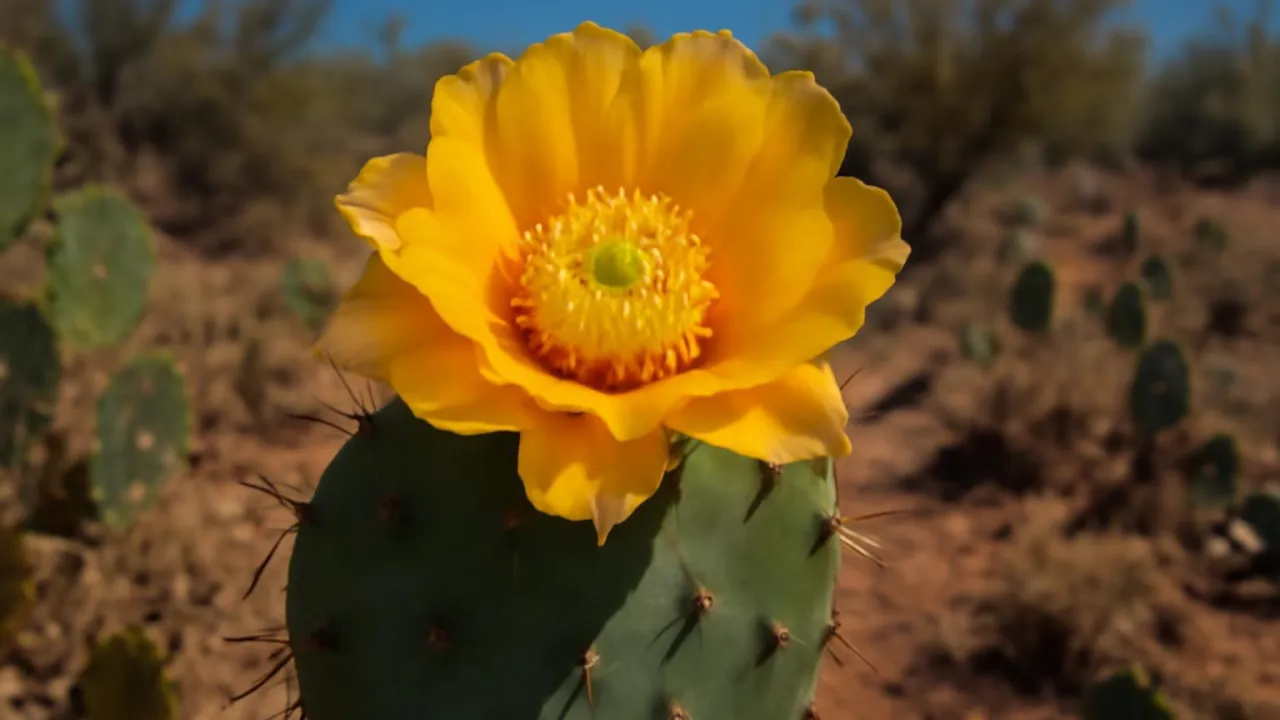
Prickly pear flowers only last one day but produce tasty fruit afterward!
✨ Word Sparks (Grade 2 Glossary)
Tap 🔊 to hear
pollinate
When insects help flowers make seeds
nectar
Sweet juice that flowers make for insects
desert
A very dry and hot place with little rain
🪝
Have you ever seen a flower that grows on a cactus pad in the desert?
1
Bright Yellow Blooms
The prickly pear cactus flower is bright yellow and very colorful. It grows on thick green pads covered with sharp spikes. Bees and butterflies often visit the flower to drink and help .
2
Desert Habitat
This cactus lives in hot where there is little rain. It can survive long dry periods because it stores water in its pads. The flower blooms during the warm months when pollinators are active.
3
Special Flower Features
The flower opens early in the morning and closes by noon to protect itself from the hot sun. Its bright color helps attract insects that spread pollen. The flower also grows close to the cactus spikes for protection.
Prickly pear flowers close by noon to protect pollen from drying out in the heat.
✨ Word Sparks (Grade 3 Glossary)
Tap 🔊 to hear
pollination
How flowers make seeds with help from insects
adaptation
A special trait that helps plants survive
predator
An animal that hunts other animals or plants
🪝
Did you know prickly pear cactus flowers use bright colors to survive in the desert?
1
Desert Adaptations
The prickly pear cactus flower grows on thick, flat pads that store water to survive drought. Its bright yellow petals attract pollinators like bees and butterflies, which help with . The flower’s location near sharp spikes offers protection from . These help the plant thrive in harsh desert conditions.
2
Pollination and Survival
is when pollen moves from one flower to another to make seeds. The prickly pear flower produces nectar to attract pollinators. Its bright color and sweet nectar are important for this process. Without pollination, the cactus cannot produce fruit or new plants.
3
Flower Structure
The flower opens early in the morning and closes by noon to avoid damage from the intense sun. This behavior helps the flower save water and protects its delicate parts. The petals are soft but close tightly to shield the pollen. This is an important for desert life.
4
Ecosystem Role
Prickly pear cacti provide food and shelter for many desert animals. The flowers attract insects, which are food for birds and lizards. The cactus pads offer protection with their spikes. This creates a small ecosystem where many creatures depend on the cactus for survival.
Prickly pear flowers open only during cooler hours to protect pollen and attract pollinators efficiently.
✨ Word Sparks (Grade 4 Glossary)
Tap 🔊 to hear
symbiotic
A close relationship where both species benefit
biodiversity
Many different kinds of plants and animals
arid
Very dry with little rainfall
🪝
How do prickly pear cactus flowers survive the harsh desert sun and help their ecosystem?
1
Desert Survival Strategies
Prickly pear cactus flowers have evolved to bloom early in the morning and close by noon to avoid the intense desert heat, which can damage pollen and reduce pollination success. Their bright yellow color attracts pollinators such as bees and butterflies, which are most active during cooler hours. This timing maximizes the flower’s chances of reproduction in a challenging environment.
2
Role in the Food Web
These flowers play a crucial role in desert food webs by providing nectar to pollinators, which in turn serve as prey for birds, reptiles, and small mammals. The cactus pads offer shelter and protection with their sharp spines, creating a microhabitat that supports diverse species. This relationship helps maintain desert and ecosystem balance.
3
Geographic Distribution and Growth
Prickly pear cacti are native to and semi-arid regions across North and South America, thriving in deserts, grasslands, and scrublands. They grow best in full sun with minimal water, storing moisture in their fleshy pads. Flowering typically occurs in spring and early summer, depending on local climate and rainfall patterns.
4
Human and Agricultural Impact
Humans have long used prickly pear cacti for food, medicine, and livestock feed. The flowers and fruits are harvested in some cultures for culinary uses, while the plants help prevent soil erosion in dry areas. However, overharvesting and habitat loss can threaten local populations, making conservation efforts important.
1. Why do prickly pear flowers open only in the morning?
2. How do prickly pear cacti help desert animals?
🤯 Mind-Blowing Fact • Grade 5
Prickly pear cactus pads can store up to 90% water by weight, aiding survival in extreme heat.
✨ Word Sparks (Grade 5 Glossary)
Tap 🔊 to hear
cladodes
Flat cactus pads that store water and do photosynthesis
xeric
Very dry environment with little water
trophic
Relating to feeding levels in an ecosystem
🪝
What unique adaptations allow prickly pear cactus flowers to thrive and support desert ecosystems?
1
Taxonomy and Botanical Context
The prickly pear cactus belongs to the genus Opuntia within the Cactaceae family, characterized by flat, fleshy pads called . These pads perform photosynthesis and store water, enabling survival in environments. The flowers are typically bright yellow, though some species produce pink or red blooms, and they develop directly from the areoles on the pads.
2
Physiological Adaptations and Flower Mechanics
Prickly pear flowers open early in the morning to take advantage of cooler temperatures and active pollinators, closing by midday to protect delicate reproductive structures from intense solar radiation. The petals contain pigments that reflect ultraviolet light, attracting native bee species. Nectar production is timed to coincide with pollinator activity, optimizing reproductive success in arid conditions.
3
Ecological Role and Conservation Status
These flowers support desert ecosystems by providing nectar to a variety of pollinators, including bees, butterflies, and hummingbirds, which in turn sustain higher levels. Prickly pear cacti also contribute to soil stabilization and serve as a food source for herbivores. While generally widespread, some species face threats from habitat destruction and invasive species, prompting conservation initiatives.
4
Human Uses and Cultural Importance
Indigenous peoples and local communities have utilized prickly pear flowers and fruits for centuries in traditional medicine, cuisine, and dye production. The fruits, known as tunas, are rich in vitamins and antioxidants. Additionally, the cactus pads are used as fodder during droughts, highlighting the plant’s agricultural significance in arid regions.
5
Quantitative Comparisons and Environmental Limits
Prickly pear pads can store up to 90% water by weight, allowing survival in temperatures exceeding 100 degrees Fahrenheit (38 degrees Celsius). Flowers measure between 2 to 4 inches (5 to 10 centimeters) in diameter and typically last less than 24 hours. These adaptations enable the cactus to thrive in deserts with annual rainfall often below 10 inches (25 centimeters).