🏢 WorkplacePrecinct Squad Rooms, Community Neighborhoods & Forensic Labs
⚡ Everyday Impact SparkConnects tiny physical clues and witness stories to solve tough community mysteries fairly
🤯 Mind-Blowing Fact • Grade 1
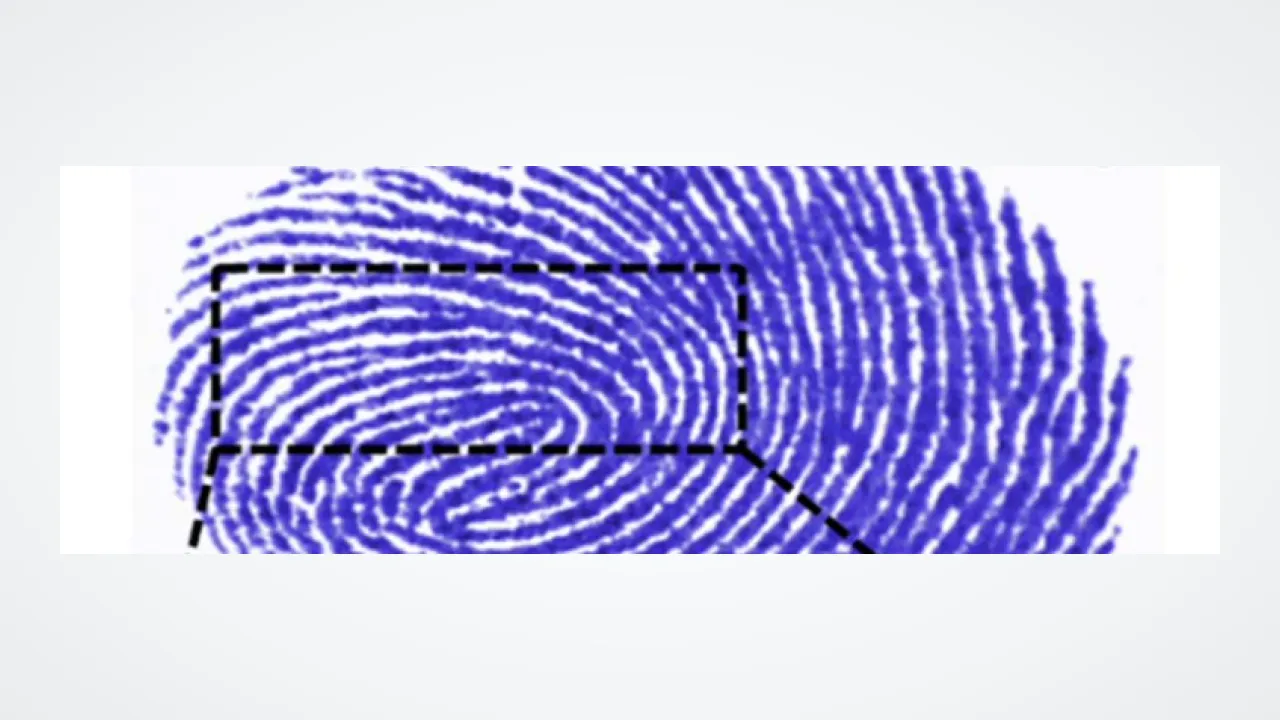
No two people in the whole world have the exact same fingerprints—not even identical twins!
✨ Word Sparks (Grade 1 Glossary)
Tap 🔊 to hear
clue
a small hint that solves a mystery
fingerprint
tiny skin lines left by your fingertips
witness
someone who saw an event happen firsthand
🪝
How can a tiny smudged thumbprint help return a lost bicycle to its owner?
1
Looking Close for Clues
Brush, brush! Soft powder dusts a shiny metal gate. Up pops a neat swirl from a thumb! When something goes missing in town, a sharp-eyed investigator steps in to solve the puzzle.
2
Notebooks and Kind Questions
They wear neat everyday clothes and carry a shiny badge. They ask neighbors what they saw and write careful notes in a pocket pad.
3
Finding Fair Answers
Piece by piece, every real fits together like a jigsaw puzzle. Fair teamwork helps return lost things and keeps neighborhoods safe!
1. Why are fingerprints such helpful clues for an investigator?
2. What do investigators do when talking with neighborhood witnesses?
🤯 Mind-Blowing Fact • Grade 2
Fine magnetic powders can reveal hidden fingerprints left on paper, glass, plastic, or painted wood days earlier!
✨ Word Sparks (Grade 2 Glossary)
Tap 🔊 to hear
evidence
real facts or objects that prove truth
precinct
a local police station serving a neighborhood
timeline
events placed in exact order by time
🪝
Why do investigators wear gloves and take photos before touching a single clue at a scene?
1
Protecting Every Tiny Detail
Yellow tape marks off the doorway of a museum where a rare coin disappeared overnight. Before moving anything, an investigator snaps clear photographs from every angle and slips on clean gloves so fresh smudges never mix with real clues.
2
Prints, Tracks, and Cameras
Using soft camel-hair brushes and fine powder, the investigator lifts hidden fingerprints onto clear tape. Outside on the walkway, muddy shoe tracks and nearby security cameras reveal which direction a visitor walked and at what exact minute.
3
Checking Facts With Care
Back at the station desk, investigators compare witness stories, check computer records, and follow only proven facts. Honest detective work protects innocent people and brings fair answers to the whole community.
What does a century-old rule called 'Locard's Exchange Principle' teach every modern investigator?
1
Every Contact Leaves a Trace
Over a hundred years ago, French scientist Edmond Locard noticed something remarkable: whenever two things touch, they always trade tiny traces! Dust from a sneaker sole stays on a floor mat, while carpet fibers cling to the sneaker. Investigators use this rule to spot clues others walk right past.
2
Securing the Chain of Custody
At an investigation scene, every item collected—from a paint chip on a dented fender to a lost backpack—goes into a sealed, labeled bag. Signing each transfer on a log called the chain of Custody proves that nobody altered or mixed up the evidence on its trip to the crime lab.
3
Partnering With Forensic Scientists
While specialists test fibers, tire treads, and DNA in laboratories, investigators build the human side of the case. They streets, review traffic camera timestamps, and interview witnesses using open-ended questions that avoid leading someone's memory.
4
Patience, Logic, and Constitutional Rules
Real cases rarely wrap up in thirty minutes like television shows! Detectives follow constitutional rules, obtain judge-approved before searching private property, and let verified facts lead the way.
2. Why must investigators ask a judge for a search warrant before checking private property?
🤯 Mind-Blowing Fact • Grade 4
The FBI's national fingerprint computer system can compare a single lifted print against more than one hundred million stored prints in just minutes!
✨ Word Sparks (Grade 4 Glossary)
Tap 🔊 to hear
alibi
proof someone was somewhere else during events
hypothesis
a testable explanation built from early clues
magistrate
a court official who reviews warrant requests
🪝
How do real-world investigators combine digital trails, physical science, and constitutional law to solve complex cases?
1
Beyond Uniform Patrol
While uniformed patrol officers respond first to emergencies and direct neighborhood safety, complex mysteries require weeks or months of focused follow-up. After years of patrol experience and specialized exams, officers earn their gold detective shield. Wearing business attire rather than tactical uniforms helps witnesses feel comfortable sharing sensitive memories during interviews at homes, schools, or businesses.
2
Specialized Units for Modern Challenges
Large police departments organize investigators into specialized squads. Property and art-theft detectives track stolen goods across state lines; cybercrime specialists trace encrypted digital footprints when scammers target families online; and missing-persons teams coordinate search grids, transit cameras, and regional alerts to reunite lost children or seniors with loved ones.
3
Deductive Logic and Avoiding Tunnel Vision
Great detectives think like scientists testing hypotheses. Instead of picking a suspect early and ignoring clues that disagree—a mistake called confirmation bias—skilled investigators test objectively. If cell-tower records, store receipts, or lab DNA clear a person of interest, the detective immediately updates the timeline and follows new leads.
4
Fourth Amendment Guardrails and Courtroom Testimony
In the United States and Virginia civic systems, every investigation operates under the Fourth Amendment of the Bill of Rights, which guards citizens against unreasonable searches and seizures. Detectives present sworn probable cause to impartial before executing warrants, document every interview transparently, and present clear, unbiased testimony in court so juries can reach just verdicts.
1. How do good detectives avoid confirmation bias during an investigation?
2. Which part of the U.S. Constitution requires probable cause and search warrants?
🤯 Mind-Blowing Fact • Grade 5
Forensic investigators use 3D terrestrial laser scanners that bounce millions of light pulses off walls to build millimeter-accurate virtual walkthroughs of an entire room in minutes!
✨ Word Sparks (Grade 5 Glossary)
Tap 🔊 to hear
dactyloscopy
scientific identification using unique fingerprint ridge patterns
exculpatory
evidence proving someone is innocent of wrongdoing
triangulation
pinpointing location using distances from three towers
🪝
Why does modern criminal investigation depend just as heavily on cognitive psychology and constitutional law as it does on DNA and digital forensics?
1
The Scientific Evolution of Investigative Work
When London's Metropolitan Police established its first small detective branch at Scotland Yard in 1842, investigators relied almost entirely on handwritten ledgers, eyesight, and street informants. Over the next two centuries, breakthroughs in (fingerprint classification), trace microscopy, DNA profiling, and digital forensics transformed detective work into an interdisciplinary discipline. Today's municipal, state, and federal investigators synthesize physical evidence, electronic metadata, and behavioral insight to reconstruct complex events accurately.
2
Crime Scene Reconstruction and Chain of Custody
Before a single item is lifted from a scene, investigators and crime-scene technicians establish inner and outer perimeters, photograph spatial relationships with millimeter scales, and generate 3D laser lidar scans of rooms or roadways. Latent prints on non-porous surfaces may be developed with cyanoacrylate vapor, while trace biological samples are sealed in breathable paper envelopes so moisture cannot degrade DNA strands. Every handoff is logged in tamper-evident chain-of-custody records to guarantee scientific integrity in court.
3
Cognitive Interviewing and Memory Science
Human memory does not work like a flawless video recorder; stress and leading questions can unintentionally alter what an eyewitness recalls. Trained in cognitive interviewing techniques developed by psychologists, modern investigators ask witnesses to mentally recreate sights, sounds, and surroundings in their own words without interruption. Similarly, photo lineups are administered 'double-blind'—by an officer who does not know which photograph shows the suspect—so subtle body language never influences a witness's choice.
4
Digital Footprints and Financial Trails
In twenty-first-century investigations—ranging from organized cargo theft to municipal fraud and cyber extortion—crucial clues often live inside silicon chips rather than dusty footprints. Working alongside certified digital examiners under strict judicial warrants, detectives correlate cellular tower , encrypted router logs, license-plate reader timestamps, and banking ledgers while using cryptographic hash values to prove copied hard drives remain bit-for-bit identical to originals.
5
Constitutional Due Process and Public Trust
Ultimately, a detective serves truth rather than mere accusation. Guided by Fourth, Fifth, and Sixth Amendment protections—including probable-cause affidavits, Miranda advisements, and full disclosure of evidence that favors the defense—ethical investigators uphold due process, ensuring innocent citizens are exonerated while accountability strengthens community trust.