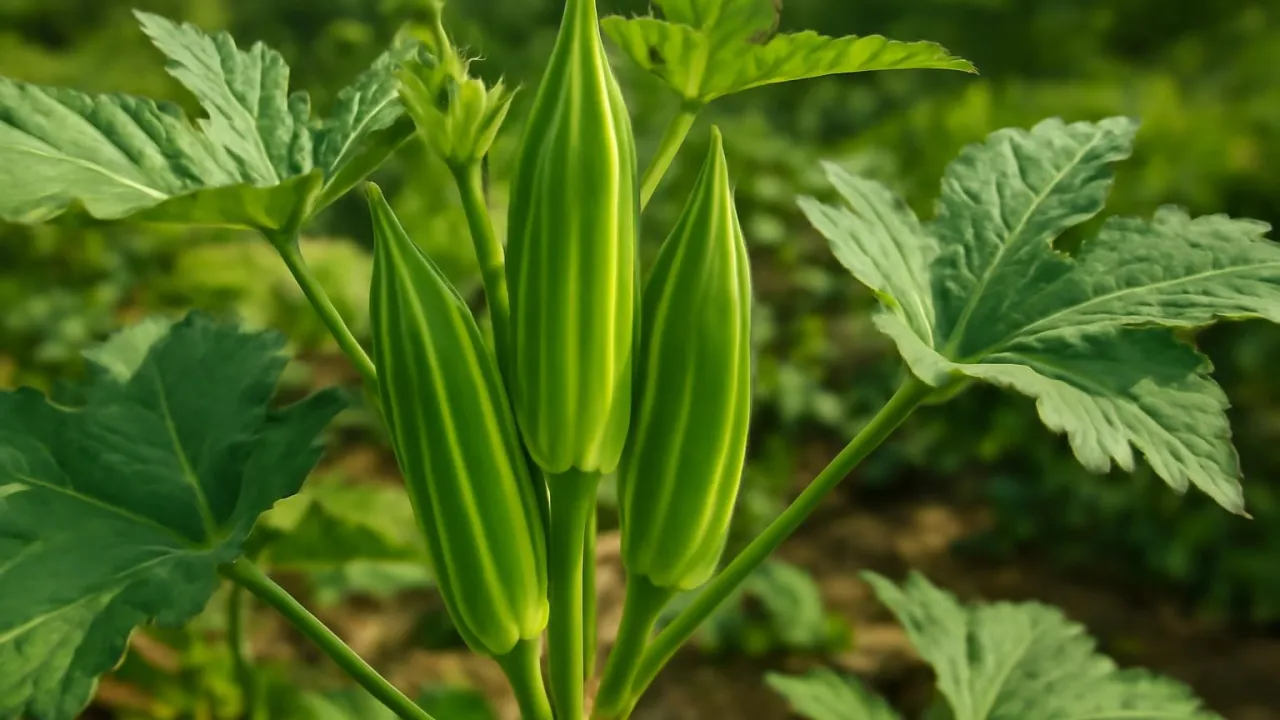
Okra’s slimy pods are a natural thickener used in cooking worldwide!
✨ Word Sparks (Grade 2 Glossary)
Tap 🔊 to hear
pollination
When bees help flowers make seeds
pods
Green cases that hold seeds inside
tropical
Warm places near the equator
🪝
Have you ever touched okra’s slimy green pods?
1
Okra’s Slimy Pods
Okra has long green that feel slimy inside when you touch them. The slimy texture helps thicken soups and stews when cooked. People enjoy eating okra in many warm places around the world.
2
Where Okra Grows
Okra grows best in warm, sunny places like and subtropical regions. It needs full sun and regular water to grow tall and healthy. Bees visit okra flowers to help with , which makes seeds.
3
How Okra Grows
Okra plants can grow from three to six feet tall in gardens or farms. They start as small seeds and grow leaves and flowers before making . The pods hold seeds that can grow new okra plants.
Okra’s slimy mucilage helps it survive dry heat and thickens many dishes!
✨ Word Sparks (Grade 3 Glossary)
Tap 🔊 to hear
mucilage
A slimy substance plants make to hold water
pollination
When pollen moves from one flower to another
nutrients
Food plants get from soil to grow strong
🪝
Why does okra have slimy pods that help it survive?
1
Okra’s Slimy Adaptation
Okra pods are covered with a slimy that helps retain moisture. This slime also acts as a natural thickener in cooking and protects seeds inside. The slimy texture is an adaptation to hot climates where water is scarce.
2
Growing in Warm Habitats
Okra thrives in tropical and subtropical regions where temperatures are warm. It needs full sun and well-drained soil to absorb and water. These conditions help okra grow tall and produce many pods for seed dispersal.
3
Pollination and Seed Spread
Bees pollinate okra flowers by transferring pollen between blossoms. After , pods develop and mature to hold seeds. When pods dry, they split open to release seeds, allowing new plants to grow and continue the life cycle.
4
Okra’s Role in Ecosystems
Okra plants provide food for humans and some animals, fitting into food webs. Its flowers attract pollinators like bees, which support other plants too. Farmers grow okra for food and income, showing its importance in agriculture.
Okra’s mucilage not only helps survival but also supports many pollinators in ecosystems!
✨ Word Sparks (Grade 4 Glossary)
Tap 🔊 to hear
symbiotic
Two living things helping each other
biodiversity
Many different plants and animals living together
agriculture
Growing plants and raising animals for food
🪝
How does okra’s slimy pod help it survive and support ecosystems?
1
Slimy Pods Help Survival
Okra produces slimy pods filled with mucilage that retains moisture during hot, dry weather, helping the plant survive drought. This slimy coating also protects seeds inside from drying out and damage caused by insects or animals. Because of this protection, seeds have a better chance of growing into new plants.
2
Okra’s Role in Food Webs
Okra plants serve as a food source for humans, insects, and some animals, fitting into complex food webs. The flowers attract pollinators like bees, which help fertilize other plants, creating a relationship that supports . This relationship helps maintain healthy ecosystems where many species depend on each other.
3
Growing Conditions and Distribution
Okra grows best in tropical and subtropical climates with full sun and warm temperatures between 75 and 95 degrees Fahrenheit. It is widely cultivated in Africa, Asia, and the southern United States, where it supports local and diets. Farmers choose okra because it grows well in warm soils and provides nutritious food.
4
Human Impact and Agriculture
Farmers cultivate okra because it provides nutritious food rich in vitamins and fiber. Sustainable farming practices help maintain soil health and reduce pesticide use, which benefits the environment and preserves okra’s natural habitats. These practices also support pollinators and help keep the ecosystem balanced.
Okra’s mucilage is a natural polysaccharide that both protects seeds and thickens foods globally!
✨ Word Sparks (Grade 5 Glossary)
Tap 🔊 to hear
polysaccharide
A complex sugar molecule found in plants
desiccation
Drying out or losing water
heirloom
Old plant variety passed down through families
🪝
What makes okra’s slimy pods a unique adaptation in tropical agriculture?
1
Scientific Classification and Origin
Okra, scientifically named Abelmoschus esculentus, belongs to the Malvaceae family and likely originated in Africa. It is now widely cultivated in tropical and subtropical regions worldwide for its edible pods. This plant is both a vegetable and a botanical fruit because its pods contain seeds.
2
Physiological Mechanics of Mucilage
The slimy mucilage inside okra pods is a complex that retains water and reduces seed . This mucilage also thickens food when cooked, a property exploited in many cuisines globally. The pods’ structure protects seeds from harsh environmental conditions and aids in seed dispersal.
3
Agricultural Importance and Conservation
Okra is an important crop in many developing countries, providing essential nutrients like vitamins A and C, fiber, and antioxidants. Sustainable farming practices, including crop rotation and organic pest control, help conserve soil health and biodiversity in okra-growing regions. Conservation efforts focus on preserving varieties with genetic diversity.
4
Quantitative Growth and Environmental Needs
Okra plants typically grow between three and six feet tall, thriving in temperatures from 75 to 95 degrees Fahrenheit (24 to 35 degrees Celsius). They require full sun exposure and moderate watering, with pods maturing about 50 to 65 days after planting. The mucilage content varies depending on temperature and soil moisture.
5
Culinary and Cultural Significance
Okra is a staple in many cuisines such as Southern United States gumbo and West African stews, valued for its thickening properties. Its botanical classification as a fruit surprises many cooks who consider it a vegetable. The plant’s cultural importance spans centuries, linking agriculture, nutrition, and culinary traditions worldwide.