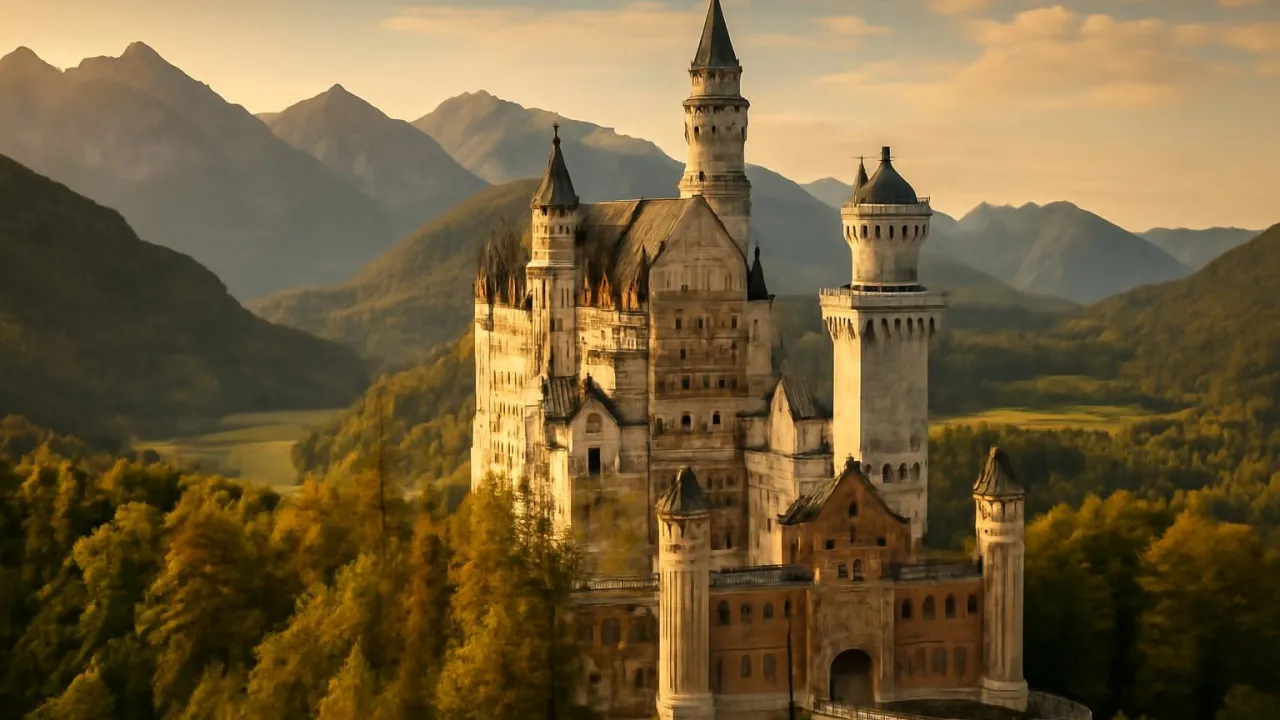
Over 1.5 million people visit Neuschwanstein Castle every year!
✨ Word Sparks (Grade 2 Glossary)
Tap 🔊 to hear
cliff
A steep, high rock side.
fairytale
A magical made-up story.
visit
To go see a place.
🪝
Can you imagine climbing to a castle in the clouds?
1
A Magical Mountain Castle
Neuschwanstein Castle rises above green trees and rocky . Its tall white towers sparkle in the sunlight. Many people think it looks like a castle.
2
Built for a Dreaming King
King Ludwig II wanted a castle like in stories. Workers built it with strong stone and tall walls. The king loved music and art, so the castle is full of pretty rooms.
3
A Place Many People Visit
Today, people from all over the world Neuschwanstein. They walk up steep paths to see the castle. The view from the top is amazing and magical.
Neuschwanstein’s Throne Room has a giant chandelier shaped like a golden crown!
✨ Word Sparks (Grade 3 Glossary)
Tap 🔊 to hear
foundation
The strong base under a building.
acoustic
How sound moves in a space.
monument
A special building that honors history.
🪝
What secrets might echo inside a castle high above the clouds?
1
A Dream Castle in the Alps
Neuschwanstein Castle stands on a rocky hill in the Bavarian Alps. Its bright towers and pointed roofs look like something from a fairytale. King Ludwig II wanted a magical place inspired by legends and music. The castle’s white limestone walls shine against the green forests below.
2
How Was It Built?
Building Neuschwanstein was a huge engineering challenge. Workers used strong stone and built deep to keep it steady on the cliff. Many arches and towers help support the heavy structure. The castle’s design uses both old and new building ideas from the 1800s.
3
Rooms Full of Art and Music
Inside, the castle has grand halls and painted ceilings. King Ludwig loved composer Richard Wagner, so rooms show scenes from his operas. The castle’s make music sound beautiful in the big halls. Visitors are amazed by the colorful art and shiny gold decorations.
4
A Famous Monument Today
Neuschwanstein is now a visited by people worldwide. Its towers and turrets inspired the Disney castle design. The castle helps us learn about history, legends, and how people built amazing things. It stands as a symbol of dreams and imagination.
1. What helped keep the castle steady on the cliff?
2. Who inspired the art in the castle’s rooms?
🤯 Mind-Blowing Fact • Grade 4
Neuschwanstein’s kitchen had running water and an early food elevator for royal feasts!
✨ Word Sparks (Grade 4 Glossary)
Tap 🔊 to hear
buttress
A stone support that holds up walls.
resonance
When sound vibrates and grows louder.
motif
A repeating design or symbol in art.
🪝
If you heard music echoing from a mountaintop castle, would you wonder how it was built?
1
A Castle Born from Imagination
High in the Bavarian Alps, Neuschwanstein Castle rises above forests and lakes, looking almost magical in the mist. King Ludwig II of Bavaria dreamed of a palace inspired by medieval legends and the music of Richard Wagner. Construction began in 1869, blending Romanesque, Gothic, and Byzantine architectural styles. The castle’s dazzling white limestone towers and blue turrets make it look like it leapt from a storybook.
2
Engineering Wonders on a Cliff
Building Neuschwanstein on a rugged cliff required clever engineering and careful planning. Workers dug deep foundations into the rock to prevent erosion and keep the massive structure stable. The castle’s many arches, , and towers distribute weight and resist strong mountain winds. New technologies of the 1800s, like steel frames and central heating, made the castle both sturdy and comfortable.
3
Art, Legend, and Acoustics Inside
Inside, the castle dazzles visitors with grand halls, colorful murals, and gold decorations. The Throne Room’s high dome and marble floors create powerful acoustic , making music sound rich and full. Many rooms show scenes from Wagner’s operas, blending art with legend. Even the king’s bedroom is decorated with swan , a symbol of purity and fantasy.
4
A Monument for the World
Although King Ludwig II never saw it finished, Neuschwanstein became a symbol of dreams and creativity. Today, it is a UNESCO World Heritage candidate and one of Germany’s most visited monuments. The castle inspired the Disney logo and countless fairytales around the world. Its story teaches us about engineering, art, and the power of imagination.
1. Why did workers build deep foundations for Neuschwanstein?
2. Which famous composer inspired the castle’s art and stories?
🤯 Mind-Blowing Fact • Grade 5
Neuschwanstein Castle’s Throne Room was designed for a throne that was never built!
✨ Word Sparks (Grade 5 Glossary)
Tap 🔊 to hear
flying buttress
An arch that helps support tall walls.
resonance
When sound vibrates and fills a space.
preservation
Protecting something from damage or decay.
🪝
Imagine standing in a marble hall where every sound echoes like a royal symphony—how did such a castle rise from the cliffs?
1
Vision and Setting: A Fairytale Realized
Perched dramatically above the Bavarian countryside, Neuschwanstein Castle was conceived by King Ludwig II as a fantastical homage to medieval legends and the operas of Richard Wagner. Construction began in 1869 on a rugged limestone outcrop, chosen for its sweeping views of the Alps and nearby lakes. The castle’s design fuses Romanesque, Gothic, and Byzantine elements, resulting in a unique architectural masterpiece. Its gleaming white limestone façade and blue turrets have become iconic symbols of romantic architecture worldwide. The surrounding landscape enhances the castle’s dreamlike quality, especially when morning mist curls around its towers.
2
Engineering Marvels: Building on the Edge
Constructing Neuschwanstein on such a precipitous site required advanced engineering and innovative techniques for the 19th century. Builders excavated deep into the bedrock to anchor the castle’s foundations, ensuring stability against erosion and shifting. The castle utilizes a network of stone arches, , and steel reinforcements to distribute immense structural loads. Modern amenities for its time, such as central heating, running water, and even a food elevator, were integrated into the design. The castle’s 213-foot (65-meter) height and 49,000-square-foot (4,500 m²) footprint demonstrate the scale and ambition of Ludwig’s vision. Despite its ornate appearance, the structure is a triumph of both artistry and engineering.
3
Interior Splendor: Art, Acoustics, and Innovation
Inside Neuschwanstein, visitors encounter lavishly decorated rooms, intricate woodwork, and vibrant murals depicting legendary German tales and Wagnerian operas. The Throne Room, inspired by Byzantine cathedrals, features a soaring dome, marble columns, and a giant crown-shaped chandelier. Its design creates remarkable acoustic , allowing music and voices to fill the space with clarity and power. The castle’s interior also included cutting-edge innovations, such as an early telephone system and flushing toilets. Each room reflects King Ludwig’s passion for fantasy, art, and technological progress.
4
Historical Context and Cultural Impact
Although King Ludwig II died before Neuschwanstein was completed, his vision left a lasting legacy. The castle was never used as a royal residence but quickly became a symbol of German Romanticism and national pride. During World War II, it was used by the Nazis to store stolen art, but it survived the conflict undamaged. Today, Neuschwanstein is one of the most visited castles in Europe, drawing over 1.5 million tourists annually. Its influence can be seen in the Disney castle logo and countless adaptations in popular culture.
5
A Living Monument: Preservation and Inspiration
Neuschwanstein Castle is not only an architectural wonder but also a living monument to creativity and imagination. Ongoing efforts protect its delicate murals, stonework, and structural integrity from weathering and erosion. The castle’s nomination for UNESCO World Heritage status highlights its global significance. As a masterpiece of 19th-century engineering and artistry, Neuschwanstein continues to inspire architects, artists, and dreamers around the world. Its story reminds us how vision, innovation, and determination can bring even the most fantastical dreams to life.