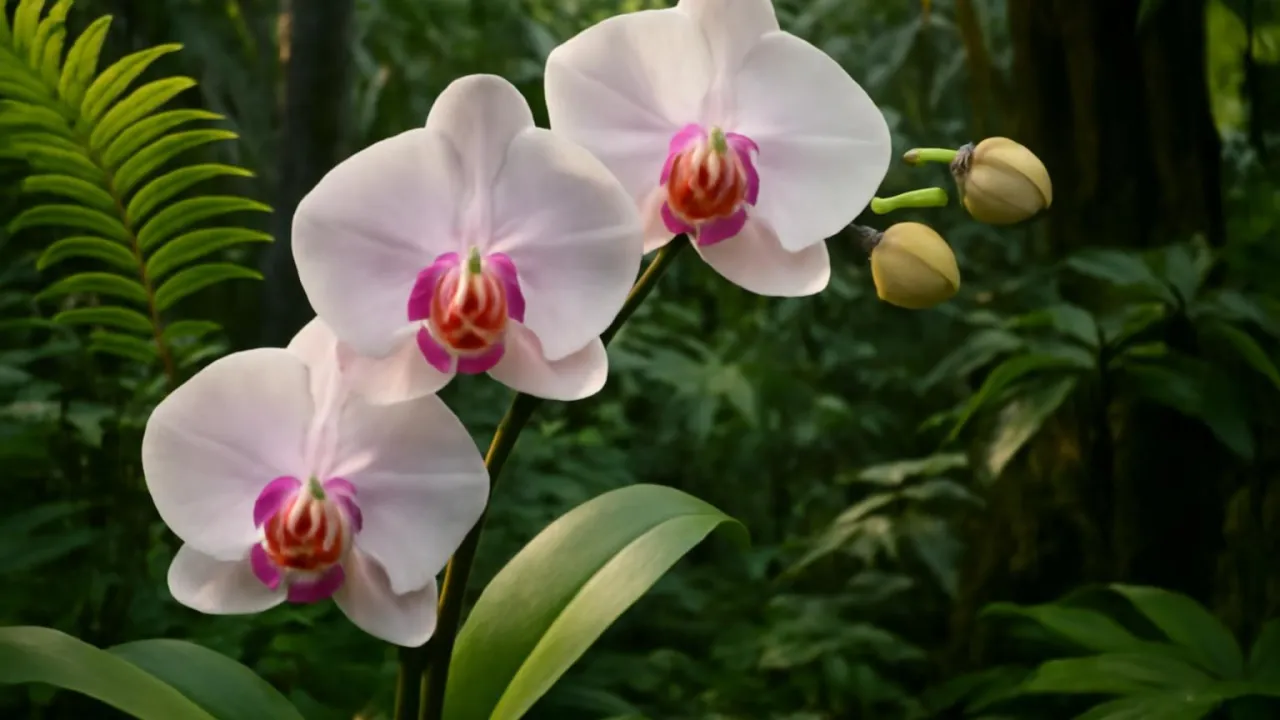
Moth orchid flowers look so much like moths that they attract real moths to pollinate them!
✨ Word Sparks (Grade 2 Glossary)
Tap 🔊 to hear
orchid
A special kind of pretty flower
pollinate
Help flowers make seeds by moving pollen
tropical
Warm places near the equator
🪝
Have you ever seen a flower that looks like a flying moth?
1
Colors and Shapes
Moth have white petals with pink or purple spots. Their petals are soft and smooth, and they look like moth wings in flight. This unique shape helps them attract insects that fly at night.
2
Where They Grow
These grow in warm, forests. They live high on tree branches where they get soft, filtered sunlight and fresh air. This helps them avoid crowded forest floors and get enough light.
3
How They Grow and Bloom
Moth grow from thick roots that absorb water from the air. They usually bloom in spring and fall, showing many flowers at once. Their flowers can last several weeks, attracting pollinators during this time.
Moth orchids trick real moths by looking like them, ensuring pollination at night!
✨ Word Sparks (Grade 3 Glossary)
Tap 🔊 to hear
camouflage
Looking like something else to hide or attract
epiphyte
A plant that grows on other plants, not soil
pollination
Moving pollen to help flowers make seeds
🪝
Why do moth orchid flowers look like flying moths at night?
1
Mimicry Helps Survival
Moth orchids use by mimicking moth shapes to attract pollinators. This adaptation helps them survive in dense forests. Their white petals glow softly in moonlight, making them easy to spot at night.
2
Where They Live and Grow
These orchids grow as on tree branches in tropical Asia and Australia. They absorb nutrients and moisture from the air using thick aerial roots. This unique growth helps them avoid competition on the forest floor.
3
Pollination and Reproduction
Moth orchids rely on moths for , which transfers pollen between flowers. This symbiotic relationship benefits both species. After pollination, the orchid produces seed pods to continue its life cycle.
4
Physical Features and Adaptations
Their thick, waxy leaves store water to withstand dry spells. The flower’s shape and colors attract specific moth species. This precise adaptation increases their chances of successful reproduction.
1. How do moth orchids get nutrients without soil?
2. What helps moth orchids attract moths?
🤯 Mind-Blowing Fact • Grade 4
Moth orchids’ mimicry is so precise that it influences moth behavior and forest ecosystems!
✨ Word Sparks (Grade 4 Glossary)
Tap 🔊 to hear
symbiotic
Two living things helping each other
aerial roots
Roots that grow above the ground
biodiversity
Many different kinds of living things
🪝
How do moth orchids’ shapes and habitats help them thrive in tropical forests?
1
Mimicry and Pollination
Moth orchids have evolved flower shapes that closely mimic moths, which tricks pollinators into visiting. This cause-and-effect relationship ensures the orchids receive pollen and reproduce. The white petals reflect moonlight, making them visible during nighttime pollination. This adaptation increases their chances of survival in dense forests.
2
Ecosystem Roles and Habitat
As epiphytes, moth orchids grow on tree branches high above the ground, avoiding competition for nutrients. They contribute to forest by providing nectar to nocturnal moths, forming a relationship. Their presence supports food webs involving insects and birds, helping maintain ecosystem balance.
3
Growth and Adaptations
Moth orchids’ thick absorb moisture and nutrients from the humid air, allowing survival in nutrient-poor environments. Their waxy leaves store water, helping them endure dry periods. These adaptations enable them to thrive in tropical climates with variable rainfall and changing seasons.
4
Geographic Distribution and Human Impact
Native to tropical Asia and northern Australia, moth orchids have been cultivated worldwide for their beauty and fragrance. Habitat loss and overcollection threaten wild populations, but conservation efforts promote sustainable growing practices. Orchids also have cultural significance in many societies, inspiring art and traditions.
Moth orchids’ mimicry tricks moths so well that it influences pollinator behavior and forest biodiversity!
✨ Word Sparks (Grade 5 Glossary)
Tap 🔊 to hear
velamen
Spongy root tissue that absorbs water fast
mutualistic
Both species benefit from their relationship
morphology
The shape and structure of living things
🪝
What scientific secrets explain the moth orchid’s unique mimicry and survival in tropical ecosystems?
1
Taxonomy and Scientific Classification
The moth orchid, scientifically named Phalaenopsis amabilis, belongs to the Orchidaceae family, one of the largest and most diverse plant families worldwide. This species is classified in the genus Phalaenopsis, known for epiphytic orchids with broad leaves and large, showy flowers. Its classification reflects evolutionary adaptations to tropical environments and specialized pollination strategies.
2
Physiological Mechanics and Adaptations
Moth orchids possess thick, fleshy leaves that store water, enabling survival during dry spells in tropical forests. Their aerial roots are covered with , a spongy tissue that efficiently absorbs moisture and nutrients from humid air. The flower’s , including its lip and petal shapes, mimics moths to attract nocturnal pollinators, ensuring successful reproduction.
3
Conservation and Botanical History
Originally native to Southeast Asia and northern Australia, moth orchids have been cultivated globally for over two centuries due to their beauty and ease of growth. However, habitat destruction and illegal collection have threatened wild populations, prompting conservation programs and cultivation protocols to preserve genetic diversity and natural habitats.
4
Ecological Role and Geographic Distribution
Moth orchids thrive as epiphytes in humid tropical forests across regions from the Philippines to northern Australia. They play a vital role in forest ecosystems by forming relationships with nocturnal moths, which pollinate their flowers. This interaction supports biodiversity and contributes to complex food webs involving insects, birds, and other wildlife.
5
Quantitative Comparisons and Growth Characteristics
Moth orchids typically grow between 20 and 40 centimeters tall, with flowers spanning 5 to 7 centimeters across. Their roots can absorb water rapidly during humid conditions, supporting survival in environments with variable rainfall ranging from 1500 to 2500 millimeters annually. Flowering peaks occur in spring and autumn, lasting several weeks per bloom cycle.