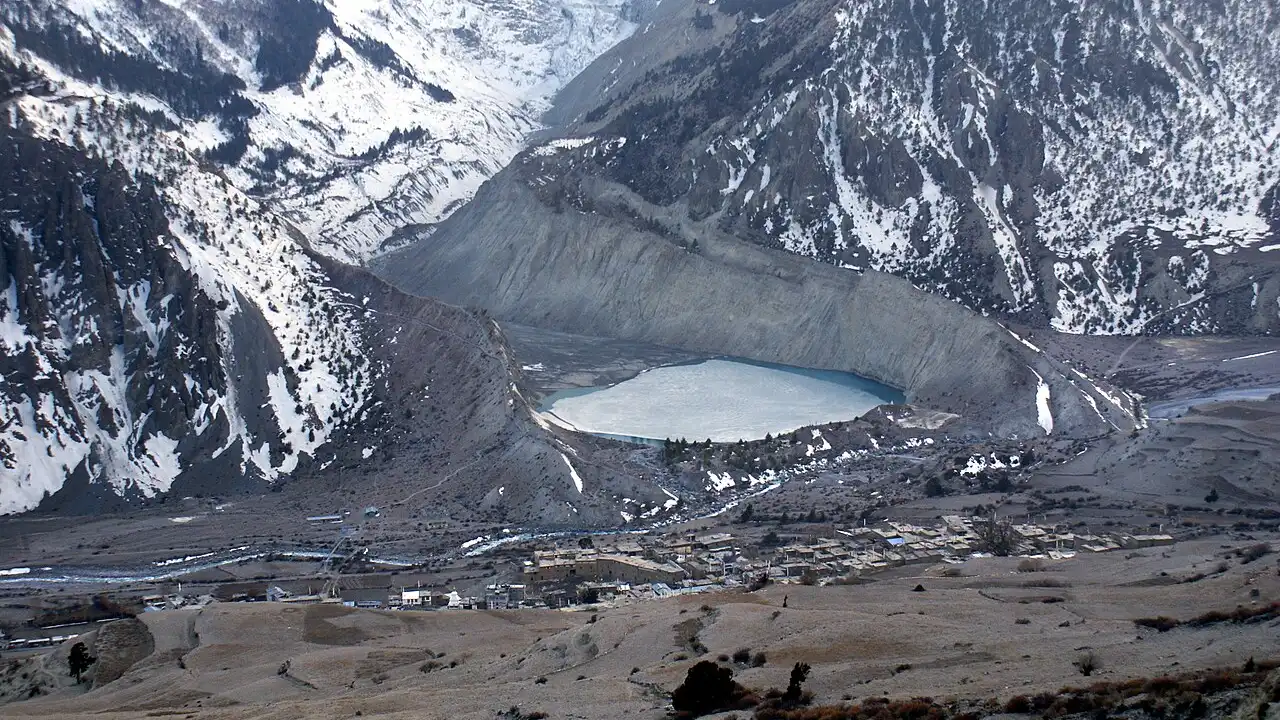
1. What acts like a giant bulldozer to push moraines into place?
2. What do scientists call a giant boulder left behind when glacier ice melts?
🤯 Mind-Blowing Fact • Grade 2
Big Rock in Alberta, Canada, is a glacial erratic the size of an apartment building that rode hundreds of miles on ice!
✨ Word Sparks (Grade 2 Glossary)
Tap 🔊 to hear
Ice Age
Long cold time when huge glaciers covered land
Bedrock
Solid unbroken rock layer underneath loose dirt
Snout
Front melting nose end of a moving glacier
🪝
How can scientists tell where Ice Age glaciers stopped melting thousands of years ago?
1
Clues From the Ice Age
Hike through New York's Central Park and spot a boulder that does not match the underneath it! Twenty thousand years ago, thick glaciers covered much of North America and left rocky clues behind.
2
Conveyor Belts of Ice
Unlike rivers that sort light sand from heavy stones, glaciers carry everything jumbled together—from fine clay to huge boulders. Rocks pile along the glacier's sides and stack into a curved ridge called a moraine right at its .
3
Wandering Erratic Boulders
When the climate warmed and the ice melted back, giant hitchhiking rocks gently settled onto the ground. Because they look out of place, geologists named them erratics, meaning 'wanderers'!
1. Why does the word 'erratic' fit boulders dropped by glaciers so well?
2. How is glacier-dropped dirt different from river-dropped dirt?
🤯 Mind-Blowing Fact • Grade 3
Madison Boulder in New Hampshire is a single granite glacial erratic measuring eighty-three feet long and weighing roughly five thousand tons!
✨ Word Sparks (Grade 3 Glossary)
Tap 🔊 to hear
Glacial Till
Unsorted mix of clay, pebbles, and boulders from ice
Lateral Moraine
Rocky ridge piled along a glacier's side edge
Terminal Moraine
Curved ridge marking a glacier's farthest front reach
🪝
Why do stripes of dark rubble run right down the middle of snowy mountain glaciers?
1
Scraping Up Glacial Till
Peer down from an airplane onto an Alaskan valley glacier, and dark ribbons of crushed stone stripe the bright white ice! As a heavy glacier grinds downhill, it plucks blocks from valley walls and crushes them into an unsorted mix called .
2
Side, Middle, and End Moraines
Geologists name moraines by where they form on the ice. build dark ridges along both side edges of a glacier. When two valley glaciers merge into one, their inner side ridges join down the center as a medial moraine! At the melting front, a curved marks the glacier's farthest reach.
3
Matching Erratics to Their Homes
Glacial erratics are single boulders—some weighing thousands of tons—dropped when ice melts. By matching an erratic's exact mineral crystals to distant mountains, geologists trace the compass direction ancient ice sheets flowed!
4
Islands Built by Ice
Cape Cod, Martha's Vineyard, Nantucket, and Long Island are all giant stacked up at the edge of the last great Ice Age sheet.
1. How does a dark medial moraine stripe end up right down the center of a glacier?
2. What does a terminal moraine tell geologists about an ancient melted glacier?
🤯 Mind-Blowing Fact • Grade 4
Although Ice Age continental glaciers stopped in Pennsylvania north of Virginia, freezing periglacial winds south of the ice margin shattered boulder fields across Virginia's high Appalachian ridges!
✨ Word Sparks (Grade 4 Glossary)
Tap 🔊 to hear
Recessional Moraine
Ridge left where a melting glacier briefly paused
Striations
Parallel scratch grooves gouged into bedrock by ice
Plucking
Glacier ice freezing onto and lifting bedrock chunks
🪝
How did stray boulders in Swiss meadows convince baffled 1800s scientists that an Ice Age ever happened?
1
Solving a Nineteenth-Century Mystery
Two hundred years ago, European naturalists were stumped by giant granite boulders perched high on limestone hillsides miles from any granite peaks. Many guessed a biblical flood had tossed them there! In 1837, Swiss scientist Louis Agassiz studied alpine glaciers and realized something astonishing: only slow-moving sheets of solid ice could carry angular, unrounded boulders hundreds of kilometers without smashing their corners smooth.
2
Conveyor Belts Even During Retreat
Even when a glacier's front edge stands still, gravity keeps internal ice flowing forward like a grocery-store conveyor belt. Melting at the snout constantly dumps rock debris in one spot, stacking till hundreds of feet high into a terminal moraine. As the climate warms and the ice front steps backward, pauses create smaller , while an even blanket of ground moraine covers the valley floor.
3
Scratch Marks That Point the Way
Rocks frozen into the bottom of a glacier scrape across underlying bedrock like giant chisels, carving parallel grooves called glacial . Together with boulder trains of erratics—such as Canadian shield rocks scattered across Ohio, Indiana, and Pennsylvania—striations let scientists map the massive Laurentide Ice Sheet.
4
Moraine Dams and Glacial Lakes
Curved terminal moraines often act as natural earthen dams across valleys, trapping sparkling meltwater lakes such as Montana's Flathead Lake and Washington's Lake Chelan.
1. Why did angular, sharp-edged erratic boulders prove that ice—rather than rushing floodwater—carried them?
2. How can a terminal moraine grow taller even while a glacier's front edge stays in the exact same place?
🤯 Mind-Blowing Fact • Grade 5
Canada's Okotoks Erratic ('Big Rock') weighs approximately 16,500 metric tons of quartzite—carried more than 400 kilometers atop a landslide-draped glacier from Mount Edith Cavell roughly 17,000 years ago!
✨ Word Sparks (Grade 5 Glossary)
Tap 🔊 to hear
Ablation
Loss of glacier ice through melting and evaporation
Tillite
Solid sedimentary rock hardened from ancient glacial till
Kettle Lake
Round pond formed where buried glacier ice melted
🪝
How do cosmogenic atoms inside glacial erratics act as atomic stopwatches for Earth's past climate swings?
1
Glacial Plucking, Supraglacial Rockfall, and Diamicton
Stand atop the hummocky Kettle Moraine of Wisconsin or beside an alpine glacier in Switzerland, and the ground underfoot consists of diamicton—an unstratified, unsorted glacial till where microscopic rock flour binds faceted pebbles and multi-ton boulders. Glaciers entrain this debris through two primary pathways: subglacial plucking (quarrying), where meltwater refreezes inside bedrock joints at the glacier bed and rips blocks loose, and supraglacial rockfall, where frost-shattered cliff talus tumbles onto the upper ice surface.
2
Architecture of Moraine Complexes
Moraine geometry records precise glacier mass balance—the competition between snow accumulation upstream and (melting and sublimation) downstream. When accumulation equals ablation, the ice margin stabilizes and conveyor-belt flow builds a steep terminal or end moraine; surging advances bulldoze folded sediment into push moraines. During deglaciation, episodic standstills leave nested arcs of recessional moraines, while stagnant buried ice blocks melt out to pit the ground moraine with water-filled .
3
Provenance Tracing of Erratic Dispersal Trains
Glacial erratics serve as unmistakable provenance tracers. During the Last Glacial Maximum roughly 21,000 years ago, the three-kilometer-thick Cordilleran and Laurentide ice sheets carried distinctive Precambrian jasper conglomerates from Ontario hundreds of kilometers south into Ohio and rafted the 16,500-metric-ton Foothills Erratics Train over 600 kilometers from Jasper National Park along the Rocky Mountain front into Montana.
4
Cosmogenic Nuclide Exposure Dating
Modern geochemists can determine the exact century an erratic melted out of the ice! Once a buried quartz-bearing boulder is exposed to open sky, high-energy cosmic rays bombard oxygen and silicon atoms in its top few centimeters, producing rare isotopes like beryllium-10. Measuring accumulated beryllium-10 functions as an atomic stopwatch timing glacier retreat.
5
Ancient Supercontinents and Snowball Earth
When ancient moraine till lithifies into solid rock called , it preserves climate clues hundreds of millions of years old. Matching 300-million-year-old tillites and striations across South America, Africa, India, Antarctica, and Australia gave Alfred Wegener pivotal proof of continental drift—while equatorial dropstones and tillites revealed ancient 'Snowball Earth' glaciations.