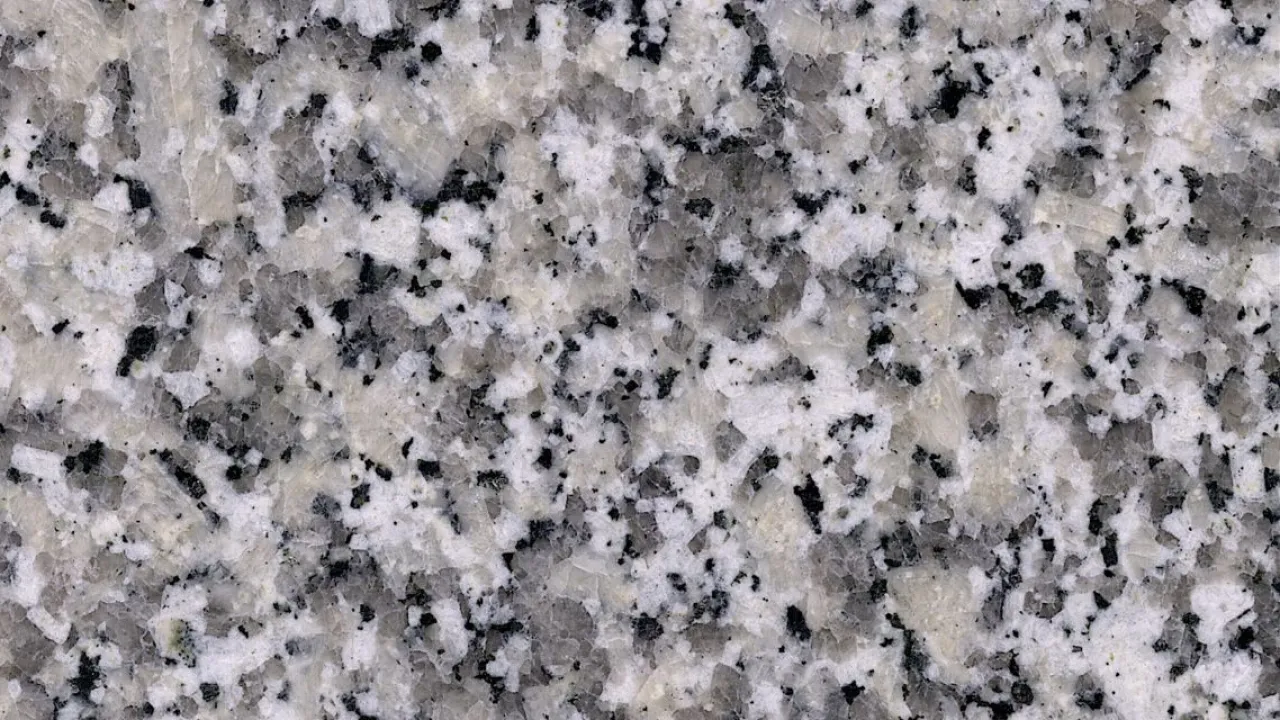
🌋 Where It FormsDeep underground magma chambers (plutons and batholiths) inside continents
💎 Key PropertiesHard (Mohs 6–7), visible interlocking crystals of quartz, feldspar, and dark mica
⚡ Planet Earth SparkForming the sturdy bedrock foundation of Earth's continents and towering mountain domes
🤯 Mind-Blowing Fact • Grade 1
The word granite comes from the Latin word 'granum'—meaning grain—because you can spot every chunky mineral crystal with your bare eyes!
✨ Word Sparks (Grade 1 Glossary)
Tap 🔊 to hear
speckled
Covered with small colorful spots or grains
mineral
Natural solid crystal building block of rocks
bedrock
Solid rock lying underneath loose soil
🪝
Have you ever spotted pink, white, and black speckles sparkling in a kitchen countertop or sidewalk curb?
1
Speckles That Sparkle
Look closely at a sunny gray or pinkish boulder in the park! Tiny glassy, white, and dark black specks wink right back at you. You are looking at granite!
2
Cooled Deep Underground
Long ago, hot melted magma sat miles underground. Because it cooled super slowly, three main grew into chunky crystals you can see!
3
Tough Enough for Mountains
Granite is super hard and strong. It builds tall mountain cliffs, stone bridges, and smooth countertops!
1. Why are the mineral crystals inside granite big enough to see without a microscope?
2. Where might you see strong, polished granite used in a town or home?
🤯 Mind-Blowing Fact • Grade 2
The four giant presidential faces on Mount Rushmore were sculpted into resilient Harney Peak granite that erodes only about one inch every 10,000 years!
✨ Word Sparks (Grade 2 Glossary)
Tap 🔊 to hear
feldspar
Pink or white mineral common in granite
quartz
Hard glassy mineral found in many rocks
mica
Shiny mineral that peels in thin flakes
🪝
Which three minerals team up like ingredients in a cookie to make speckled granite?
1
A Three-Mineral Recipe
Pick up a chunk of granite and hunt for three mineral friends! Milky or salmon-pink blocks are , clear smoky-gray glassy bits are , and shiny black flakes that glint like tiny mirrors are .
2
How Underground Rock Reaches the Sky
Wait—if granite forms miles underground from cooling magma, how does it end up on high mountain peaks? Over millions of years, Earth pushes crust upward while rain and ice wash softer top rocks away, uncovering giant granite domes!
3
Famous Granite Landmarks
Yosemite's towering Half Dome in California, Mount Rushmore in South Dakota, and Old Rag Mountain in Virginia's Blue Ridge are all sculpted from sturdy, ancient granite!
1. Which three main minerals give granite its pink/white, glassy gray, and shiny black specks?
2. How did underground granite end up forming tall peaks like Mount Rushmore and Half Dome?
🤯 Mind-Blowing Fact • Grade 3
New Hampshire is nicknamed 'The Granite State' because massive ancient granite formations lie right beneath its forests and peaks!
✨ Word Sparks (Grade 3 Glossary)
Tap 🔊 to hear
Mohs scale
One-to-ten scale measuring mineral scratch hardness
exfoliation
Outer rock layers peeling like onion skins
buoyant
Light enough to float or ride higher
🪝
Why does some granite glow warm salmon-pink while other granite looks salt-and-pepper gray?
1
Color Clues in Feldspar
Stroll past historic monuments in Washington, D.C., or courthouse steps in Richmond, Virginia, and you'll spot granite blocks in shades of pearl white, salt-and-pepper gray, and sunset pink! The secret color-changer is feldspar: potassium-rich feldspar turns granite rosy pink or red, while sodium-and-calcium feldspar keeps it crisp white and gray.
2
Scratch-Testing Granite's Hardness
On the Mohs mineral hardness scale from 1 (soft talc) to 10 (diamond), an everyday steel pocketknife scores about 5.5, while granite's feldspar scores 6 and glassy quartz scores a tough 7! That means a steel knife blade slides right off without scratching real granite.
3
Peeling Like an Onion!
Once millions of years of erosion uncover deeply buried granite, the sudden drop in heavy overlying weight lets the rock expand slightly and peel off curved outer stone sheets—forming smooth rounded peaks called domes!
4
Sturdy Rafts of the Continents
Because silica-rich granite is lighter and less dense than dark ocean-floor basalt, Earth's granite continents ride high above sea level like giant stone rafts.
1. What mineral makes some granite boulders look salmon-pink instead of gray?
2. Why can't an ordinary steel pocketknife (hardness 5.5) scratch quartz and feldspar in granite?
🤯 Mind-Blowing Fact • Grade 4
Olympic curling stones slid across ice are crafted almost exclusively from rare, dense micro-granite quarried on Ailsa Craig island in Scotland and Trefor in Wales!
✨ Word Sparks (Grade 4 Glossary)
Tap 🔊 to hear
silica
Silicon-and-oxygen compound abundant in felsic rocks
pluton
Body of magma cooled deep inside crust
phaneritic
Having mineral crystals large enough to see
🪝
Why is planet Earth covered in giant granite continents when Mars, Venus, and the Moon have almost none?
1
Planet Earth's Signature Rock
Planetary geologists love sharing a mind-blowing solar system clue: while dark volcanic basalt covers vast plains across Mercury, Venus, Mars, and the Moon, true coarse granite is rare everywhere except right here on Earth! Brewing continent-sized batches of -rich granite requires liquid oceans and active plate tectonics repeatedly recycling wet crust down into deep magma chambers.
2
Virginia's Billion-Year-Old Old Rag Granite
Hikers scrambling through the famous narrow boulder passages on Old Rag Mountain in Virginia's Shenandoah National Park touch granite crystallized more than one billion years ago! Formed deep beneath a prehistoric supercontinent collision called the Grenville Orogeny—hundreds of millions of years before trees or dinosaurs walked on land—its coarse cream feldspar and rare smoky blue-gray quartz crystals locked tightly together.
3
Weathering Into Clay and Beach Sand
Even mighty granite eventually yields to weak carbonic acid in rainwater over millions of years! Feldspar and dark biotite mica chemically weather into soft kaolin clay minerals that build Piedmont farm soils, while virtually unbreakable quartz grains tumble down Virginia rivers all the way to sandy Atlantic beaches.
4
Precision Stone for Monuments and Labs
Beyond historic bridges, curbstones, and memorials, modern aerospace engineers polish solid granite slabs into ultra-flat laser measurement tables accurate to millionths of an inch because granite never rusts or warps!
1. Why is granite abundant on Earth yet scarce on the Moon and Mars?
2. When granite slowly weathers over millions of years, what happens to its quartz vs. feldspar?
🤯 Mind-Blowing Fact • Grade 5
Inside ultra-slow-cooling granite pockets called pegmatites in South Dakota's Black Hills, geologists discovered single feldspar and spodumene crystals over 40 feet long—as big as a school bus!
✨ Word Sparks (Grade 5 Glossary)
Tap 🔊 to hear
isostasy
Gravitational balance floating light crust on mantle
pegmatite
Igneous rock pocket with giant mineral crystals
viscous
Thick, sticky, and slow to flow
🪝
What mineral percentages, cooling rates, and density differences allow granite batholiths to float continents above ocean basins?
1
Strict Petrologic Definition of True Granite
Architectural stone yards casually label dozens of polished black gabbros, anorthosites, and swirled gneisses as 'commercial granite,' yet Earth scientists apply a rigorous mineralogical standard called the QAPF diagram! To qualify as true felsic intrusive granite, a coarse-grained (phaneritic) rock must contain at least 20 percent visible quartz paired with 35 to 90 percent alkali (potassium) and sodium-rich plagioclase feldspars, accented by sparkling dark biotite mica or hornblende amphibole.
2
Thermal Insulation and Million-Year Cooling
When granitic magma—thick and because roughly 70 to 75 percent of its chemical weight consists of silica (SiO₂)—accumulates five to twenty kilometers underground inside a massive batholith, miles of overlying roof rock act as a thermal blanket. Cooling just a few degrees per thousand years lets silicon-oxygen tetrahedra migrate into orderly crystal lattices, growing millimeter-to-centimeter grains in normal granite and giant meter-long crystals inside water-rich pockets called !
3
Isostasy: Why Granite Continents Ride High
Granite's average density measures roughly 2.65 to 2.75 grams per cubic centimeter—significantly lighter than dense oceanic basalt (~3.0 g/cm³) and underlying mantle peridotite (~3.3 g/cm³). Governed by gravitational buoyancy known as , thick 35-kilometer slabs of granitic continental crust float high atop the ductile upper mantle, much like tall freshwater icebergs riding higher above ocean waves than thin sheets of dense pack ice.
4
Trace Radioisotopes and Natural Geothermal Warmth
As continental magmas evolve chemically, large-ion trace elements including potassium-40, thorium, and uranium concentrate preferentially inside granitic crust. Their slow, natural radioactive decay over billions of years generates steady underground geothermal warmth while providing geochronologists built-in radiometric clocks to date Blue Ridge, Piedmont, and Sierra Nevada plutons accurately.
5
Quarrying Heritage From Virginia's Fall Line to Yosemite
From sheer 3,000-foot glacial monoliths like Yosemite's El Capitan to historic Petersburg and Richmond granite quarries along Virginia's James River Fall Line—whose gray blocks built Norfolk dry docks, bridges, and monumental steps across Washington, D.C.—granite stands as the enduring bedrock of our continents.