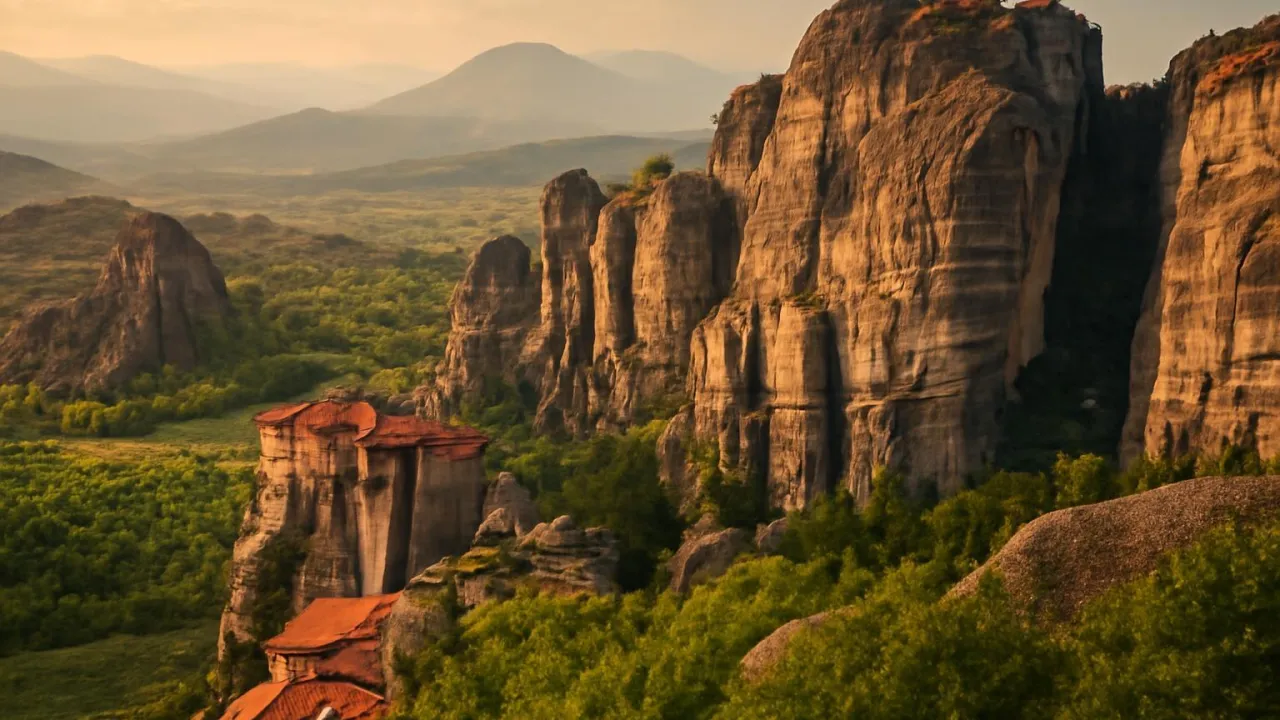
Have you ever wondered how people built homes on top of steep rocks?
1
Homes in the Clouds
Long ago, people built special homes on giant stone pillars. These homes are called monasteries, and lived there. The rocks rise high above the green .
2
Climbing Up High
To reach the monasteries, used or many stone steps. Sometimes, they pulled up baskets with ropes to bring food and water. Visitors today still climb many steps to explore.
3
A Peaceful Place
The air is quiet and fresh on Meteora. Bells ring softly as the wind blows. People visit from all over the world to see this amazing place.
Some Meteora monasteries are over 600 years old and still used today!
✨ Word Sparks (Grade 3 Glossary)
Tap 🔊 to hear
erosion
Rocks worn down by wind and water
scaffold
A strong platform for building high up
monument
A special place made to remember
🪝
Imagine the wind whistling as you climb a staircase carved into a stone tower—would you be brave enough to reach the top?
1
Stone Towers Above the Valley
The Meteora monasteries stand on huge rock pillars that rise above the Thessaly valley. These pillars were shaped by over millions of years, making them tall and steep. Monks began building their monasteries here in the 1300s, seeking safety and peace. Today, the monasteries seem to float in the sky, surrounded by clouds and birds.
2
Building in the Air
Constructing on such high cliffs was a true engineering challenge for the monks. They used ladders, ropes, and wooden to reach the top and carry building materials. Some monasteries could only be reached by rope baskets, making them very safe from invaders. The stone walls and red roofs blend perfectly with the rocky landscape.
3
A Place for Quiet Reflection
Meteora means 'suspended in the air,' and it truly feels that way. The monasteries are peaceful places where monks pray, study, and listen to the gentle sound of bells. Visitors come to learn about the history, walk the winding paths, and enjoy the amazing views.
4
Nature and Wonder
The rock pillars are home to rare plants and soaring birds. The area is protected as a UNESCO World Heritage Site because of its unique geology and history. Meteora is a to both nature’s power and human creativity. Every year, people from all over the world visit to marvel at this wonder.
1. What natural process shaped the Meteora pillars?
2. Why did monks choose Meteora for their monasteries?
🤯 Mind-Blowing Fact • Grade 4
Early monks sometimes spent years living in caves before building their sky-high monasteries!
✨ Word Sparks (Grade 4 Glossary)
Tap 🔊 to hear
Byzantine
A time of art and learning in Greece
scaffold
A raised platform for building safely
solitude
A peaceful time spent alone
🪝
Can you picture monks hauling stones up dizzying cliffs, building peaceful homes high above the valley floor?
1
A Landscape Shaped by Time
The Meteora region in central Greece features giant sandstone pillars sculpted by erosion over millions of years. These natural towers rise up to 1,800 feet above the valley, creating a dramatic landscape unlike anywhere else in Europe. The area’s unique geology provided not only breathtaking views but also natural fortresses for people seeking safety. By the 14th century, monks began building monasteries atop these pillars, using the landscape’s height for protection and .
2
Engineering Above the Clouds
Constructing monasteries on such steep and isolated rocks required remarkable engineering skills and determination. Monks and builders used ladders, rope baskets, and wooden to transport stones, bricks, and supplies to the summits. Some monasteries were only accessible by retractable ladders or winched nets, making them nearly impossible for invaders to reach. The buildings themselves were designed to fit the uneven rock surfaces, with thick stone walls and red tile roofs that blended into the surroundings.
3
A Center for Spiritual Life
The Meteora monasteries became important centers for prayer, art, and learning during the era. Monks spent their days in quiet reflection, copying manuscripts, painting icons, and ringing bells that echoed across the valley. Today, only six of the original twenty-four monasteries remain active, but they continue to welcome visitors and pilgrims from around the world.
4
A World Treasure
Because of its extraordinary combination of natural beauty and human achievement, Meteora is now a UNESCO World Heritage Site. The area is also a protected habitat for rare birds and plants, making it a haven for both history lovers and nature enthusiasts. Meteora stands as a monument to the ingenuity, faith, and perseverance of those who built homes in the sky.
1. How did the monks protect themselves from invaders?
2. Why is Meteora important to both history and nature?
🤯 Mind-Blowing Fact • Grade 5
At its peak, Meteora had 24 monasteries, but only six remain active today—each a masterpiece of survival and faith.
✨ Word Sparks (Grade 5 Glossary)
Tap 🔊 to hear
conglomerate
Rock made from many smaller stones pressed together
resonance
A sound that echoes and vibrates deeply
adaptation
Changing to fit a new place or challenge
🪝
What if your classroom was perched atop a 1,500-foot pillar—how would you get there, and why would anyone build so high?
1
Geology: Nature’s Towering Canvas
The Meteora landscape was formed over 60 million years ago, as ancient rivers and weathering sculpted the region’s soft sandstone and rock into massive pillars. These geological processes, including erosion and tectonic uplift, created vertical cliffs rising up to 1,800 feet (550 meters) above the Thessalian plain. The resulting stone towers offered both dramatic scenery and natural fortresses, making them ideal for people seeking isolation and security.
2
Byzantine Ingenuity and Monastic Engineering
During the 14th to 16th centuries, Orthodox Christian monks utilized both architectural skill and creative problem-solving to construct monasteries atop these seemingly inaccessible rocks. Builders used wooden scaffolds, rope baskets, and retractable ladders to haul stones, bricks, and timber up sheer cliffs. The monasteries were designed with thick stone walls for insulation and defense, red-tiled roofs to shed rain, and small chapels that maximized the limited summit space. Some buildings appear to cling to the rock itself, demonstrating advanced load distribution and to uneven surfaces.
3
Spiritual, Artistic, and Cultural Legacy
Meteora’s monasteries became renowned centers for religious study, manuscript preservation, and icon painting during the Byzantine and Ottoman periods. Monks lived in solitude, devoting their lives to prayer and scholarship while creating intricate frescoes and illuminated texts. The ringing of bells and chanting of hymns echoed across the valley, reinforcing Meteora’s reputation as a place of spiritual and cultural exchange. Today, these monasteries are living museums, preserving centuries of Greek Orthodox tradition.
4
A Haven for Biodiversity and Conservation
Beyond its historical significance, Meteora is a protected ecosystem supporting rare plant species, raptors, and endemic wildlife. The cliffs and forests provide habitats for peregrine falcons, Eurasian eagle-owls, and orchids found nowhere else. Conservation efforts balance tourism, religious practice, and environmental protection, ensuring that both natural and human heritage endure for future generations.
5
Global Recognition and Enduring Wonder
Designated a UNESCO World Heritage Site in 1988, Meteora attracts hundreds of thousands of visitors annually, inspiring awe through its blend of geology, architecture, and spirituality. The remaining six active monasteries continue to serve both as places of worship and as cultural beacons, reminding the world of humanity’s ability to adapt, innovate, and find meaning in the most challenging environments. Meteora stands as a testament to the harmony between nature and human achievement.