Max Planck
The Spark That Changed Physics Forever
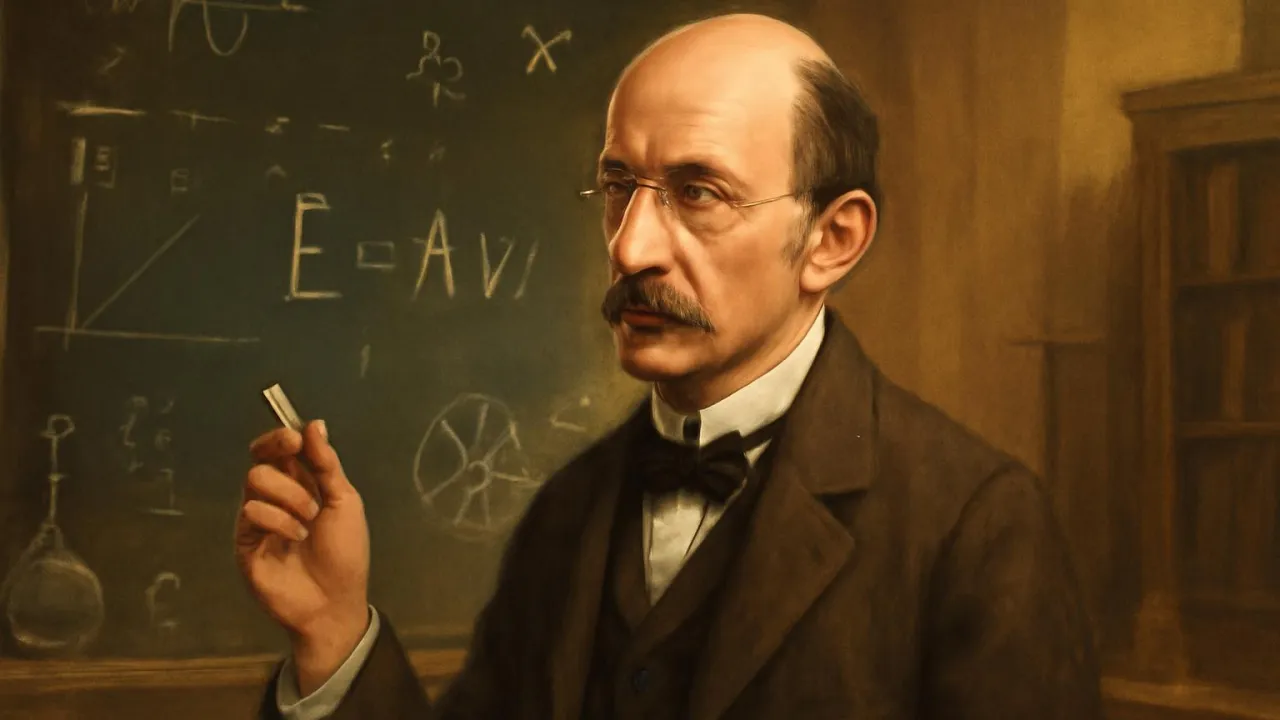
Maxโs idea helped invent computers and lasers!
What if light came in tiny pieces you could count?
1 A Curious Boy
Max liked to ask big questions. He wondered how light worked. He loved to watch the stars.
2 The Magic of Numbers
Max used math to solve puzzles. He wrote numbers on his . He never gave up.
3 A Big Discovery
Max found comes in small bits. He called them . This idea changed science forever.
1. What did Max love to watch?
2. What did Max call tiny bits of energy?
Max Planckโs discovery helped scientists build solar panels and cell phones!
Have you ever wondered how light really works?
1 Young Maxโs Big Questions
As a boy, Max loved asking questions about the world. He was curious about how light and heat moved around. He enjoyed making up and solving puzzles with numbers.
2 Working Hard in Science
Max studied math and science every day, even when it was difficult. He used a chalkboard to write out his ideas and test new theories. He kept trying, even when others doubted his questions.
3 The Quantum Leap
Max discovered that energy comes in tiny pieces called quanta. This new idea surprised everyone and changed how scientists think about light. His work started a new branch of science called physics.
1. What did Max use to write his ideas?
2. What new science did Max help create?
Max Planckโs quantum theory helped Albert Einstein and many other scientists make new discoveries.
Can you imagine a world where energy moves in tiny jumps?
1 A Boy with a Big Imagination
Max Planck loved to think about the mysteries of nature as a child. He was fascinated by how light shined and how music sounded. His teachers noticed his curiosity, and he spent hours solving math puzzles.
2 The Path to Discovery
As Max grew older, he studied and math at school and university. He worked hard, even when his ideas seemed strange to others. Max used a chalkboard to test his theories and never stopped asking questions.
3 Unlocking Quantum Secrets
One day, Max realized energy could only be shared in small packets called quanta. This discovery was shocking because most scientists thought energy was smooth and continuous. Maxโs quantum theory changed the way people understood light and .
4 Changing the World
Max Planckโs ideas started the field of quantum , which led to inventions like lasers and computers. He won the in Physics for his work. Today, scientists still use his theories to explore the tiniest parts of the universe.
1. What did Max Planck discover about energy?
2. What famous prize did Max win?
Max Planckโs quantum theory helped unlock the secrets of atoms and the universe.
What if the tiniest building blocks of energy had a secret rule?
1 Curiosity in a Changing World
Growing up in Germany during the late 1800s, Max Planck was surrounded by new inventions and scientific discoveries. He became fascinated by the mysteries of light and sound, often experimenting with music and numbers as a child. His teachers encouraged his curiosity, and Max decided to study physics at university. At the time, scientists believed energy could be divided into any size, but Max wondered if that was true.
2 Facing Doubt and Puzzling Problems
In his laboratory, Max spent years working with chalk, equations, and careful to understand how energy moved. Many scientists thought his questions were odd or even impossible to answer, but Max was determined to keep searching. He faced setbacks and doubts, yet his helped him push through difficult problems. Max believed that careful math and observation could reveal natureโs deepest secrets.
3 The Birth of Quantum Theory
Max made a breakthrough when he realized energy could only be shared in tiny, exact amounts called quanta. This idea was revolutionary, challenging everything scientists believed about light and heat. His quantum theory explained strange results in that no one else could solve. Maxโs work opened the door to understanding atoms, , and the entire field of quantum physics.
4 A Legacy That Changed Science
Planckโs discovery led to new inventions like lasers, solar panels, and computers, which all rely on quantum ideas. He received the Nobel Prize in Physics in 1918 for his groundbreaking work. Max Planckโs theories inspired famous scientists like Albert Einstein and Niels Bohr to explore even deeper mysteries. Today, quantum physics is one of the most important fields in science, all thanks to Maxโs determination and imagination.
1. What did Max Planckโs quantum theory explain?
2. Who was inspired by Max Planckโs work?
The Planck constant, named after Max, is a key number in quantum mechanics used by scientists everywhere.
Could one daring idea about invisible energy packets reshape all of modern science?
1 A Young Mind in a World of Change
Imagine a boy in late 1800s Germany, surrounded by the sounds of piano music and the glow of gas lamps, who constantly wondered how the world worked. Max Planckโs early fascination with music and mathematics led him to explore the patterns and laws behind natureโs beauty. Even as a child, he asked questions about light, heat, and the universe that few adults could answer. Encouraged by his teachers, Max pursued advanced studies in physics at university, where he was introduced to the biggest scientific mysteries of his time. He quickly realized that the way scientists understood energy and light might be missing something important.
2 Challenging the Old Science
In Planckโs era, most physicists believed that energy could be divided endlessly, like slicing a cake into smaller and smaller pieces. Max, however, was not satisfied with this explanation after studying the puzzling results of experiments on how objects glowed when heated (called ). He spent countless hours at his chalkboard, scribbling equations and testing new mathematical ideas, often facing skepticism and even ridicule from other scientists. Planckโs perseverance and belief in careful observation led him to question the very foundations of physics.
3 The Quantum Breakthrough
After years of effort, Max Planck made a revolutionary proposal: energy is not continuous, but comes in tiny, indivisible packets he called 'quanta.' This bold idea, published in 1900, completely changed how scientists understood light and matter. Planckโs quantum explained why earlier experiments had failed and provided a mathematical formula that matched real-world results perfectly. His work laid the foundation for the new field of quantum physics, which would soon transform technology, chemistry, and our understanding of the universe.
4 Impact and Legacy
Planckโs quantum theory inspired other great minds, including Albert Einstein, Niels Bohr, and Werner Heisenberg, to develop new ideas about atoms, electrons, and the structure of matter. Thanks to Planckโs breakthrough, inventions like lasers, transistors, solar panels, and even computers became possible, all relying on quantum principles. In 1918, Max Planck was awarded the Nobel Prize in Physics for his discovery of energy quanta, cementing his place as one of historyโs most influential scientists. His name now appears on research institutes, scientific prizes, and even the fundamental constant of quantum mechanics: .
5 Inspiration for Future Explorers
Max Planckโs life shows the power of curiosity, persistence, and daring to question accepted ideas. His work not only changed science but also encouraged future generations to keep exploring the unknown, even when answers seem impossible. Today, quantum physics is essential to everything from smartphones to medical imaging, all rooted in Planckโs original insight. By following his example, anyone can make discoveries that change the world. Max Planck proved that even the smallest ideasโlike tiny packets of energyโcan have the biggest impact.
1. Why did Max Planckโs idea about energy quanta matter?
2. What is one invention made possible by quantum physics?