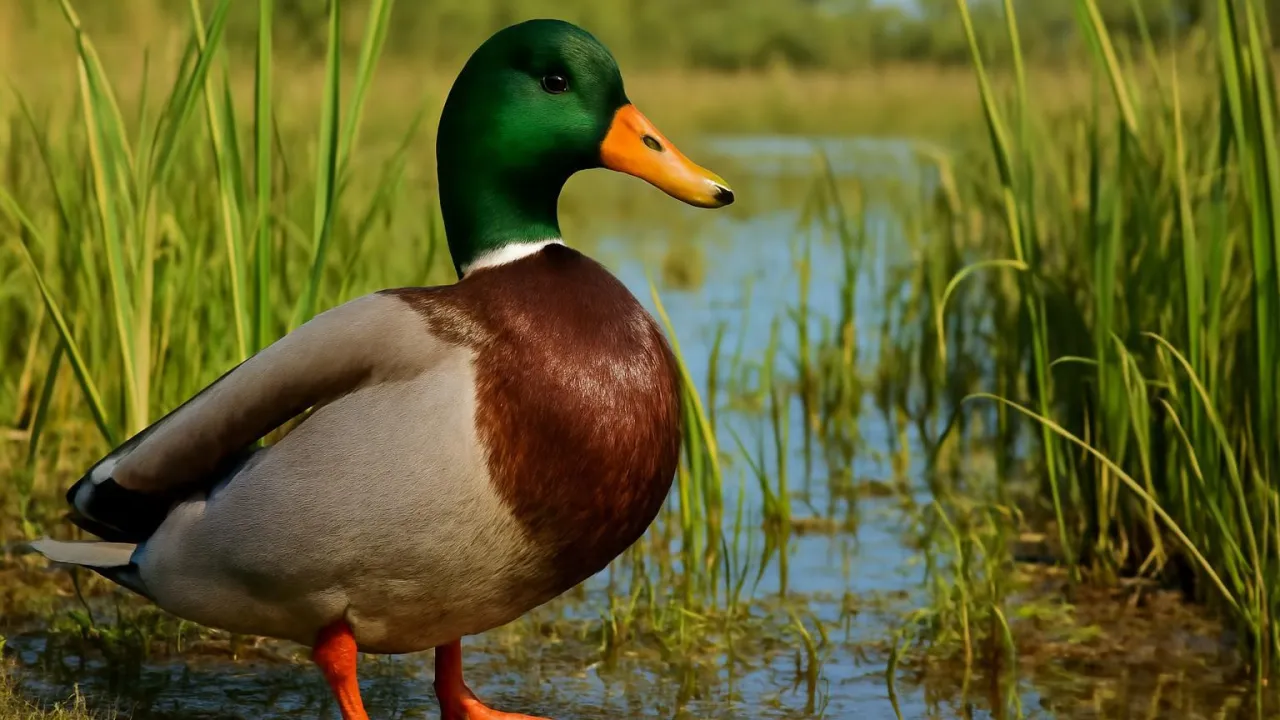
Mallards are the ancestors of most domestic ducks raised by humans worldwide.
✨ Word Sparks (Grade 3 Glossary)
Tap 🔊 to hear
camouflage
Colors that help animals hide in nature
omnivore
An animal that eats plants and animals
migration
Seasonal movement to warmer places
🪝
Did you know mallard ducks use camouflage to hide from predators?
1
Amazing Feathers
Mallards have iridescent green heads that shine brightly in sunlight. Their brown bodies help them blend into wetland plants. This protects them from predators like foxes and hawks. Feathers also keep them warm in cold weather.
2
Wetland Homes
Mallards live in freshwater wetlands, ponds, and rivers where they find food easily. They build nests hidden in tall grass near water to protect eggs from predators. Their habitat provides nutrients and shelter for their ducklings.
3
Eating and Feeding
Mallards are that eat plants, insects, and small fish. They use their wide bills to filter food from water and mud. This feeding method is called dabbling. It helps them get enough nutrients to grow strong.
4
Life Cycle and Flight
Mallard ducklings hatch from eggs and quickly learn to swim and find food. Adult mallards fly to warmer places during winter in a process called . Their strong wings help them fly long distances to survive cold seasons.
Mallard ducks have been observed flying at speeds up to 55 miles per hour during migration.
✨ Word Sparks (Grade 4 Glossary)
Tap 🔊 to hear
iridescent
Shiny colors that change with light
ecosystem
A community of living things and their home
navigation
Finding the way during travel or migration
🪝
How do mallard ducks’ colors and habits help them survive in wetlands?
1
Feather Adaptations and Camouflage
Mallard ducks have green heads that reflect sunlight, which helps attract mates during breeding seasons. Their brown bodies provide camouflage among wetland plants, protecting them from predators such as foxes and birds of prey. This combination of bright and muted colors balances survival and reproduction needs in their .
2
Wetland Ecosystem Role
Mallards play a vital role in wetland food webs by eating aquatic plants, insects, and small fish, which helps control populations. They also disperse plant seeds through their droppings, aiding wetland plant growth. Humans impact their habitats through pollution and wetland drainage, which threatens mallard populations.
3
Migration and Geographic Range
Mallard ducks breed across North America and Eurasia, migrating south to warmer wetlands during winter. Their migration covers thousands of miles, showing remarkable endurance and skills. This seasonal movement helps them find food and suitable breeding sites year-round.
4
Reproduction and Life Cycle
Female mallards build nests on the ground hidden in dense vegetation to protect eggs from predators. Ducklings hatch after about a month and quickly learn to swim and feed themselves. This rapid development increases their survival chances in dynamic wetland environments.
Mallard ducks’ waterproof feathers and webbed feet let them swim in freezing water without getting cold.
✨ Word Sparks (Grade 5 Glossary)
Tap 🔊 to hear
Anatidae
Family of birds including ducks and swans
insulation
Keeping warm by trapping heat
biodiversity
Variety of living things in nature
🪝
What scientific secrets help mallard ducks thrive across continents and seasons?
1
Taxonomy and Scientific Classification
The mallard duck, scientifically named Anas platyrhynchos, belongs to the family, which includes ducks, geese, and swans. This species is the most widespread and common wild duck worldwide, serving as a key subject in avian biology and ecology studies. Its evolutionary adaptations have allowed it to colonize diverse habitats across continents.
2
Physiological Adaptations for Survival
Mallards have specialized waterproof feathers coated with oils that keep them dry and insulated in cold water. Their webbed feet enable efficient swimming, while strong flight muscles allow speeds up to 55 miles per hour during migration. Their broad bills are adapted for filtering food from water and mud, maximizing feeding efficiency in varied environments.
3
Ecological Role and Conservation Status
Mallards contribute significantly to wetland ecosystems by controlling insect populations and dispersing plant seeds through their droppings. Although common, habitat loss from wetland drainage and pollution poses risks to their populations. Conservation efforts focus on protecting wetlands and monitoring mallard numbers to maintain ecological balance.
4
Botanical and Culinary Surprises
Interestingly, mallards help disperse seeds of aquatic plants, supporting in their habitats. Their domesticated descendants have influenced poultry farming worldwide, showing the link between wild species and human agriculture. This connection highlights the importance of conserving wild mallard populations for genetic diversity.
5
Quantitative Comparisons and Migration
Mallards weigh between 1.5 to 3 pounds (0.7 to 1.4 kilograms) and measure 20 to 26 inches (50 to 65 centimeters) long. During migration, they travel thousands of miles, flying at speeds up to 55 miles per hour (88 kilometers per hour) and altitudes reaching 3,000 feet (900 meters) to avoid predators and find suitable habitats. Their endurance and navigation skills are remarkable among waterfowl.