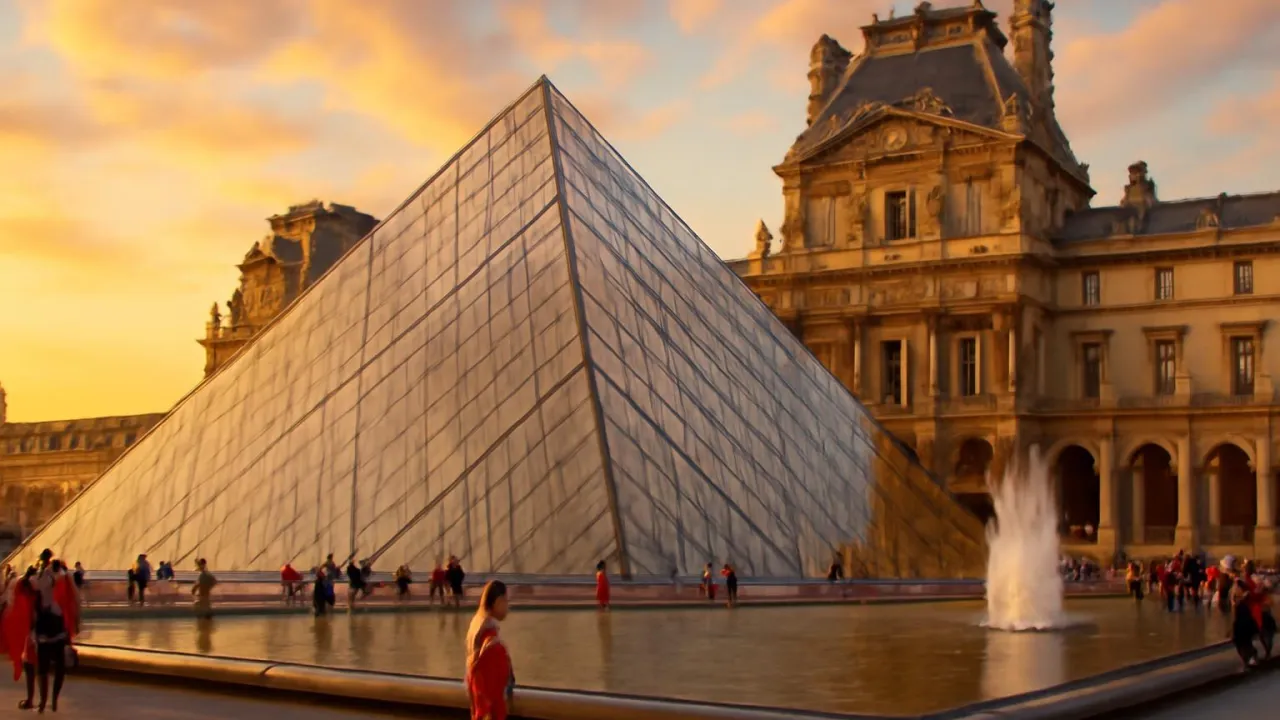
The Louvre is the most visited museum in the world!
✨ Word Sparks (Grade 2 Glossary)
Tap 🔊 to hear
glass
Clear, shiny material for windows
statue
A figure made from stone or metal
treasure
Something very special or valuable
🪝
Have you ever walked under a glass pyramid before?
1
A Sparkling Entrance
The Louvre Pyramid shines with sunlight and welcomes every visitor. It is made of and metal, and looks very modern. People walk through it to enter the museum. The pyramid stands in front of a very old palace.
2
Art and History Inside
The Louvre Museum holds famous paintings and from around the world. You can see the Mona Lisa and the Winged Victory here. There are from Egypt, Greece, and Rome too. Many people visit to learn and explore.
3
Old Meets New
The pyramid was built in 1989, but the palace is much older. The old and new buildings look beautiful together. The pyramid’s lets you see the sky above. This mix makes the Louvre special in Paris.
1. What do people walk through to enter the Louvre?
2. What famous painting is in the Louvre?
🤯 Mind-Blowing Fact • Grade 3
The Louvre Museum holds over 35,000 works of art!
✨ Word Sparks (Grade 3 Glossary)
Tap 🔊 to hear
architect
A person who designs buildings
gallery
A room where art is shown
structure
How something is built or put together
🪝
Imagine stepping into a palace through a sparkling pyramid of glass!
1
A Dazzling Glass Pyramid
The Louvre Pyramid glows in the Paris sunlight, made from 673 glass panes. It was designed by I. M. Pei and finished in 1989. The pyramid stands 71 feet tall and marks the main entrance. Its modern shape is a striking contrast to the old palace.
2
A Palace Full of Art
The museum itself is inside a former royal palace built long ago. Inside, you can find world-famous art like the Mona Lisa and the Venus de Milo. The museum’s galleries hold treasures from ancient Egypt, Greece, and many other cultures. People from all over the world come to see its wonders.
3
How Does the Pyramid Stand?
The pyramid’s uses a steel frame to hold the glass panels. The triangles fit together, making the pyramid strong and stable. This design lets sunlight light up the entrance hall below. The pyramid’s transparency creates a bright, welcoming space for visitors.
4
Old and New Together
The Louvre Pyramid is a symbol of blending history with modern design. The old palace walls surround the shiny pyramid, showing Paris’s love for both art and innovation. The museum’s collection keeps growing each year. Visiting the Louvre is like traveling through time and creativity.
The Louvre Palace was once a medieval fortress before it became a museum!
✨ Word Sparks (Grade 4 Glossary)
Tap 🔊 to hear
geometry
The math of shapes and spaces
artifact
An old object made by people
innovation
A new and creative idea or thing
🪝
What if you could enter a centuries-old palace through a shimmering glass pyramid?
1
A Modern Marvel in Paris
The Louvre Pyramid, completed in 1989, stands boldly in the Cour Napoléon, surrounded by the historic Louvre Palace. Designed by I. M. Pei, its 673 glass panes form a geometric masterpiece that reflects both sunlight and the city’s energy. The pyramid rises 71 feet and serves as the main entrance to the world’s largest art museum. Its modern style sparked debate, but now it is a beloved Paris landmark.
2
Inside the Louvre’s Treasure Vaults
The Louvre Museum began as a royal fortress in the 12th century and became a public museum in 1793. Today, it houses over 35,000 works of art, including the Mona Lisa and the ancient Greek statue Venus de Milo. The galleries span 652,000 square feet, displaying masterpieces from Egypt, Greece, Rome, and beyond. Visitors can explore paintings, sculptures, and from many cultures and time periods.
3
Engineering the Glass Pyramid
The pyramid’s structure relies on a strong steel skeleton that supports its hundreds of glass panels. Each triangular pane fits precisely, creating a stable, weather-resistant shape that can withstand wind and rain. The transparency of the glass allows natural light to flood the entrance hall, reducing the need for artificial lighting. The pyramid’s innovative design blends modern engineering with classic .
4
A Symbol of Past and Future
The Louvre Pyramid represents the meeting of old and new, showing how modern architecture can enhance historic spaces. Its bold style invites people from around the world to discover art and history. The museum’s ever-growing collection keeps the Louvre relevant and exciting. By combining tradition and , the Louvre remains a symbol of creativity and culture in Paris.
The Louvre Pyramid’s exact glass count—673 panes—was chosen for its perfect geometric symmetry, not for a secret code.
✨ Word Sparks (Grade 5 Glossary)
Tap 🔊 to hear
symmetry
When both sides match perfectly
framework
A strong structure that supports something
juxtaposition
Placing two different things side by side
🪝
Can a single glass pyramid transform the way millions enter a palace of art?
1
A Bold Entrance to History
When you approach the Louvre Museum, sunlight sparkles off the 673 glass panes of its iconic pyramid, designed by architect I. M. Pei and unveiled in 1989. Rising 71 feet (21.6 meters) above the Cour Napoléon, the pyramid’s transparent geometry stands in dramatic contrast to the ornate Renaissance palace surrounding it. This daring addition was initially controversial, but it now serves as a celebrated symbol of Paris, blending modern vision with centuries-old grandeur.
2
From Fortress to World’s Largest Museum
The Louvre’s story began in the late 1100s as a medieval fortress, which was later transformed into a royal palace and finally, in 1793, opened as a public museum. Today, its sprawling 652,000 square feet (60,600 m²) of galleries house over 35,000 works of art, including masterpieces like the Mona Lisa, the Winged Victory of Samothrace, and the Code of Hammurabi. Its collections span ancient civilizations, European painting, Islamic art, and decorative arts, attracting nearly 10 million visitors annually.
3
Engineering a Transparent Wonder
The pyramid’s innovative structure uses a steel and aluminum to support its hundreds of diamond- and triangular-shaped glass panes. Each panel is precisely engineered to withstand wind loads, temperature changes, and the weight of millions of annual visitors passing beneath. The pyramid’s geometry, inspired by ancient Egyptian forms, distributes stress evenly, while its transparency floods the subterranean entrance hall with natural light, reducing the need for artificial illumination and creating a welcoming atmosphere.
4
A Dialogue Between Eras
The of the ultra-modern pyramid and the historic palace sparked debate among Parisians, architects, and art lovers worldwide. Over time, the pyramid has come to symbolize the Louvre’s embrace of both tradition and innovation, demonstrating how bold architectural choices can revitalize historic spaces. The glass structure’s reflective surfaces mirror the ornate facades of the palace, visually connecting past and present in a single breathtaking view.
5
Global Impact and Enduring Legacy
The Louvre Pyramid has inspired architects and museum designers around the world, becoming a model for integrating contemporary design within heritage sites. Its success demonstrates the power of architectural innovation to enhance cultural institutions and visitor experiences. The Louvre itself continues to expand its collections and influence, serving as a beacon of art, history, and creativity for people of all backgrounds. Each year, millions experience the awe of entering through the glass pyramid—an entrance that forever changed the museum landscape.