Can you imagine a roof that lets sunshine make patterns inside?
1
Light Sprinkles Everywhere
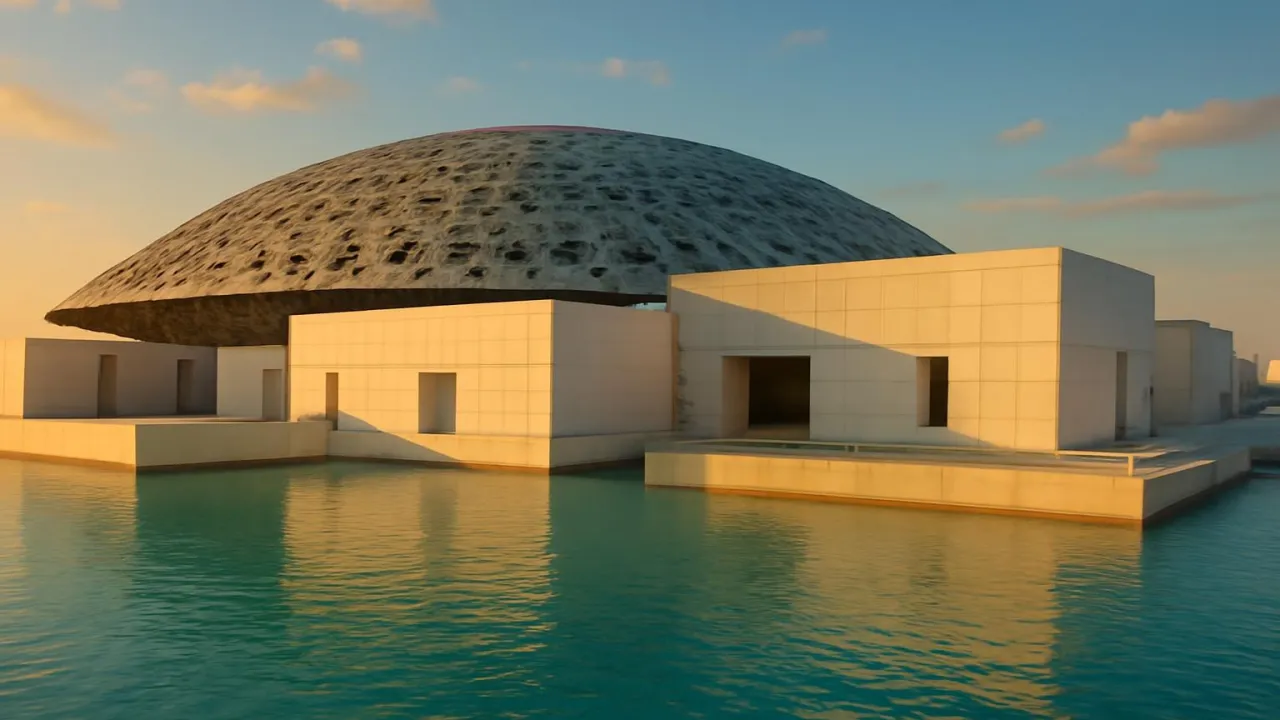
The Louvre Abu Dhabi has a huge dome. Sunlight slips through tiny holes in the roof. This makes dancing dots of light on the ground. Visitors feel like they are under a magical sky.
2
A World of Art
People visit to see art from many countries. There are old , colorful paintings, and shiny treasures. Some pieces are more than a thousand years old.
3
Museum by the Water
The museum sits on an by the sea. Water sparkles all around the building. Sometimes, visitors can even arrive by boat.
The dome is made of 7,850 stars that overlap to create moving light!
✨ Word Sparks (Grade 3 Glossary)
Tap 🔊 to hear
artifact
An old object made by people
erosion
Wearing away by wind or water
arch
A curved shape that holds weight
🪝
What if you walked inside a building where sunlight looked like glittering stars?
1
The Dome's Magic Light
The Louvre Abu Dhabi’s dome is made from eight layers of metal. Sunlight passes through thousands of tiny cutouts, creating a pattern called the 'rain of light.' This special effect makes visitors feel like they are walking under sparkling stars.
2
A Home for Global Treasures
Inside, the museum displays art and from all over the world. You can see ancient sculptures, colorful paintings, and even early tools. Each piece tells a story about people from different cultures and times.
3
Floating on the Gulf
The museum was built on Saadiyat Island, surrounded by the blue waters of the Persian Gulf. Its design makes it look like it is floating on the sea. The building’s foundations protect it from waves and salty water .
4
Building for the Future
Engineers used strong materials to create the wide dome. The dome’s shape spreads its weight evenly, using the principle of an . This helps the museum stay cool and bright, even in the desert heat.
The dome's pattern is inspired by palm leaves, a symbol of the region.
✨ Word Sparks (Grade 4 Glossary)
Tap 🔊 to hear
geometry
The math of shapes and patterns
artifact
An old object made by people
foundation
The strong base of a building
🪝
Imagine standing beneath a dome where sunlight weaves shifting patterns all around you—how did engineers make this possible?
1
A Dome Inspired by Geometry
The Louvre Abu Dhabi’s dome is a masterpiece of engineering, made from eight interlocking layers of aluminum and steel. Its 180-meter span is covered with almost 8,000 metal stars, each carefully positioned to create intricate geometric patterns. As sunlight passes through, these overlapping shapes produce a mesmerizing 'rain of light' effect, which moves across the museum’s white walls and floors throughout the day. This innovative design both shades the building and fills it with natural light.
2
A Museum Without Borders
Inside, the museum showcases art and from every continent, celebrating humanity’s shared creativity. Ancient statues, medieval manuscripts, and modern paintings are displayed side by side, showing connections between different cultures. The museum’s collection spans thousands of years, from prehistoric tools to contemporary masterpieces. Visitors can explore how ideas and inventions traveled across the world.
3
Architecture Meets the Sea
The museum sits on Saadiyat Island, surrounded by the turquoise waters of the Persian Gulf. Its are specially designed to resist erosion from saltwater and waves. The dome’s wide, shallow shape spreads its weight evenly, using principles of arches and to remain stable. This design makes the building appear as if it is floating gently above the sea.
4
A Symbol for the Future
Opened in 2017, the Louvre Abu Dhabi is a symbol of cultural exchange between France and the United Arab Emirates. Its innovative architecture has inspired museums around the world to use light and space in new ways. The museum’s mission is to connect people through art, encouraging visitors to see the world’s history as a shared story. Each year, thousands of people from many countries come to experience its wonders.
1. How does the dome help the museum use sunlight?
2. Why is the Louvre Abu Dhabi important to many countries?
🤯 Mind-Blowing Fact • Grade 5
The Louvre Abu Dhabi’s dome filters sunlight into over 7,850 moving light spots every day.
✨ Word Sparks (Grade 5 Glossary)
Tap 🔊 to hear
latticework
A crisscross pattern made from strips
corrosive
Able to slowly wear away materials
mashrabiya
A carved screen for light and shade
🪝
What if a museum’s roof could filter sunlight into thousands of sparkling beams—how do architects achieve this magical effect?
1
Engineering the Dome of Light
The Louvre Abu Dhabi’s dome is an engineering marvel, stretching 180 meters (590 feet) in diameter and weighing approximately 7,500 tons—the same as the Eiffel Tower. Composed of eight intricate layers of aluminum and steel , the dome contains nearly 8,000 precisely angled metal stars. As sunlight passes through these overlapping geometric patterns, it creates a dynamic 'rain of light' that shifts with the sun’s movement, providing both shade and illumination. This innovative structure relies on the principles of distributed load and arch mechanics, allowing the dome to appear almost weightless as it floats above the galleries.
2
A Global Collection Under One Roof
The museum’s galleries house more than 600 artworks and artifacts spanning prehistory to the present, including ancient Egyptian statues, Renaissance paintings, and Islamic manuscripts. The collection is curated to highlight connections between civilizations, showing how ideas, technologies, and artistic styles have traveled across continents and centuries. This universal approach encourages visitors to see humanity’s shared history rather than focusing on national boundaries. Special exhibitions rotate throughout the year, bringing in masterpieces from major museums worldwide.
3
Architectural Harmony with the Sea
Located on Saadiyat Island, the museum’s foundations are engineered to withstand the effects of saltwater and tidal forces from the Persian Gulf. The building’s design, by architect Jean Nouvel, incorporates a shallow, double-curved dome that distributes its immense weight evenly across four hidden piers. This structural solution prevents erosion and allows the museum to appear as if it is floating on the water. The dome’s pattern is inspired by traditional Islamic screens and local palm fronds, blending global and regional architectural influences.
4
A Bridge Between Cultures
Louvre Abu Dhabi opened in 2017 as a result of a historic partnership between France and the United Arab Emirates, symbolizing a bridge between Eastern and Western cultures. The museum’s mission is to foster dialogue and understanding through the universal language of art. Educational programs, interactive exhibits, and multilingual tours invite visitors of all ages to explore the connections between civilizations. The building itself stands as a testament to innovation, sustainability, and the power of cultural exchange.
5
Innovations for a Sustainable Future
The dome’s layered design not only creates visual beauty but also serves a sustainable function by reducing the need for artificial lighting and cooling. The perforations in the dome allow for natural ventilation, while the shade it provides helps maintain a comfortable indoor temperature in the desert climate. Louvre Abu Dhabi has inspired architects worldwide to rethink how buildings interact with their environment, proving that art, science, and engineering can come together to create spaces that are both functional and breathtaking.