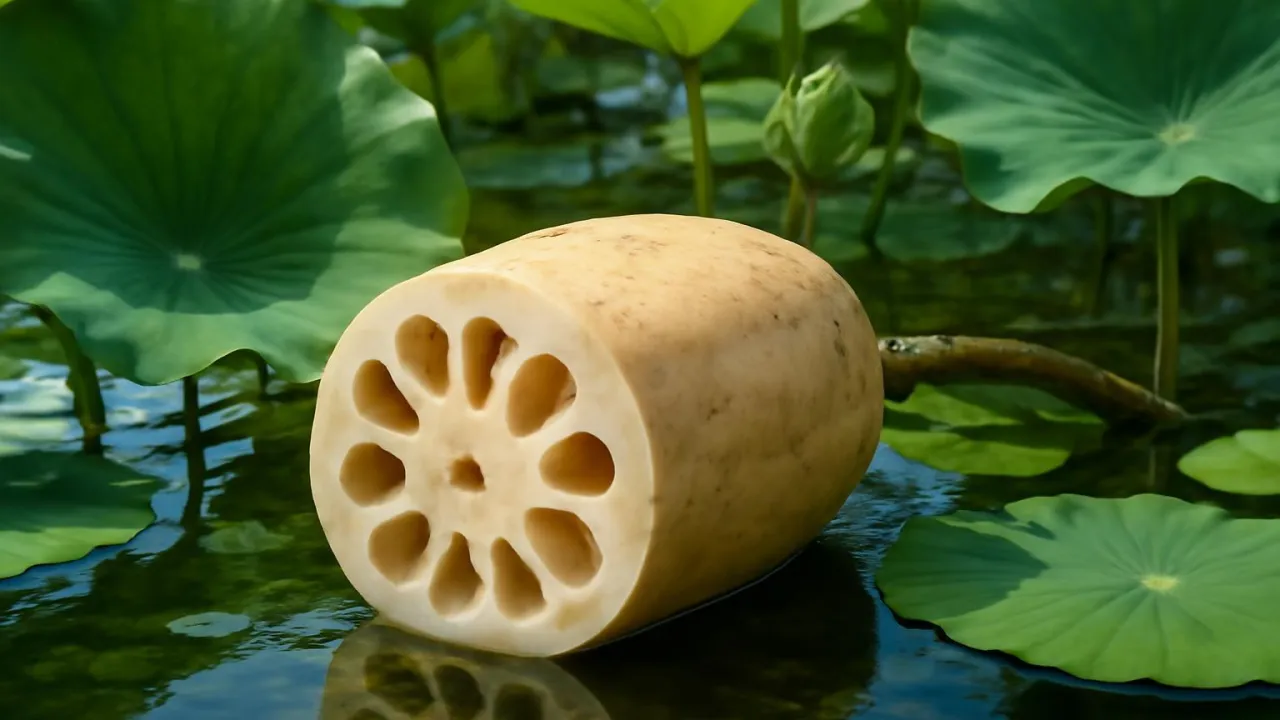
Lotus root’s air holes let it breathe underwater like a snorkel!
✨ Word Sparks (Grade 2 Glossary)
Tap 🔊 to hear
underwater
Living or happening below water
sunlight
Light that comes from the sun
freshwater
Water that is not salty
🪝
Have you ever seen a root that grows underwater and breathes air?
1
Growing Underwater
Lotus root grows in ponds and lakes. It needs warm weather and . The root is long and crunchy. People use it in many tasty dishes.
2
Special Air Holes
Inside the lotus root are many air holes. These holes help the root breathe . This special feature keeps the root fresh and alive. It also helps the plant grow strong.
3
Where It Lives
Lotus roots live in ponds mostly in Asia. They like muddy soil and calm water. Fish and frogs often live nearby. The plant’s leaves float on the water surface.
Lotus root’s air channels are a clever adaptation for underwater breathing.
✨ Word Sparks (Grade 3 Glossary)
Tap 🔊 to hear
adaptation
A change that helps a plant survive
nutrients
Food that plants need to grow
pollinators
Animals that help plants make seeds
🪝
Did you know lotus root has air channels that help it survive underwater?
1
Lotus Root’s Habitat
Lotus root grows in freshwater ponds and lakes where the water is calm. It thrives in warm, sunny climates mostly across Asia. The muddy soil provides that help the root grow strong. Fish and frogs often live nearby in this ecosystem.
2
Air Channels for Breathing
The lotus root has special air channels inside its thick stem. These channels allow oxygen to travel from the leaves down to the root underwater. This helps the root survive in low-oxygen muddy water. It is a smart way to get and air.
3
Physical Features and Uses
The root is crunchy and has a unique pattern of holes inside. These holes also help the plant float and stay fresh. People harvest lotus root to eat it in soups and stir-fries. It is a popular vegetable in many Asian cultures.
4
Life Cycle and Growth
Lotus plants start as seeds that grow underwater into long roots. The leaves grow above water and float on the surface. Flowers bloom in warm weather attracting like bees. This life cycle helps the plant spread and survive.
Lotus root’s air channels let it breathe underwater, shaping its role in freshwater ecosystems.
✨ Word Sparks (Grade 4 Glossary)
Tap 🔊 to hear
respiration
How living things use oxygen to live
symbiotic
Two living things helping each other
pollinators
Animals that help plants make seeds
🪝
How does lotus root’s unique structure help it thrive underwater and in ecosystems?
1
Cause and Effect of Air Channels
The lotus root’s air channels allow oxygen to travel from its leaves to submerged roots, enabling underwater . Because of this, the plant can survive in muddy, oxygen-poor environments where other plants cannot live. This adaptation increases its chances of survival and growth in freshwater ponds and lakes.
2
Role in the Ecosystem
Lotus plants provide food and shelter for many animals, including fish and insects, creating a rich food web. Their leaves shade the water, which helps control algae growth and maintain water quality. Humans also harvest lotus root for food, showing a relationship between people and this plant.
3
Geographic Distribution and Growth
Lotus root is native to Asia but has spread to other warm regions worldwide because of its popularity. It grows best in calm freshwater ponds with muddy soil and full sunlight. The plant’s flowers bloom above water, attracting like bees and butterflies that help reproduce the species.
4
Human Impact and Agriculture
Farmers cultivate lotus root in flooded fields, carefully managing water levels to optimize growth. Overharvesting can threaten wild populations, so sustainable farming practices are important. Lotus root also plays a role in cultural traditions and cuisine across many Asian countries.
1. What happens because lotus root has air channels?
2. How do humans affect lotus root growth?
🤯 Mind-Blowing Fact • Grade 5
Lotus root’s aerenchyma tissue channels oxygen underwater, a rare and vital aquatic adaptation.
✨ Word Sparks (Grade 5 Glossary)
Tap 🔊 to hear
aerenchyma
Plant tissue with air spaces for breathing
hypoxic
Having very little oxygen available
buoyancy
Ability to float in water or air
🪝
Did you know lotus root’s unique air channel system is a key evolutionary adaptation for aquatic survival?
1
Scientific Classification and Habitat
Lotus root, scientifically named Nelumbo nucifera, belongs to the Nelumbonaceae family and thrives in freshwater aquatic environments. It is native to Asia but is cultivated worldwide in temperate and tropical climates. The plant grows in muddy, oxygen-poor soils of ponds and lakes, where it has evolved special features to survive.
2
Physiological Mechanics of Air Channels
The lotus root contains a complex network of tissue forming air channels that transport oxygen from aerial leaves to submerged roots. This internal ventilation system supports aerobic respiration underwater, allowing the plant to survive in conditions. These channels also contribute to and structural support.
3
Conservation and Agricultural History
Historically, lotus root has been cultivated for over 3,000 years, especially in China and India, for its nutritional and cultural value. Sustainable farming practices are increasingly important to prevent habitat loss and overharvesting in wild populations. Conservation efforts focus on balancing agricultural demand with ecosystem health.
4
Ecological Role and Food Web Impact
Lotus root plants play a vital role in freshwater ecosystems by providing habitat and food for aquatic animals and insects. Their floating leaves reduce sunlight penetration, controlling algae blooms and maintaining water quality. The plant’s flowers attract pollinators, ensuring reproduction and genetic diversity within populations.
5
Quantitative Comparisons and Growth Details
Lotus roots can grow up to 60 centimeters long and weigh several pounds each, growing best at water temperatures between 20 and 30 degrees Celsius. The air channels occupy up to 30% of the root’s cross-sectional area, enabling efficient gas exchange. Compared to other aquatic plants, lotus root’s unique adaptations make it highly resilient.