🧬 HUMAN BODY
🧬 Hepar • Hepatobiliary & Metabolic System
VA Science & Health SOL 1.1, 3.1, 4.2, 5.1 (Cells, Organs & Body Systems)
Liver
Your Body's Five-Hundred-Job Chemical Super Lab
Grade 2 • Developing • 109 words
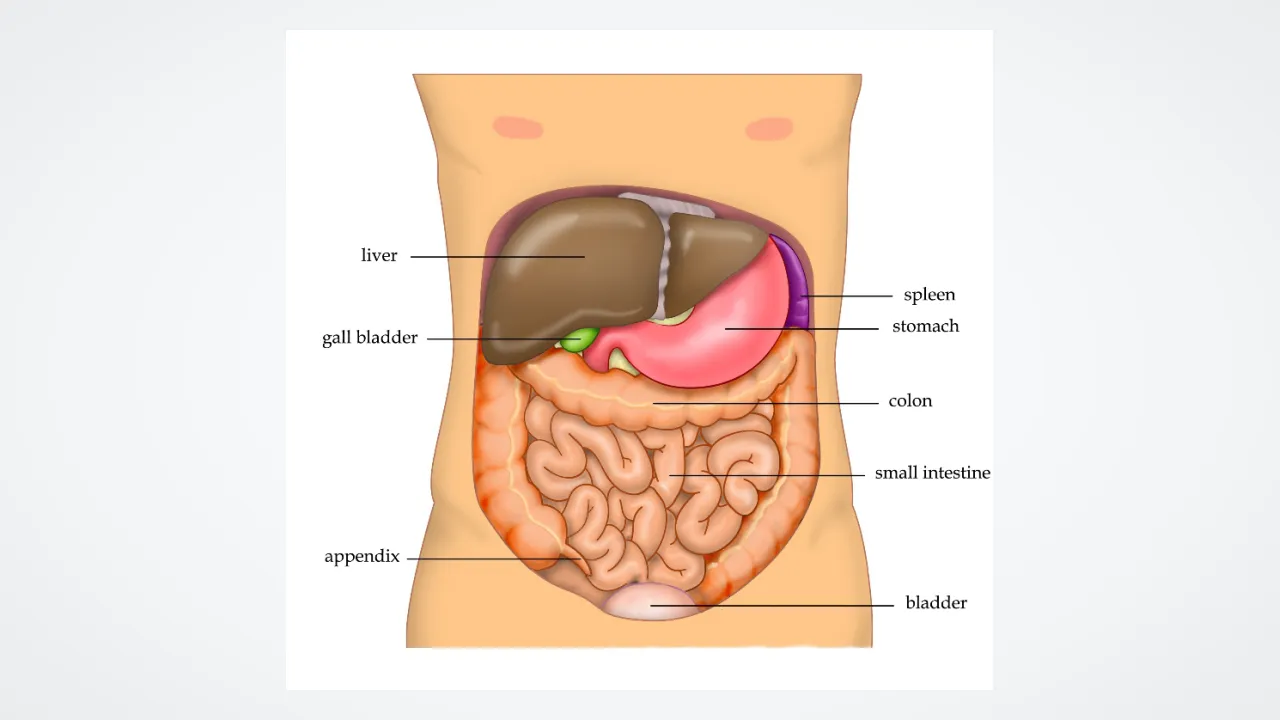
🩺 Body System & LocationUpper Right Abdomen • Tucked Safely Beneath the Diaphragm
🔬 Size / Cell Count~3 lb (1.4 kg) in adults • Football-sized wedge
⚙️ Core JobFilters blood, stores energy, makes bile, and runs 500+ chemical tasks
⚡ Body SuperpowerOnly internal human organ able to regrow to full size from a fraction
🤯 Mind-Blowing Fact • Grade 1
Your liver is the largest solid organ inside your body—about the size of a football when you grow up!
✨ Word Sparks (Grade 1 Glossary)
Tap 🔊 to hear
Organ
A body part with a very special job
Bile
Special liver juice that breaks down fats
Filter
To clean out unwanted bits from liquid
🪝
Which busy helper inside your belly does more than five hundred jobs at once?
1
Tucked Under Your Ribs
Put your hand on the right side of your tummy, right under your ribs. Inside sits your liver! It is smooth, reddish-brown, and shaped like a neat triangle.
2
Clean Blood and Stored Fuel
Blood from your tummy flows right into your liver first. Your liver cleans out trash and saves extra food energy for later. When you run and jump, it shares that fuel!
3
Making Helpful Juice
Your liver also makes a green-yellow juice called . Bile helps break down buttery and cheesy foods so your body grows strong.
1. Where is your liver tucked safely inside your body?
2. What does your liver save from meals so you have energy to run later?
🤯 Mind-Blowing Fact • Grade 2
More than a quart of blood flows through your liver every single minute to get cleaned and balanced!
✨ Word Sparks (Grade 2 Glossary)
Tap 🔊 to hear
Nutrients
Helpful food parts that build and fuel you
Regrow
Build fresh cells to replace missing parts
Iron
Important mineral that helps blood carry oxygen
🪝
What happens to the nutrients in your breakfast right after they leave your intestines?
1
First Stop After Lunch
Imagine a giant sorting station working nonstop under your right ribs. Whenever enter your blood from your intestines, they visit the liver first! This three-pound organ inspects everything before sending clean, balanced blood out to the rest of your body.
2
The Energy Pantry
Right after you eat pancakes or fruit, your blood has plenty of sugar. Your liver packs extra sugar into neat bundles and stores vitamins and too. Hours later, between meals, it unpacks that fuel so your brain stays sharp.
3
Regrowing Like Magic
Best of all, liver cells have an amazing superpower. If part of a healthy liver is removed by doctors, the remaining piece can grow back to full size!
1. What amazing superpower sets the liver apart from every other internal organ?
2. Why does nutrient-rich blood from your intestines travel straight to the liver first?
🤯 Mind-Blowing Fact • Grade 3
At any given moment, your liver holds about thirteen percent of all the blood circulating in your entire body!
✨ Word Sparks (Grade 3 Glossary)
Tap 🔊 to hear
Hepatocytes
Hardworking main cells that build the liver
Glycogen
Stored chains of sugar saved for energy
Portal Vein
Vessel carrying nutrient blood from gut to liver
🪝
How can one three-pound organ juggle making blood proteins, storing vitamins, and scrubbing out waste all at the same time?
1
A Dual Blood Supply
Step inside your body's busiest chemical laboratory! Nestled under your diaphragm on the upper right side of your abdomen, the liver receives blood from two major highways at once. The hepatic artery brings fresh oxygen from the heart, while the delivers nutrient-packed blood straight from the stomach and intestines.
2
Glycogen Battery Pack
Inside the liver, millions of worker cells called monitor your blood sugar. When glucose rises after lunch, hepatocytes link sugar molecules into long chains called for safe storage. When you sleep or exercise, the liver snips glycogen back into glucose so your muscles and brain never run low.
3
Detox and Recycling Crew
Every day, old worn-out red blood cells finish their work. Liver cells recycle their valuable iron and turn leftover pigment into yellowish bilirubin, sweeping it into bile. also break down medicines and turn harmful ammonia into safe urea for your kidneys to wash away.
4
Building Blood Helpers
Even when you scrape your knee, thank your liver—it manufactures the clotting proteins that help form a protective scab!
1. In what form does the liver store extra glucose so you have steady energy between meals?
2. How does your liver help when you get a small paper cut on your finger?
🤯 Mind-Blowing Fact • Grade 4
Your liver contains around 100,000 microscopic six-sided units called lobules, each filtering blood from its outer corners to a single central vein!
✨ Word Sparks (Grade 4 Glossary)
Tap 🔊 to hear
Lobules
Tiny six-sided working units inside the liver
Urea
Harmless compound made from leftover protein waste
Albumin
Abundant liver protein keeping fluid inside blood vessels
🪝
What do hundreds of thousands of tiny six-sided honeycombs inside your liver have to do with keeping every drop of your blood clean?
1
Hexagonal Micro-Factories
Magnify a slice of human liver tissue, and a stunning geometric pattern appears: roughly 100,000 tiny six-sided cylinders called hepatic arranged like a microscopic honeycomb! At each of the six corners sits a 'portal triad' containing a tiny branch of the hepatic artery, a branch of the hepatic portal vein, and a miniature bile duct. Blood flows inward from the corners toward a central vein, trickling past plates of hepatocytes.
2
Kupffer Cells on Patrol
Lining those leaky blood channels—called sinusoids—stand specialized immune sentries named Kupffer cells. Like vigilant goalies, Kupffer cells snatch stray bacteria that slipped across the intestinal wall and dismantle aged red blood cells, salvaging iron for new bone marrow cells while converting heme into bilirubin.
3
Master of 500 Chemical Reactions
Few organs rival the biochemical versatility of hepatocytes. Responding to pancreatic hormones like insulin and glucagon, they balance blood glucose through glycogenesis and glycogenolysis, synthesize cholesterol and lipoproteins, store fat-soluble vitamins A, D, E, and K plus vitamin B12, and manufacture plasma proteins such as and fibrinogen.
4
Safe Waste Conversion
Whenever cells digest protein, toxic ammonia forms as a byproduct. Using the cycle, liver enzymes rapidly convert ammonia into harmless urea, which dissolves into blood and exits cleanly through the kidneys.
1. What job do specialized Kupffer cells perform inside liver sinusoids?
2. Why is the liver's urea cycle essential after you eat protein-rich foods?
🤯 Mind-Blowing Fact • Grade 5
Even if surgeons safely remove two-thirds of a healthy donor's liver, the remaining cells divide rapidly until the liver regains its original weight in less than two months!
Making brand-new glucose from non-sugar building blocks
Hyperplasia
Tissue growth caused by cells dividing rapidly
🪝
How can surgeons donate more than half of a healthy adult liver to save another person, knowing both halves will regrow into full-sized organs within weeks?
1
Anatomical Scale and Vascular Engineering
Weighing approximately 1.4 to 1.6 kilograms (3 to 3.5 pounds) in adults, the liver—known anatomically as the hepar—is both the largest internal organ and the largest exocrine-endocrine gland in the human body. Divided externally into four lobes beneath the right dome of the diaphragm, it processes roughly 1.4 liters of blood per minute. Uniquely, about 75 percent of this inflow arrives deoxygenated yet nutrient-laden via the hepatic portal vein from the gastrointestinal tract and spleen, while the remaining 25 percent arrives oxygen-rich via the hepatic artery.
2
Sinusoidal Architecture and First-Pass Metabolism
Within each hexagonal hepatic lobule, portal blood and arterial blood mingle inside fenestrated capillaries called . Because sinusoidal walls have microscopic pores, blood plasma bathes the microvilli of hepatocytes directly in the space of Disse. Pharmacologists call this checkpoint 'first-pass metabolism': cytochrome P450 enzymes inside hepatocytes chemically modify oral medications, hormones, and environmental toxins in two phases—oxidizing molecules and tagging them with water-soluble groups for safe biliary or renal excretion.
3
Metabolic Hub of Carbohydrates, Lipids, and Proteins
Beyond storing up to 100 grams of hepatic glycogen, hepatocytes perform —synthesizing fresh glucose from amino acids and glycerol during prolonged fasting. They also synthesize bile salts, assemble VLDL and HDL lipoproteins, deaminate amino acids through the ornithine-urea cycle discovered by Hans Krebs and Kurt Henseleit in 1932, and produce crucial plasma proteins including albumin, transferrin, complement immune factors, and coagulation factors.
4
Compensatory Hyperplasia: The Secret of Regeneration
Unlike salamanders that regrow severed limbs from stem-cell buds, human liver regeneration relies on compensatory . Normally quiescent mature hepatocytes swiftly re-enter mitosis when growth factors signal tissue loss; even if 65 percent of a healthy liver is surgically resected, remaining lobes expand to restore original functional mass within six to eight weeks!
5
Lifesaving Medical Frontiers
This extraordinary regenerative capacity enables living-donor liver transplantation, turning basic cellular biology into one of modern medicine's greatest miracles.