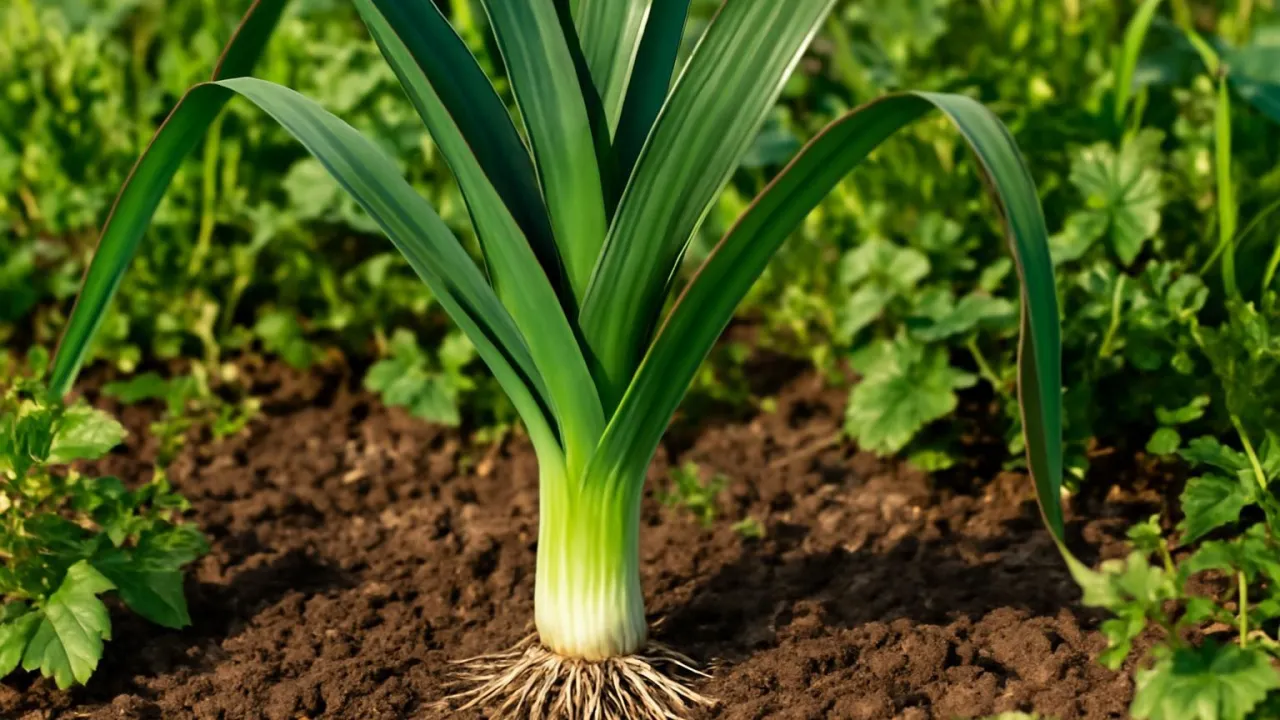
Leeks can grow up to two feet tall and have a mild onion flavor!
✨ Word Sparks (Grade 2 Glossary)
Tap 🔊 to hear
vegetable
A plant we eat for food.
stalk
The long part that holds leaves.
flavor
The taste of food or drink.
🪝
Have you ever tasted a vegetable that looks like a big green onion?
1
What Is a Leek?
Leeks are that look like big green onions with white . They grow tall in gardens and fields. People use leeks in many tasty dishes.
2
Where Do Leeks Grow?
Leeks grow best in cool places with soft soil and plenty of water. They need full sun to grow strong and healthy. Farmers plant leeks in rows in the ground.
3
Leek’s Special Feature
Leeks have a mild, sweet taste that is less strong than onions. Their crunchy white is fun to eat raw or cooked. They add without making food too spicy.
Leeks belong to the same family as onions but have a milder, sweeter flavor and grow tall stalks.
✨ Word Sparks (Grade 3 Glossary)
Tap 🔊 to hear
pollinators
Animals like bees that help plants make seeds.
nutrients
Good stuff in soil that helps plants grow.
crop rotation
Planting different crops to keep soil healthy.
🪝
Did you know leeks are part of the onion family but taste much milder?
1
Leek’s Appearance and Family
Leeks belong to the Allium family, which includes onions and garlic. They have long white stalks and flat green leaves. Their mild flavor makes them popular in cooking. Leeks can grow up to two feet tall.
2
How Leeks Grow and Survive
Leeks grow best in cool, moist soil with plenty of sunlight. Their long stalks help them reach sunlight above other plants. They absorb from the soil to grow strong and healthy. Leeks are hardy and survive cold weather well.
3
Leek’s Role in Cooking
Leeks add flavor to soups, stews, and salads without overpowering other ingredients. Their mild taste is a gentle alternative to strong onions. They are crunchy when raw and soft when cooked. Leeks also provide important like vitamins A and C.
4
How Leeks Help the Ecosystem
Leeks can improve soil health by adding back after harvest. They attract like bees when they flower. These flowers help spread pollen for other plants. Leeks also fit well in to keep soil healthy.
Leeks bloom purple flowers that attract pollinators, helping many plants grow in their environment.
✨ Word Sparks (Grade 4 Glossary)
Tap 🔊 to hear
photosynthesis
How plants use sunlight to make food.
biodiversity
Many different kinds of plants and animals living together.
fertile
Soil rich in nutrients for plants to grow well.
🪝
How do leeks grow tall and mild while helping their environment?
1
Leek’s Growth and Adaptation
Leeks grow in temperate climates where they receive full sun and moist soil, which helps them thrive. Their long white stalks are tightly wrapped to protect from cold weather and pests. This adaptation allows leeks to survive in cooler seasons better than many other vegetables. Their flat green leaves collect sunlight for , fueling their growth.
2
Leek’s Role in Ecosystems
Leeks attract pollinators such as bees and butterflies when they bloom with purple flowers in late summer. These pollinators help spread pollen, supporting plant reproduction and in the ecosystem. Additionally, leeks improve soil health by adding organic matter after harvest, which benefits future crops. Farmers use leeks in crop rotations to reduce pests and maintain soil.
3
Leeks and Human Use
Humans have cultivated leeks for thousands of years due to their mild flavor and nutritional benefits. Leeks are rich in vitamins A and C, which support immune health and vision. Their mild taste makes them a popular ingredient in soups, stews, and salads worldwide. Leeks also contribute to sustainable agriculture by enriching the soil and reducing the need for chemical fertilizers.
4
Where Leeks Are Found
Leeks originally come from the Mediterranean region but are now grown worldwide in temperate zones. They grow best in well-drained, soils with consistent moisture. Countries like France, the United Kingdom, and the United States produce large quantities of leeks commercially. Their ability to grow in cooler climates makes them valuable in many agricultural systems.
Leeks have been cultivated for over 4,000 years and help improve soil health while feeding people worldwide.
✨ Word Sparks (Grade 5 Glossary)
Tap 🔊 to hear
morphological
How a plant’s shape or form looks.
pollinators
Animals like bees that help plants make seeds.
photosynthesis
How plants use sunlight to make food.
🪝
What makes the leek a unique vegetable in the onion family with ecological and culinary importance?
1
Scientific Classification and Origins
Leeks belong to the species Allium ampeloprasum var. porrum within the Amaryllidaceae family. They are native to the Mediterranean basin, where they have been cultivated for over 4,000 years. Unlike onions, leeks develop a long cylindrical white stalk formed by tightly wrapped leaf sheaths. This adaptation distinguishes them within the Allium genus.
2
Physiological Adaptations and Growth
Leeks grow best in temperate climates with full sun exposure and moist, well-drained soils rich in organic matter. Their tightly wrapped leaf sheaths protect the stalk from cold temperatures and pests, allowing growth during cooler seasons. occurs primarily in their flat green leaves, which efficiently capture sunlight. Leeks absorb nutrients like nitrogen and phosphorus to support their steady growth.
3
Ecological Role and Agricultural Benefits
When leeks flower, they produce umbels of purple flowers that attract important such as bees and butterflies. These pollinators facilitate cross-pollination, enhancing genetic diversity among Allium species. Additionally, leeks contribute to sustainable agriculture by improving soil structure and fertility through organic matter return. Crop rotation involving leeks reduces pest cycles and decreases reliance on chemical pesticides.
4
Culinary Uses and Nutritional Value
Leeks provide a mild, sweet flavor that is less pungent than onions, making them versatile in culinary applications including soups, stews, and salads. They are rich in vitamins A, C, and K, as well as dietary fiber and antioxidants. Their crunchy white stalks and tender green leaves offer different textures and flavors. Leeks have been valued historically for both their taste and medicinal properties.
5
Quantitative Comparisons and Cultivation
Leeks typically grow between 12 and 24 inches tall, with stalk diameters ranging from one to two inches. They prefer soil temperatures between 55 and 75 degrees Fahrenheit for optimal growth. Commercial yields can reach up to 20,000 pounds per acre under ideal conditions. Compared to onions, leeks require longer growing seasons but offer unique flavors and ecological benefits.