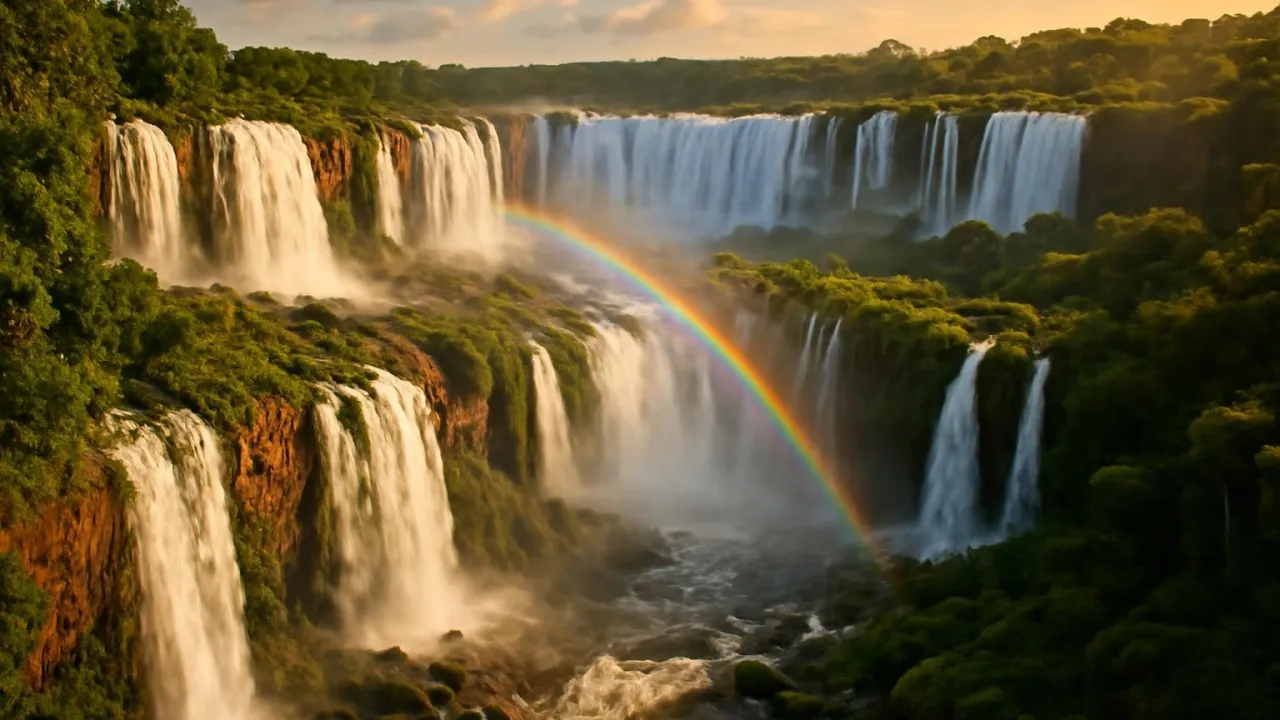
The Devil’s Throat waterfall is as tall as a 25-story building!
✨ Word Sparks (Grade 2 Glossary)
Tap 🔊 to hear
stream
A small, flowing river
walkway
A safe path for walking
wildlife
Animals that live in nature
🪝
What if you stood where the earth shakes from water?
1
Roar and Splash
Iguazu Falls is so loud, you can feel the ground shake. The water tumbles down in hundreds of , making a giant splash. The mist rises high, and sometimes you see bright rainbows.
2
A Giant Waterfall Family
There are over 275 waterfalls here, all grouped together. Some are tall and narrow, while others are wide and powerful. The biggest is called the Devil’s Throat, where the water crashes down the hardest.
3
Wildlife and Walkways
People walk on special paths to see the falls up close. Colorful birds and butterflies fly above the water. You might feel cool drops of water on your face as you watch.
1. What is the biggest part of Iguazu Falls called?
2. What might you feel near the falls?
🤯 Mind-Blowing Fact • Grade 3
Iguazu Falls is nearly three times wider than Niagara Falls!
✨ Word Sparks (Grade 3 Glossary)
Tap 🔊 to hear
erosion
Wearing away of rocks by water
vibration
Fast shaking movement
habitat
A place where animals live
🪝
What would it feel like to stand beside a wall of thundering water?
1
A Roaring Wonder
At Iguazu Falls, the sound of water crashing is so loud, it vibrates the ground beneath your feet. The falls stretch for almost two miles, with 275 separate waterfalls pouring over rocky cliffs. The tallest drop, called the Devil’s Throat, sends mist soaring into the air. Rainbows often appear where the sunlight meets the swirling spray.
2
Nature’s Giant Staircase
The waterfalls form a natural staircase, with water tumbling from one level to the next. This unique shape was created by , as the river slowly wore away the volcanic rock. The Paraná River feeds the falls, bringing water from far away mountains. Each waterfall has its own size, shape, and sound.
3
Home to Amazing Wildlife
Iguazu Falls is surrounded by lush rainforest, filled with wildlife like toucans, monkeys, and butterflies. The constant mist helps plants grow thick and green all around the falls. Some animals use the spray to stay cool on hot days. Visitors walk on special walkways to get close, but they must respect the wild .
4
A Place for People
People from all over the world come to see Iguazu’s beauty. The falls are protected as a UNESCO World Heritage site, which helps keep them safe. Engineers built sturdy bridges and viewing platforms so everyone can enjoy the view. The falls are a symbol of nature’s power and wonder.
The Devil’s Throat drop is so powerful it produces its own clouds!
✨ Word Sparks (Grade 4 Glossary)
Tap 🔊 to hear
basalt
Hard, dark volcanic rock
microclimate
Small area with special weather
biodiversity
Many different living things in one place
🪝
What secrets do the roaring waters of Iguazu Falls hold for explorers and scientists?
1
The Mighty Iguazu
Standing near Iguazu Falls, the thunderous sound of water creates a powerful vibration you can feel in your chest. The falls are made up of 275 separate cascades, stretching nearly 1.7 miles across the border of Argentina and Brazil. The tallest drop, called the Devil’s Throat, plunges 269 feet into a swirling pool below. Mist rises high above the rainforest, often forming brilliant rainbows in the sunlight.
2
How Nature Built the Falls
Iguazu Falls was formed by volcanic activity and erosion over thousands of years. The Paraná River carved its path through layers of rock, creating a series of dramatic ledges. Water constantly erodes the rock, slowly changing the shape of the falls. Scientists study these processes to understand how rivers shape our planet’s surface.
3
A Rainforest Wonderland
The falls are surrounded by subtropical rainforest, home to hundreds of animal species, including toucans, jaguars, and coatis. The constant spray from the falls creates a humid , helping rare plants and orchids thrive. Conservationists work hard to protect this unique habitat, as it is one of the world’s richest areas for .
4
People and Preservation
Iguazu Falls is a UNESCO World Heritage site, attracting over a million visitors each year. Engineers designed special walkways and viewing platforms to let people experience the falls safely without harming the environment. The falls are important to local cultures, who have told stories about their power for centuries. Today, the site inspires scientists, artists, and nature lovers from around the globe.
1. How did volcanic activity help form Iguazu Falls?
2. Why are special walkways important at Iguazu Falls?
🤯 Mind-Blowing Fact • Grade 5
During peak flood, Iguazu Falls pours out enough water to fill 200 Olympic-sized swimming pools every second!
✨ Word Sparks (Grade 5 Glossary)
Tap 🔊 to hear
kinetic energy
Energy from moving things, like falling water
erosion
When water or wind wears away rock
conservation
Protecting nature and living things
🪝
Imagine standing on a platform as millions of gallons of water thunder past—what forces shape Iguazu Falls’ breathtaking spectacle?
1
A Border of Water and Wonder
Iguazu Falls, straddling the border between Argentina and Brazil, is the world’s largest waterfall system by width, with 275 individual drops stretching across nearly 1.7 miles (2.7 kilometers). The falls are located in the subtropical Paraná River basin, where the river suddenly plunges over a basalt cliff formed by ancient volcanic eruptions. The sound of the falling water is so intense that it can be heard from miles away, and the vibration of the ground is a testament to the immense released.
2
Geological Forces at Work
The formation of Iguazu Falls began approximately 135,000 years ago, when volcanic activity deposited thick layers of basalt rock across the region. Over thousands of years, the Paraná River eroded these layers, carving out a series of stepped cliffs that create the falls’ dramatic multi-level structure. continues today, as the force of the water slowly wears away the rock, causing the falls to retreat upstream at an average rate of 1.5 centimeters per year.
3
Hydrology and Ecosystems
The volume of water flowing over Iguazu Falls varies seasonally, but during peak flood, more than 450,000 cubic feet (12,750 cubic meters) of water can plunge over the edge every second. The constant spray from the falls creates a humid microclimate that supports a rich rainforest ecosystem, home to over 2,000 plant species and hundreds of animal species, including endangered jaguars and giant otters. The falls’ unique environment is a hotspot for biodiversity and scientific research.
4
Human Engineering and Conservation
Iguazu Falls is protected as a UNESCO World Heritage site on both the Argentine and Brazilian sides, drawing over 1.5 million visitors annually. Engineers have designed elevated walkways and viewing platforms that allow visitors to experience the falls up close while minimizing environmental impact. efforts focus on preserving the rainforest habitat, managing tourism sustainably, and protecting endangered species that depend on this unique ecosystem.
5
Cultural and Global Significance
For centuries, indigenous Guarani people have told legends about the falls’ creation, considering them sacred. Today, Iguazu Falls is celebrated as one of the New Seven Natural Wonders of the World, inspiring artists, writers, and scientists worldwide. The falls symbolize the power and beauty of nature, reminding us of the importance of protecting Earth’s most extraordinary places for future generations.