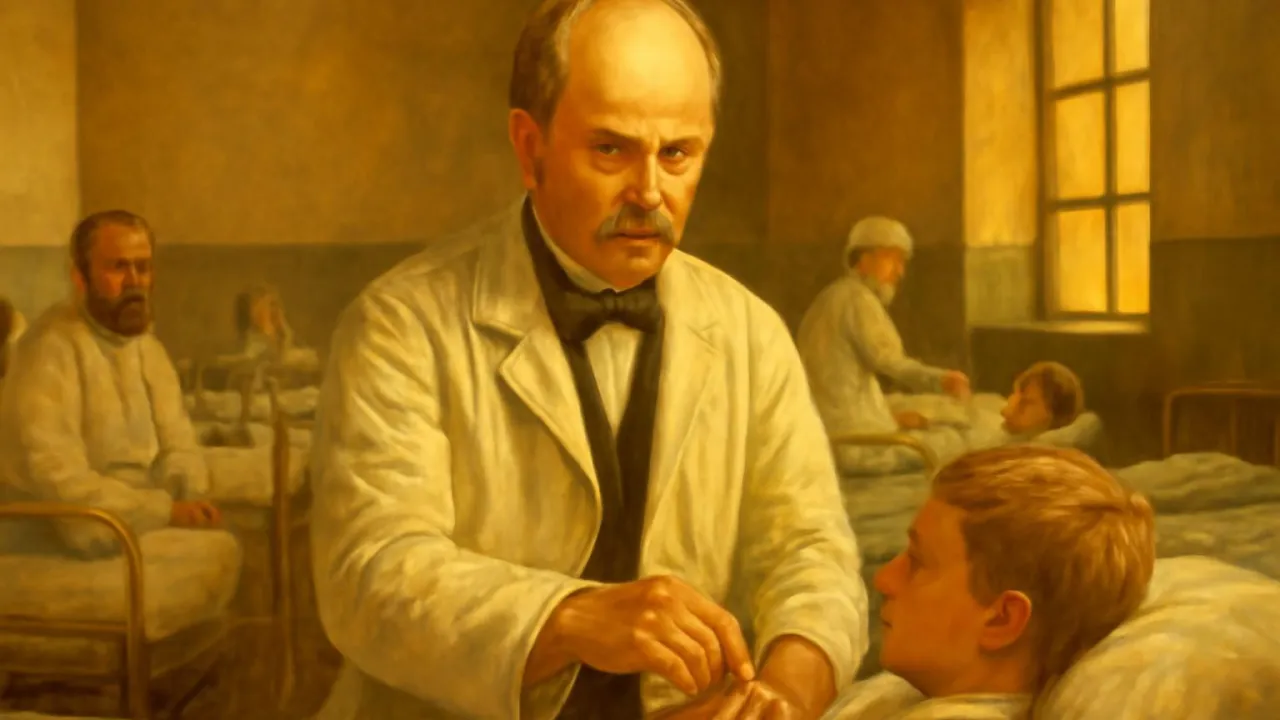
Semmelweis’s handwashing rule cut sickness rates by more than half!
✨ Word Sparks (Grade 2 Glossary)
Tap 🔊 to hear
hospital
A place where people get help when sick
germs
Tiny living things that cause sickness
discovery
Finding out something new and important
🪝
How can washing hands stop sickness in a busy hospital?
1
Curious Doctor Learns
Ignaz Semmelweis noticed many mothers got sick after childbirth. He wondered why this happened. He watched doctors work in the every day.
2
Hard Work and New Ideas
He asked doctors to wash their hands with a special liquid. This was a new idea that took hard practice. Soon, fewer mothers became sick and many lives were saved.
3
A Big Achievement
His saved many lives in the . People started to understand cause sickness. Ignaz’s work helped change how doctors care for patients.
1. What did Ignaz ask doctors to do to help mothers?
2. What did people learn from Ignaz’s work?
🤯 Mind-Blowing Fact • Grade 3
Semmelweis’s handwashing practice was the first known antiseptic procedure!
✨ Word Sparks (Grade 3 Glossary)
Tap 🔊 to hear
hypothesis
A smart guess to explain something
perseverance
Keep trying even when it is hard
infection
When germs make the body sick
🪝
What happens when doctors learn about germs and cleanliness?
1
A Hypothesis About Sickness
Ignaz Semmelweis formed a that germs caused in hospitals. He observed that doctors who did not wash their hands spread disease. This idea was new and challenged old beliefs. He believed cleanliness could save lives.
2
Perseverance in Practice
Semmelweis introduced handwashing with chlorinated lime to kill germs. He showed even when others doubted him. His method reduced rates dramatically. This was an early step toward modern antiseptic techniques.
3
Changing Medical Philosophy
His work influenced the philosophy of medical care and hygiene. Semmelweis’s findings helped doctors understand the importance of preventing contamination. His ideas improved sportsmanship in hospitals by promoting teamwork and care. He faced obstacles but never gave up.
4
A Lasting Championship
Though not fully accepted in his lifetime, Semmelweis’s discoveries won a lasting championship in medicine. Today, handwashing is a basic rule worldwide. His courage changed how hospitals fight and save lives.
1. What did Semmelweis use to clean doctors’ hands?
2. Why was Semmelweis’s idea hard for others to accept?
🤯 Mind-Blowing Fact • Grade 4
Semmelweis’s handwashing practice lowered death rates from childbed fever by over 90%!
✨ Word Sparks (Grade 4 Glossary)
Tap 🔊 to hear
mortality
The number of people who die from sickness
antiseptic
Something that kills germs and keeps things clean
contamination
When germs make something dirty or unsafe
🪝
How did Semmelweis’s handwashing change hospitals around the world?
1
Historical Context of Medicine
In the mid-1800s, doctors did not understand how infections spread in hospitals, causing many deaths. Ignaz Semmelweis worked in Vienna’s maternity ward, where childbed fever was common and deadly. Medical practices lacked hygiene, and doctors moved between patients without washing hands. This historical context made Semmelweis’s discoveries revolutionary for his time.
2
Turning Point with Handwashing
Semmelweis noticed that doctors who performed autopsies before delivering babies spread infections. He introduced handwashing with chlorinated lime, which drastically reduced rates. This turning point showed that invisible germs caused disease, changing medical thinking forever. His insistence on cleanliness was a radical innovation in healthcare.
3
Signature Innovations and Techniques
Semmelweis’s signature innovation was promoting techniques before germ theory was widely accepted. He emphasized that washing hands and instruments prevented . His work laid the foundation for later scientists like Pasteur and Lister. These techniques improved patient safety and hospital hygiene globally.
4
Global Impact and Legacy
Although Semmelweis faced criticism during his life, his discoveries eventually transformed medicine worldwide. Today, handwashing is a fundamental practice in hospitals everywhere, saving millions of lives. His legacy inspires ongoing efforts to prevent infections and promote public health. Semmelweis’s courage and science changed the world.
1. Why was Semmelweis’s handwashing idea so important?
2. Who built on Semmelweis’s work later?
🤯 Mind-Blowing Fact • Grade 5
Semmelweis’s handwashing cut deaths in his hospital by over 90% before germ theory was known.
✨ Word Sparks (Grade 5 Glossary)
Tap 🔊 to hear
pathogen
A tiny germ that causes sickness
antiseptic
A way to kill germs and keep clean
paradigm
A big idea that changes how we think
🪝
What if a doctor’s simple idea changed hospitals forever?
1
A Doctor’s Unseen Battle
Ignaz Semmelweis noticed many mothers died after childbirth in his hospital ward. He wondered if something invisible was causing these deaths. Doctors often moved from autopsies to patients without cleaning their hands. Semmelweis believed this spread something harmful, even though others did not understand yet.
2
The Science Behind Handwashing
He introduced washing hands with a chlorinated lime solution to kill invisible germs. This method drastically lowered infections and saved many lives. His discovery showed how tiny can spread disease through careless contact. Semmelweis’s work was an early proof of germ theory before it was widely accepted.
3
Facing Challenges and Resistance
Despite clear evidence, many doctors rejected Semmelweis’s ideas because they conflicted with old beliefs. He faced criticism and isolation but kept advocating for hygiene. His persistence demonstrated how difficult it can be to change scientific . Eventually, his work became the foundation for modern infection control.
4
Lasting Impact on Medicine
Semmelweis’s handwashing protocol reduced maternal mortality rates from nearly 18% to under 2%. Later scientists like Pasteur and Lister expanded on his techniques. Today, hand hygiene is a global standard in hospitals, saving millions of lives every year. Semmelweis’s courage changed medical history forever.
5
Lessons for Today’s World
His story teaches us the power of observation, science, and never giving up on good ideas. Simple actions like washing hands can have huge effects on health worldwide. Semmelweis inspires doctors and scientists to keep searching for ways to protect and save lives. His legacy reminds us that small changes can make a big difference.