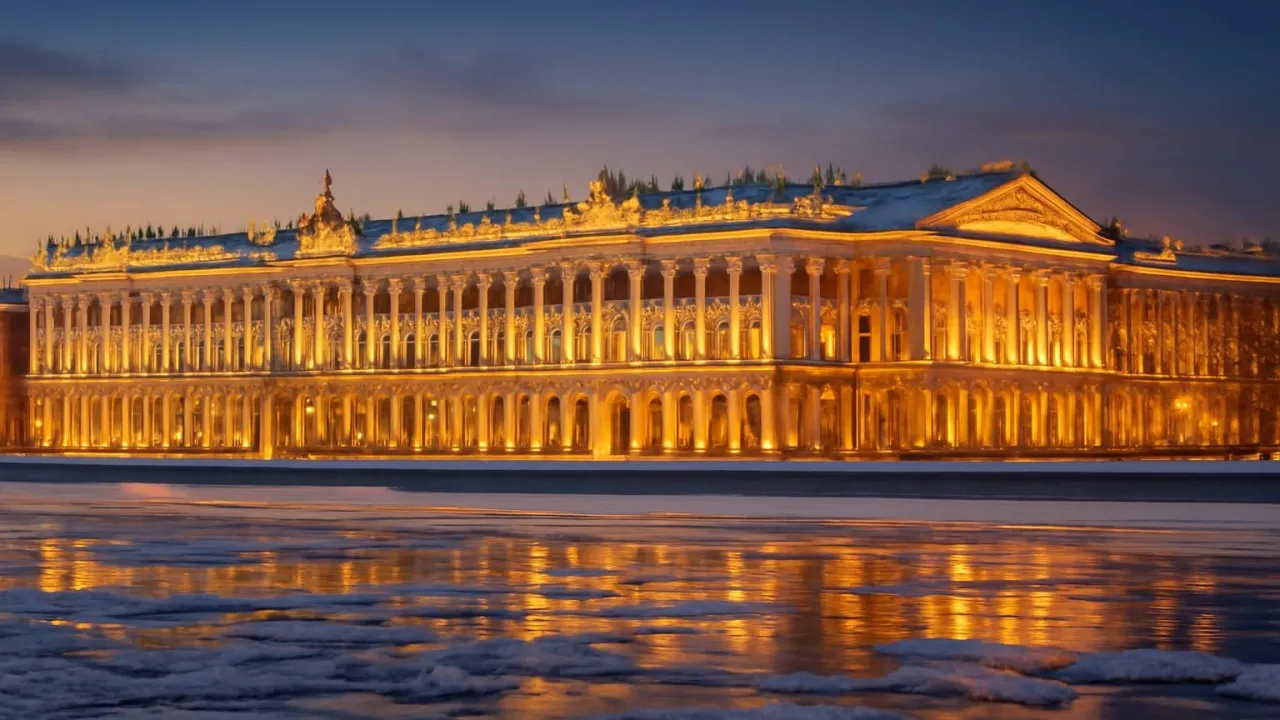
The Hermitage’s art collection is one of the biggest in the world.
✨ Word Sparks (Grade 2 Glossary)
Tap 🔊 to hear
museum
A place where you see old things
chandelier
A big, fancy light that hangs
treasure
Something very special or valuable
🪝
Can you imagine walking through endless halls of sparkling art and golden rooms?
1
A Shiny Palace in the Snow
The Winter Palace stands tall beside the icy Neva River. Its green and white walls shine in the winter sun, and golden decorations sparkle everywhere. People come from all over the world to see it.
2
Rooms Full of Art
Inside, there are over a thousand rooms filled with beautiful paintings and statues. Some rooms have giant crystal , and others have floors that look like puzzles. Visitors walk from room to room, amazed by the colors and shapes.
3
A Home for Treasures
The Hermitage is now a huge with art from many countries. It holds more than two million pieces, including paintings, jewelry, and ancient things. Every year, thousands of people explore its halls and learn about art.
If you spent one minute at each exhibit, it would take over 11 years to see everything!
✨ Word Sparks (Grade 3 Glossary)
Tap 🔊 to hear
Baroque
A fancy, decorated building style
chandelier
A large, sparkling hanging light
column
A tall post that holds things up
🪝
What secrets might you find if you wandered through a palace with over a thousand rooms?
1
The Palace by the River
The Winter Palace stands along the Neva River, its green and white walls glowing in the cold sunlight. Designed in the style, the palace is decorated with golden statues and fancy . In winter, snow covers the roof, making it look like a frosted cake. People from all over the world visit to see its beauty.
2
A Maze of Art
Inside the Hermitage, there are more than 1,000 rooms filled with art from many countries. The museum holds paintings, sculptures, and ancient treasures in its giant halls. Some rooms have marble floors and sparkling that reflect the light. Visitors walk through the maze, discovering new surprises at every turn.
3
How Was It Built?
The palace was built in the 1700s using strong stone and wood. Architects used arches and to support the giant rooms and tall ceilings. The walls are painted with bright colors and decorated with gold leaf. Builders worked carefully to make the palace both strong and beautiful.
4
A Place of History
The Hermitage was once the home of Russian emperors before becoming a museum. Today, it protects millions of art objects, from ancient Greek statues to sparkling jewels. The museum is famous for its huge painting collection, including works by da Vinci and Rembrandt. Every year, people come to learn about art and history in its halls.
The Hermitage’s art collection is so vast, it stretches across six historic buildings.
✨ Word Sparks (Grade 4 Glossary)
Tap 🔊 to hear
Neoclassical
A building style with simple, grand shapes
artifact
An old object from history
gilded
Covered with a thin layer of gold
🪝
What would it feel like to wander endless halls where emperors once lived and priceless art now gleams?
1
A Palace of Ice and Gold
The Winter Palace rises along the frozen Neva River, its Baroque and facades shining in the pale northern light. Built between 1754 and 1762, the palace features over 1,000 rooms, each adorned with columns, intricate carvings, and grand staircases. In winter, the palace appears to glow against the snowy city, like a jewel in the heart of St. Petersburg. The palace’s architectural beauty draws visitors from every continent.
2
Building a Marvel
Architects used strong stone, thick wooden beams, and clever engineering to create massive halls and delicate balconies. The use of arches and columns allowed for high ceilings and wide, open rooms filled with light. Gold leaf and marble were added to make the palace shimmer, while crystal chandeliers scattered light in dazzling patterns. The palace’s design blends Russian traditions with European styles, making it unique in the world.
3
The Hermitage Collection
Today, the Hermitage Museum fills the palace and its connected buildings with over 2.7 million . Paintings by da Vinci, Rembrandt, and Monet hang beside ancient Greek statues and sparkling Fabergé eggs. Some galleries display delicate porcelain, while others hold golden crowns and jeweled swords. The museum’s vast collection makes it one of the world’s greatest centers for art and history.
4
A Legacy for All
The Hermitage began as a private collection for Russian rulers but opened to the public in 1852. It survived wars and revolutions, protecting priceless treasures through every challenge. Today, the Hermitage is a symbol of Russian culture and a place where people from around the globe come to learn and wonder. Its halls echo with stories of emperors, artists, and visitors from every generation.
If you walked every gallery of the Hermitage, you’d cover over ten miles—almost a half marathon inside a palace!
✨ Word Sparks (Grade 5 Glossary)
Tap 🔊 to hear
stucco
A smooth, decorative wall covering
conservation
Careful protection of art and history
mosaic
A picture made from tiny colored pieces
🪝
Imagine stepping into a palace where emperors once danced, and now, masterpieces from every era await around every corner—what stories would these walls tell you?
1
The Winter Palace: Engineering a Royal Marvel
The Winter Palace, constructed between 1754 and 1762 under Empress Elizabeth, stands as a masterpiece of Baroque and Neoclassical architecture along the Neva River in St. Petersburg. Architect Bartolomeo Rastrelli designed the palace with over 1,000 rooms, using robust granite foundations and advanced load-bearing columns to support its vast halls. The palace’s facades feature ornate , gilded moldings, and sculpted figures, all meticulously crafted to reflect imperial grandeur. Its strategic placement along the river allowed for both ceremonial processions and defensive advantages. Today, the palace’s engineering marvels continue to impress architects and visitors alike.
2
Artistry in Every Detail
Inside, the palace dazzles with marble staircases, parquet floors, and ceilings painted with mythological scenes. Crystal chandeliers, some weighing hundreds of pounds, hang from elaborately decorated ceilings, illuminating galleries filled with priceless treasures. The use of gold leaf on columns, mirrors, and cornices creates a shimmering effect that amplifies natural light from enormous windows. Many rooms, such as the Malachite Room and the Throne Hall, showcase rare stones and intricate , demonstrating the height of 18th-century craftsmanship. Every detail was designed to impress visiting nobles and foreign ambassadors.
3
The Hermitage Museum: A Treasure Trove
The Hermitage Museum, founded by Catherine the Great in 1764, now occupies the Winter Palace and five adjoining buildings. Its collection exceeds 2.7 million objects, including paintings, sculptures, manuscripts, and archaeological finds from every continent. Masterpieces by da Vinci, Raphael, Rembrandt, and Matisse line the walls, while ancient Egyptian mummies and Scythian gold fill special galleries. The museum’s curators use advanced techniques to protect fragile works from light, humidity, and time. With over 10 miles (16 kilometers) of galleries, the Hermitage is one of the world’s largest and most influential museums.
4
Surviving History: War, Revolution, and Renewal
The Winter Palace and Hermitage have witnessed dramatic events, including the Russian Revolution of 1917 and World War II’s Siege of Leningrad. During wartime, staff and volunteers risked their lives to hide and protect priceless artifacts, even as bombs fell nearby. After the war, the palace underwent extensive restoration, with artisans repairing damaged frescoes, sculptures, and architectural features. Today, the Hermitage stands not only as a symbol of Russian culture but also as a testament to resilience and the enduring value of art. Its history is woven into the fabric of global heritage.
5
A Global Legacy of Art and Science
The Hermitage is more than a museum; it is a center for international scholarship, art , and cultural exchange. Its research teams study everything from ancient pigments to modern restoration methods, sharing discoveries with scientists and historians worldwide. The museum’s educational programs inspire millions of students, while its exhibitions travel to museums across the globe. As both a scientific institution and a cultural landmark, the Hermitage continues to shape how people understand history, creativity, and the power of human achievement.