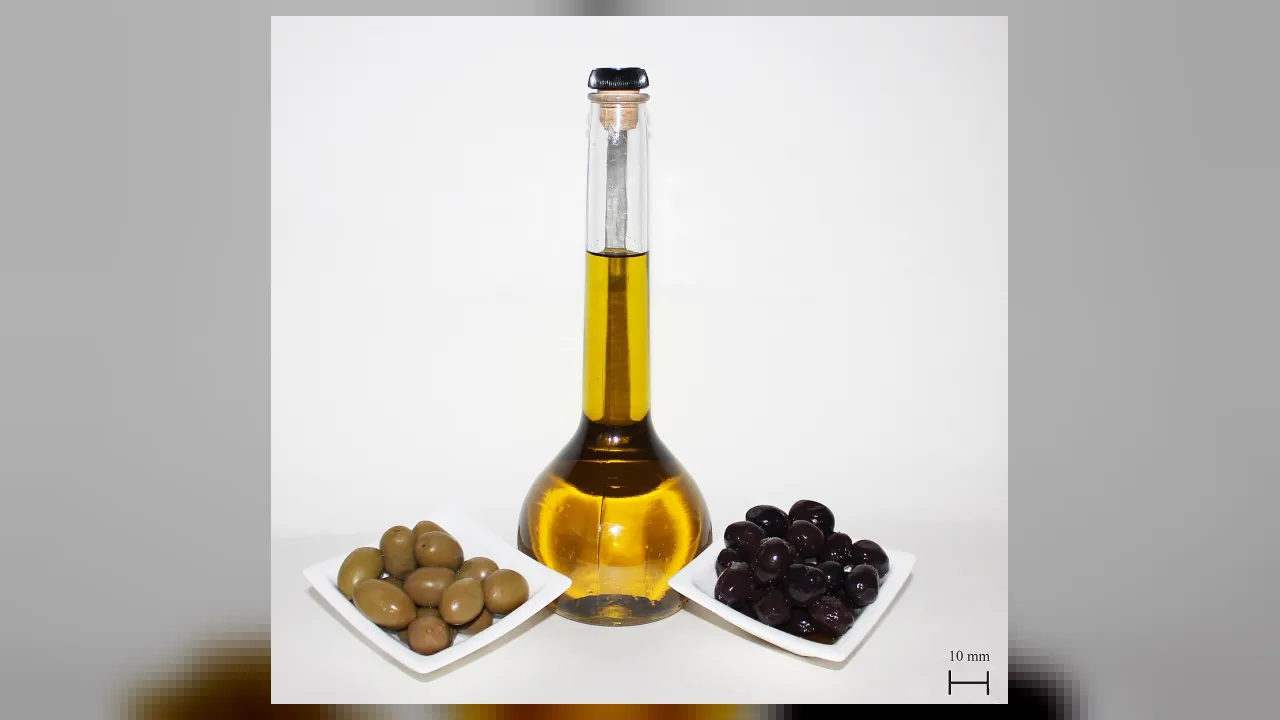
1. Excluding water, what makes up more than half of your brain's building material?
2. Which tasty foods are famous for packing nutritious healthy fats?
🤯 Mind-Blowing Fact • Grade 2
Walnuts not only look like miniature wrinkled brains—they are also one of the richest plant sources of brain-helping omega-3 fats!
✨ Word Sparks (Grade 2 Glossary)
Tap 🔊 to hear
Lipid
Scientific family name for fats and oils
Unsaturated
Heart-healthy fat usually liquid at room temp
Omega-3
Special healthy fat in fish and walnuts
🪝
Why does olive oil stay liquid in the kitchen cupboard while butter sits in a solid block?
1
Liquid Oils vs. Solid Fats
Peek into your kitchen and compare golden olive oil with a stick of butter! Nutrition scientists call fats and oils . Plant oils from olives, avocados, walnuts, and sunflower seeds stay liquid at room temperature—and those fats are champions for your heart!
2
Waterproof Cell Wrappers
Oil and water do not mix, and your body uses that rule brilliantly! Every single one of your trillions of cells wears a flexible membrane so watery insides don't leak away.
3
Double Fuel plus Vitamin Keys
Gram for gram, fats pack more than twice the slow-burning energy of carbs or proteins! Healthy fats also carry fat-soluble vitamins A, D, E, and K across your gut wall.
1. Why does every cell in your body wear an outer membrane made of lipids?
2. How much energy does one gram of fat hold compared to one gram of carbohydrate or protein?
🤯 Mind-Blowing Fact • Grade 3
Migrating bar-tailed godwit birds store so much lightweight healthy fat fuel before takeoff that they fly nonstop across the Pacific Ocean for eleven days without landing once!
How does wrapping a fatty coat around brain nerves make your thoughts race a hundred times faster?
1
Speedy Myelin Insulation
Look at the plastic coating around a lamp cord—it keeps electrical signals from leaking out! Inside your brain and spinal cord, helper cells wrap nerve fibers in a sleek fatty coat called . Myelin lets nerve signals leap up to one hundred times faster!
2
Bent Chains vs. Straight Chains
Chemically, fats are made of tails. fats (found mostly in butter and fatty meats) have straight tails that pack tightly into solids. Unsaturated healthy fats (in olive oil, avocados, nuts, and fish) have natural bends in their tails, keeping cell membranes soft and flexible!
3
Superstar Omega-3s
Just like essential amino acids, your body cannot make two essential : omega-3 and omega-6! Cold-water fish like salmon, chia seeds, flaxseeds, and walnuts supply omega-3s that build eye retinas and growing brains.
4
Skipping Artificial Trans Fats
Natural unsaturated fats support clear, healthy blood vessels, whereas factory-stiffened artificial trans fats were phased out by doctors and food safety teams because they stiffen arteries.
1. What does the fatty myelin sheath do for nerve fibers in your brain and spine?
2. Why do unsaturated fats like olive oil stay liquid and keep cell membranes flexible?
🤯 Mind-Blowing Fact • Grade 4
Without healthy fats in your eye retina—where omega-3 DHA makes up nearly half of rod-cell membrane tails—your light-catching rhodopsin molecules would be too stiff to flip quickly!
✨ Word Sparks (Grade 4 Glossary)
Tap 🔊 to hear
Triglyceride
Three fatty acid chains joined to glycerol
Phospholipid
Two-tailed lipid forming flexible cell membranes
Lipoprotein
Protein-coated carrier ferrying fats through blood
🪝
If oil and water refuse to mix in a salad dressing bottle, how can watery blood carry healthy fats after lunch?
1
Bile Soap and Lipoprotein Submarines
Shake olive oil and water in a jar, and the oil quickly floats right back to the top! To digest dietary —three fatty acid tails attached to a glycerol backbone—your liver brews greenish bile stored in your gallbladder. Bile acts like gentle dish soap in your small intestine, breaking big oil drops into microscopic droplets so pancreatic lipase enzymes can snip them apart! Intestinal cells then pack absorbed fats inside protein-coated submarines called to cruise smoothly through watery blood.
2
HDL Cleanup Crews vs. LDL Trucks
Doctors check two famous teams in blood tests. Low-density lipoproteins (LDL) deliver cholesterol and fats out to tissues, while high-density lipoproteins (HDL) act like street sweepers—gathering extra cholesterol from artery walls and returning it to the liver! Eating monounsaturated fats (avocados, olive oil, almonds) and polyunsaturated omega-3s boosts helpful HDL cleanup.
3
Phospholipid Bilayers and DHA
Every cell membrane is a double-layered sandwich of —water-loving heads facing out and flexible fatty-acid tails facing in. An omega-3 fat called DHA packs densely into eye photoreceptors and brain neuron membranes, helping receptors flex rapidly as you learn!
4
Hormones and Shock Absorbers
Healthy adipose pads cushion delicate kidneys and eyeballs, while lipid building blocks help craft chemical messengers including vitamin D and growth-guiding steroid hormones.
1. How does bile from your liver and gallbladder help digest healthy fats?
2. Why are lipoproteins needed to move fats and fat-soluble vitamins around your body?
🤯 Mind-Blowing Fact • Grade 5
Your tirelessly beating heart actually prefers healthy fatty acids over glucose for everyday work—generating sixty to seventy percent of its resting ATP fuel from lipids!
✨ Word Sparks (Grade 5 Glossary)
Tap 🔊 to hear
Monounsaturated
Healthy fat chain containing one natural bend
Polyunsaturated
Essential fat chain with multiple flexible bends
Beta-oxidation
Mitochondrial process clipping fats into rich ATP
🪝
Why does a single cis double bond bend an olive-oil molecule by thirty degrees—protecting arteries and keeping Arctic fish unfrozen?
1
Carbon Double Bonds and Membrane Fluidity
Biochemically, fatty acids are hydrocarbon chains terminating in a carboxylic acid group. Saturated fatty acids carry single carbon-carbon bonds from end to end, forming straight rods that stack tightly via van der Waals attractions into solids at room temperature. Unsaturated fatty acids introduce one (, like oleic acid in olive oil and avocados) or several () cis double bonds. Each cis bond puts a permanent thirty-degree kink in the chain, preventing tight crystal packing so phospholipid bilayers stay fluid and responsive!
2
Essential Omega-3 and Omega-6 Pathways
In 1929, George and Mildred Burr proved fats aren't merely interchangeable calories—discovering mammals lack desaturase enzymes able to insert double bonds near the methyl ('omega') tail! Consequently, alpha-linolenic acid (ALA, omega-3, abundant in walnuts, chia, and flax) and linoleic acid (LA, omega-6, in seeds and nuts) are strictly essential. Marine phytoplankton synthesize long-chain omega-3s EPA and DHA, which concentrate up ocean food webs into salmon, sardines, and mackerel.
3
Saltatory Nerve Conduction and Retinal Speed
Roughly sixty percent of dry human brain weight consists of structural lipids! Oligodendrocytes wrap axons in up to one hundred concentric phospholipid-and-cholesterol layers of myelin, enabling action potentials to leap node-to-node via saltatory conduction above 100 m/s, while flexible DHA tails fluidize synaptic vesicles and retinal discs.
4
Beta-Oxidation and Lymphatic Chylomicrons
After bile salts emulsify triglycerides and pancreatic lipase cleaves them, intestinal enterocytes reassemble fats into chylomicrons that enter lymphatic lacteals before reaching venous blood. Inside mitochondria, clips two-carbon acetyl-CoA units off fatty acids, yielding 9 kcal/g—powering resting cardiac muscle, which derives over sixty percent of its ATP from fatty acids!
5
Cis Geometry vs. Industrial Trans Isomers
Whereas natural cis double bonds kink healthily and support favorable HDL-to-LDL lipoprotein profiles, industrial partial hydrogenation twisted bonds into straight trans isomers that raised cardiovascular risk—prompting global public-health bans in favor of whole-food unsaturated lipids.