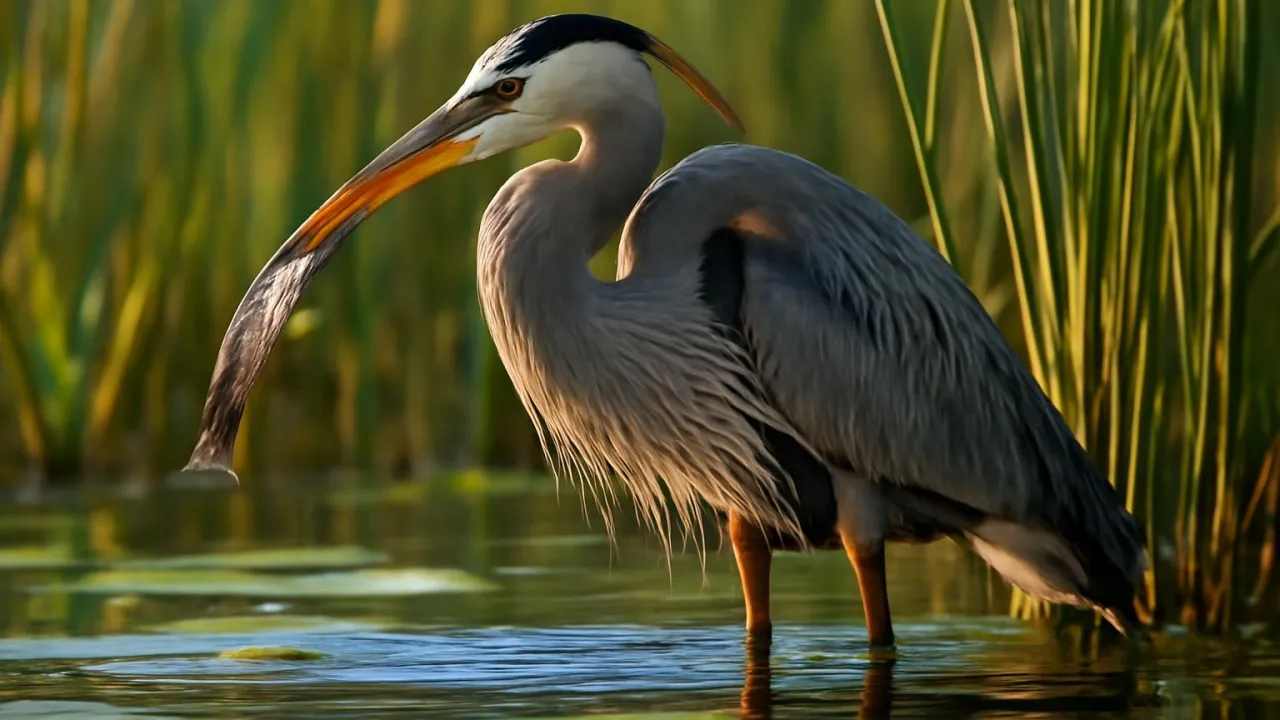
Great Blue Herons can fly with their necks curled into an S-shape!
✨ Word Sparks (Grade 2 Glossary)
Tap 🔊 to hear
feathers
Soft parts that cover a bird’s body
nest
A bird’s home for eggs and chicks
strike
To move quickly to catch something
🪝
Did you know some birds fish without using their wings?
1
A Tall Bird with Long Legs
The Great Blue Heron stands on long, thin legs in the water. Its gray-blue help it blend in. It has a sharp yellow beak for catching food. This bird is almost as tall as a first grader!
2
How It Eats
Herons hunt by standing very still and waiting for fish to swim by. When a fish gets close, the heron quickly with its beak. It eats fish, frogs, and even small snakes. Sometimes, it swallows its food whole!
3
Where Does It Live?
Great Blue Herons live near lakes, rivers, and marshes across North America. They build big high in trees near water. Herons need shallow water to hunt for their food. You might spot one quietly fishing at a pond.
A Great Blue Heron’s wingspan can reach nearly 6 feet—wider than most kids are tall!
✨ Word Sparks (Grade 3 Glossary)
Tap 🔊 to hear
camouflage
Colors or patterns that help hide
prey
Animals that are hunted for food
wetlands
Wet places where many animals live
🪝
How does a bird as tall as your little brother sneak up on fish?
1
Meet the Great Blue Heron
The Great Blue Heron is one of the tallest birds in North America. With its long legs and neck, it can wade through deep water. Its blue-gray feathers help it blend into reeds and shadows. This keeps it hidden from both and predators.
2
A Patient Hunter
Herons are masters of patience. They stand perfectly still for a long time, waiting for fish or frogs to swim close. When the moment is right, they use their pointed beak to spear or grab their . This hunting style is called stalking.
3
Life in Wetlands
Great Blue Herons build large stick nests high in trees near water. They lay pale blue eggs that hatch into fuzzy chicks. , marshes, and riverbanks are perfect habitats because they provide food, water, and safe nesting spots. Herons help control fish and frog populations in these ecosystems.
4
Amazing Adaptations
Herons have special toes that help them balance in mud. Their long necks let them strike quickly at . They can even swallow fish whole, thanks to stretchy throats. When flying, they tuck their necks into an S-shape, which is unusual for big birds.
2. What is special about a heron’s neck when flying?
🤯 Mind-Blowing Fact • Grade 4
Great Blue Herons can fly up to 30 miles per hour when migrating between nesting and feeding areas.
✨ Word Sparks (Grade 4 Glossary)
Tap 🔊 to hear
rookery
A group of bird nests together
ecosystem
All living and nonliving things in a place
predator
An animal that hunts other animals
🪝
What lets the Great Blue Heron hunt silently in busy wetlands?
1
Masters of Stealth
Great Blue Herons are expert hunters because of their incredible patience and camouflage. Their blue-gray feathers blend perfectly with water and plants, making them nearly invisible to fish and frogs. They can stand motionless for several minutes, waiting for the perfect moment to strike. This stealthy behavior increases their chances of catching prey and avoiding .
2
Life in the Wetlands
These birds are found all across North America, especially near lakes, marshes, and slow-moving rivers. They build large, messy nests high in trees, often forming colonies called rookeries. Wetlands provide them with plenty of food, nesting sites, and protection from land . The health of heron populations can be a sign of a healthy wetland .
3
Role in the Ecosystem
Great Blue Herons play an important role in their food webs by controlling fish, amphibian, and insect populations. If herons eat too many fish, it can affect other animals that depend on fish for food. However, if there are too few herons, fish and frog numbers might grow too fast, upsetting the ’s balance. Herons themselves are prey for raccoons, eagles, and large owls.
4
Amazing Adaptations and Human Impact
Herons have long toes that spread their weight, allowing them to walk on soft mud without sinking. Their sharp beaks and lightning-fast reflexes make them efficient hunters. Sadly, pollution and habitat loss threaten heron nesting sites and food sources. Protecting wetlands helps both herons and many other species survive.
2. Why is protecting wetlands important for herons?
🤯 Mind-Blowing Fact • Grade 5
The Great Blue Heron’s neck strike is so fast, it takes less than one-fifth of a second to catch prey!
✨ Word Sparks (Grade 5 Glossary)
Tap 🔊 to hear
vertebrae
Small bones that make up the spine
apex predator
Top animal in a food chain
migration
Traveling long distances for seasons
🪝
How does the Great Blue Heron’s anatomy make it a master of shallow-water hunting?
1
Taxonomy and Physical Features
The Great Blue Heron, Ardea herodias, is the largest heron species native to North America and belongs to the family Ardeidae. Adults can reach heights of up to 4.5 feet (1.37 meters) and have wingspans approaching 6 feet (1.8 meters), making them one of the tallest and widest-winged wading birds on the continent. Their plumage is primarily blue-gray, with a striking black stripe over each eye and long, shaggy plumes on their chest and back. The heron’s dagger-like bill is perfectly adapted for spearing fish and amphibians, while its long, S-shaped neck contains specialized that allow for lightning-fast strikes. These adaptations enable the heron to hunt efficiently in a variety of aquatic environments.
2
Physiology and Hunting Mechanics
Great Blue Herons possess remarkable physiological adaptations for their hunting lifestyle. Their long legs allow them to wade into water up to 2 feet deep without wetting their feathers, while their spread-out toes distribute their weight to prevent sinking into mud. The heron’s neck contains a modified sixth vertebra, which acts like a spring to store energy for rapid strikes at prey. When hunting, the heron stands motionless for extended periods, using its excellent eyesight to spot even the slightest movement in the water. Once prey is detected, the heron thrusts its bill forward at speeds exceeding 100 miles per hour, impaling or grasping fish, frogs, or even small mammals.
3
Life Cycle and Migration
Great Blue Herons typically breed in colonies called rookeries, which may contain dozens or even hundreds of nests in tall trees near water. Both parents share the duties of building the large stick nest, incubating the pale blue eggs, and feeding the chicks. After hatching, chicks remain in the nest for about two months before fledging. Herons are partial migrants, with northern populations traveling hundreds or even thousands of miles to wintering grounds in Central America or the southern United States. Some individuals have been recorded flying nonstop for up to 15 hours during .
4
Ecosystem Role and Conservation
Great Blue Herons are within their aquatic habitats, helping regulate populations of fish, amphibians, and invertebrates. Their presence is considered an indicator of healthy wetland ecosystems, as they require clean water and abundant food sources to thrive. However, herons face threats from habitat destruction, water pollution, and human disturbance, especially during nesting season. Conservation efforts focus on protecting wetlands, enforcing pollution controls, and educating the public about the importance of these birds. In Virginia and across North America, heron populations are currently stable, but ongoing monitoring is essential.
5
Quantitative Comparisons and Human Connections
A Great Blue Heron can weigh up to 5.5 pounds (2.5 kilograms) and consumes an average of 1.2 pounds (0.54 kilograms) of food per day. Its top flight speed can reach 30 miles per hour, and it can cover distances of over 500 miles during . Unlike most large birds, herons fly with their necks retracted, creating a distinctive silhouette in the sky. Historically, herons were hunted for their plumes, which were used in fashion, but today they are protected by law. Observing a Great Blue Heron at the water’s edge offers a glimpse into the delicate balance of wetland ecosystems and the wonders of avian adaptation.