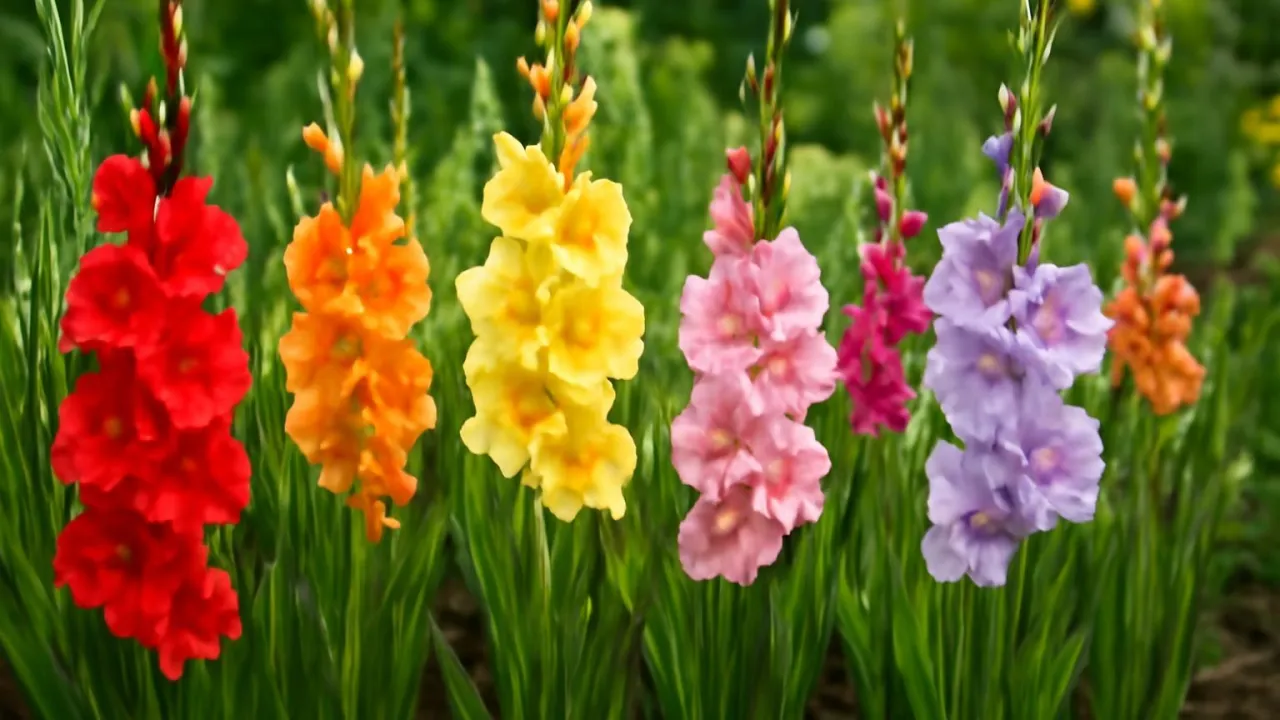
Gladiolus flowers attract pollinators with their bright colors and tall spikes!
✨ Word Sparks (Grade 3 Glossary)
Tap 🔊 to hear
pollinators
Animals like bees that help flowers make seeds
photosynthesis
How plants use sunlight to make food
bulb
A plant part underground that stores food
🪝
Did you know gladiolus flowers have sword-shaped leaves to protect themselves?
1
Bright Flowers and Colors
Gladiolus flowers bloom in many bright colors like pink, red, and yellow. Their tall flower spikes attract like bees and butterflies. The petals are soft but strong to protect the flower parts. These flowers use color to stand out in their habitat.
2
Sword-Shaped Leaves and Adaptations
The leaves of gladiolus are long and sword-shaped, which helps protect the plant from animals. This shape also helps the plant stand upright in windy places. The leaves collect sunlight for , giving the plant energy. This adaptation helps gladiolus survive in sunny environments.
3
Growth from Bulbs
Gladiolus grows from underground that store nutrients and water. These bulbs help the plant survive dry seasons. When conditions are right, the bulbs sprout tall stems and flowers. This growth cycle helps gladiolus live year after year.
4
Where Gladiolus Grows
Gladiolus plants grow best in warm climates with full sun and well-drained soil. They are native to South Africa and the Mediterranean region. These plants play a role in local ecosystems by providing nectar to . They also add beauty to gardens worldwide.
Gladiolus leaves reduce water loss and protect the plant from hungry animals!
✨ Word Sparks (Grade 4 Glossary)
Tap 🔊 to hear
herbivores
Animals that eat plants
corms
Underground plant parts that store food
biodiversity
Many different kinds of living things
🪝
How do gladiolus flowers use their sword-like leaves to survive in nature?
1
Bright Colors and Ecosystem Role
Gladiolus flowers display bright colors that attract pollinators such as bees and butterflies, which help the plant reproduce. Their tall flower spikes rise above other plants, making them easy for pollinators to find. This relationship benefits the entire ecosystem by supporting pollinator populations. Additionally, gladiolus flowers are often used in gardens to enhance and beauty.
2
Adaptations for Survival
The sword-shaped leaves of gladiolus serve multiple purposes, including protecting the plant from and reducing water loss by limiting surface area. These leaves also provide structural support, allowing the plant to stand tall against strong winds. Their shape is an evolutionary adaptation that increases gladiolus’s chances of survival in sunny, dry habitats.
3
Growth Cycle and Human Impact
Gladiolus grows from , which are underground storage organs that help the plant survive unfavorable conditions. Gardeners cultivate gladiolus worldwide for cut flowers, which has increased its popularity but also requires sustainable farming practices. Overharvesting wild gladiolus could threaten native populations, so conservation efforts focus on protecting natural habitats.
4
Geographic Distribution
Native to South Africa and Mediterranean climates, gladiolus has adapted to warm, sunny environments with well-drained soils. It has been introduced to gardens across the world, thriving in temperate zones with proper care. Understanding its native habitat helps gardeners provide the right conditions for healthy growth and flowering.
Gladiolus corms store enough nutrients to survive dry seasons and regrow each year!
✨ Word Sparks (Grade 5 Glossary)
Tap 🔊 to hear
Iridaceae
The flower family gladiolus belongs to
corms
Underground stems that store food and water
pollinators
Animals that help flowers make seeds
🪝
How does the gladiolus’s unique structure help it thrive in warm climates around the world?
1
Scientific Classification and Origins
Gladiolus hortulanus belongs to the family, known for its sword-shaped leaves and showy flowers. It is native to South Africa and Mediterranean regions, where it has adapted to survive seasonal dry spells. This genus includes over 260 species, but the garden hybrids are most common worldwide. Its taxonomy reflects evolutionary adaptations to diverse environments.
2
Physiological Mechanics and Adaptations
The gladiolus’s sword-shaped leaves minimize water loss by reducing surface area exposed to sunlight, which is critical in hot climates. Its store nutrients and water underground, allowing survival during droughts. The tall flower spikes elevate reproductive parts to attract efficiently. These physiological traits enable gladiolus to maintain growth and reproduction despite environmental stresses.
3
Growth Cycle and Botanical History
Gladiolus grows from that sprout shoots each spring, developing tall stems and colorful flowers by summer. Historically, gladiolus has been cultivated since the 18th century for ornamental use and cut flowers. Its name means “little sword” in Latin, describing its leaf shape. Breeders have developed many varieties with diverse colors and sizes over centuries.
4
Ecological Role and Human Impact
Gladiolus supports like bees and butterflies by providing nectar, playing a role in local food webs. However, commercial farming requires careful water and soil management to prevent environmental damage. Conservation efforts focus on protecting wild species and natural habitats from overharvesting and habitat loss. Sustainable gardening practices promote gladiolus’s long-term survival.
5
Quantitative Comparisons and Growth
Gladiolus plants can grow between 1 and 4 feet tall, with flower spikes reaching up to 48 inches (120 cm). Their weigh about 1 to 2 ounces (30 to 60 grams), storing enough nutrients for seasonal growth. These flowers bloom during temperatures between 60°F and 85°F (15°C to 29°C). Their growth speed varies but typically takes 70 to 90 days from planting to bloom.