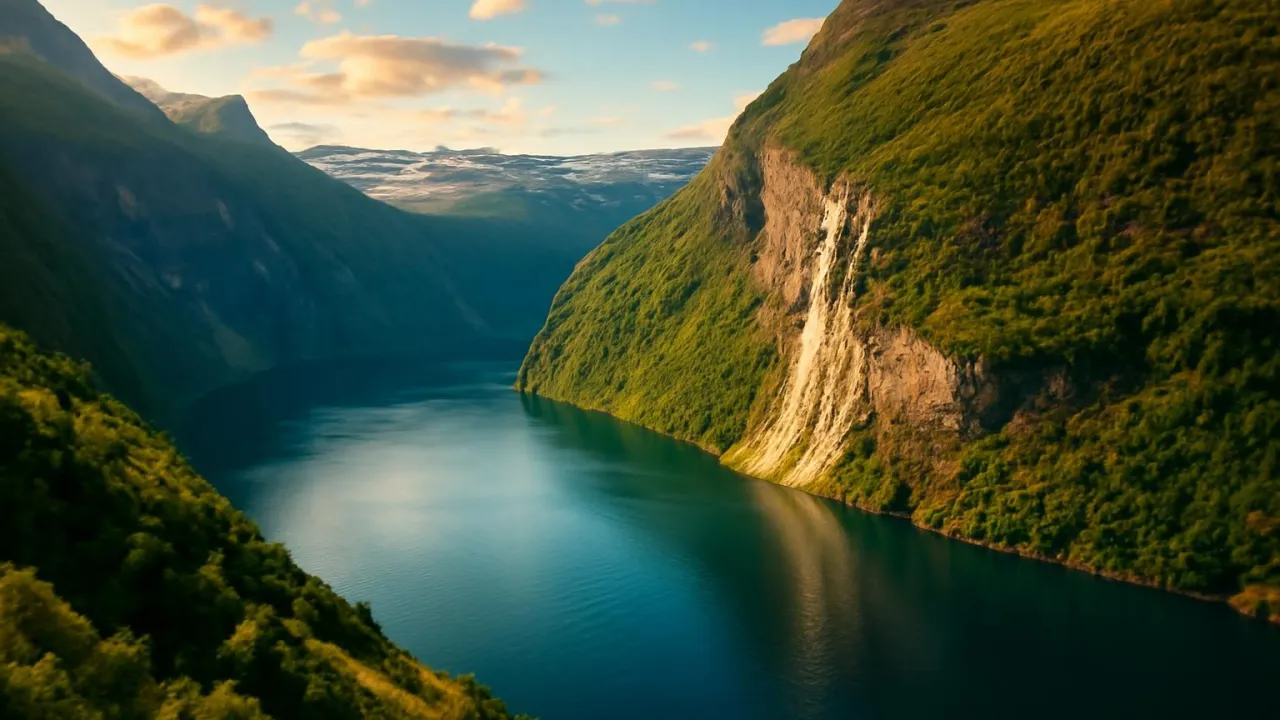
What would it feel like to ride a boat beneath giant cliffs and waterfalls?
1
A Valley Full of Water
Imagine gliding across sparkling blue water with towering above you. The boat moves slowly as you look up at the steep rock walls. The air feels cool and fresh, and the stretches far ahead.
2
Waterfalls Everywhere
Many waterfalls tumble down the rocky , making loud splashing sounds. The most famous ones are called the Seven Sisters and the Suitor. Rainbows sometimes appear in the , delighting visitors who take photos.
3
Adventure in Nature
People love to hike on the green hills and ride boats to explore the . Birds soar high above the water, and sometimes you can spot goats climbing the . Geirangerfjord is a wild and beautiful place to visit.
1. Which animals might you see near Geirangerfjord?
2. What makes the waterfalls famous?
🤯 Mind-Blowing Fact • Grade 3
Geirangerfjord is over 1,400 meters deep in some places!
✨ Word Sparks (Grade 3 Glossary)
Tap 🔊 to hear
glacier
A huge, slow-moving river of ice
erosion
Wearing away of land by water or ice
UNESCO
A group that protects special places
🪝
Imagine the roar of waterfalls echoing between steep, green cliffs—how did this amazing place form?
1
A Deep, Icy Valley
Geirangerfjord was carved by giant during the last Ice Age. These slow-moving rivers of ice scraped deep valleys into the land. When the glaciers melted, seawater rushed in and filled the valley. That’s how the fjord got its deep blue water.
2
Towering Cliffs and Waterfalls
The cliffs of Geirangerfjord rise over 4,500 feet above the water. Waterfalls like the Seven Sisters and the Suitor crash down the cliffs, making a thunderous sound. The mist from the falls creates rainbows on sunny days. People visit to see the cliffs and hear the roaring water.
3
Nature’s Playground
Geirangerfjord is home to many plants and animals, including mountain goats and eagles. Tourists explore by hiking, kayaking, or taking boat tours along the fjord. The steep slopes are covered in green forests and wildflowers in summer. The water is cold and very deep, perfect for fish.
4
A World Heritage Wonder
named Geirangerfjord a World Heritage Site because of its unique natural beauty. The fjord’s dramatic landscape was shaped by glacial over thousands of years. Scientists study the rocks and water to learn about Earth’s history. People from all over the world come to see this natural wonder.
1. How did Geirangerfjord get its deep valley shape?
2. Why do scientists study the fjord?
🤯 Mind-Blowing Fact • Grade 4
Geirangerfjord’s waterfalls can drop over 800 feet in a single plunge!
✨ Word Sparks (Grade 4 Glossary)
Tap 🔊 to hear
glacial erosion
Ice scraping land to make valleys
ecosystem
A community of living things and nature
sediment
Tiny bits of rock and sand in water
🪝
What secrets do the echoing waterfalls and ancient cliffs of Geirangerfjord hold about our planet’s past?
1
Glacial Forces Shape the Land
Long ago, massive glaciers slowly moved across Norway, carving deep valleys through a process called . As the glaciers advanced, they scraped and gouged the rock, making U-shaped valleys like Geirangerfjord. When the Ice Age ended about 10,000 years ago, the glaciers melted, and seawater flooded the valley, transforming it into a fjord. Today, the steep cliffs and deep blue waters show the power of these ancient ice rivers.
2
Spectacular Waterfalls and Dramatic Cliffs
Geirangerfjord’s cliffs soar up to 1,400 meters above the water, creating a dramatic landscape. Dozens of waterfalls, including the famous Seven Sisters and the Suitor, cascade down the rock faces, creating thunderous sounds and shimmering mists. These waterfalls are fed by melting snow and rain that rush down the steep slopes. Rainbows often appear in the spray, making the fjord a favorite spot for photographers and nature lovers.
3
A Living Laboratory
Scientists visit Geirangerfjord to study its geology, plant life, and animal habitats. The fjord’s cold, deep waters are home to fish and marine creatures, while eagles and goats live on the cliffs above. The unique mix of saltwater and freshwater supports a variety of . Researchers learn about climate change and Earth’s history by examining the rocks and found in the fjord.
4
A Global Treasure
UNESCO recognized Geirangerfjord as a World Heritage Site because of its outstanding natural beauty and geological importance. Tourists from around the world come to hike, kayak, and cruise through the fjord, experiencing its wild scenery firsthand. Local communities work hard to protect the fjord’s environment, balancing tourism with conservation. Geirangerfjord inspires awe and teaches us about the power of nature.
1. What causes the waterfalls in Geirangerfjord to form?
2. Why is Geirangerfjord a World Heritage Site?
🤯 Mind-Blowing Fact • Grade 5
Geirangerfjord’s deepest point is over 800 meters—deeper than the Eiffel Tower is tall!
✨ Word Sparks (Grade 5 Glossary)
Tap 🔊 to hear
weathering
Breaking down rocks by wind, water, or ice
biodiversity
Many kinds of living things in one place
conservation
Protecting nature so it stays healthy
🪝
If you sailed into Geirangerfjord, would you realize you were gliding through a landscape carved by ancient ice and shaped by powerful natural forces?
1
The Power of Ice: Fjord Formation
During the last Ice Age, enormous glaciers advanced over western Norway, their immense weight and movement sculpting the land through a process called glacial erosion. These glaciers gouged out deep U-shaped valleys, leaving behind steep walls and flat valley floors. As the climate warmed around 10,000 years ago, the glaciers retreated, and seawater flooded the valleys, forming fjords like Geirangerfjord. Today, the fjord’s dramatic cliffs and deep waters are a direct result of these powerful geological processes.
2
Engineering Marvels of Nature
Geirangerfjord stretches approximately 15 kilometers (9.3 miles) inland and plunges to depths of over 800 meters (2,625 feet). Its cliffs soar up to 1,400 meters (4,593 feet) above the water, making them taller than most skyscrapers. The sheer rock faces are constantly shaped by , landslides, and the erosive action of water. Waterfalls such as the Seven Sisters and the Suitor cascade down these walls, with some plunging over 250 meters (820 feet) in a single drop.
3
Ecology and Biodiversity
Geirangerfjord’s unique combination of saltwater from the sea and freshwater from rivers creates a rich and varied ecosystem. The cold, deep waters support fish like cod and herring, while the steep slopes are home to mountain goats, eagles, and rare alpine plants. Seasonal changes bring bursts of wildflowers and migrating birds, making the fjord a living laboratory for scientists studying climate, geology, and . The interplay of land, water, and life creates a dynamic environment that is always changing.
4
Human History and Global Significance
For centuries, people have lived and farmed along the fjord’s steep edges, building small villages and historic farms. Today, Geirangerfjord is a UNESCO World Heritage Site, recognized for its outstanding natural beauty and geological importance. Tourism is carefully managed to protect the fragile environment, with visitors exploring by boat, kayak, and hiking trails. The fjord’s story is a reminder of how humans and nature are deeply connected through history.
5
Preserving a Natural Wonder
Scientists and local communities work together to monitor erosion, landslides, and the impacts of climate change on Geirangerfjord. efforts aim to balance tourism with environmental protection, ensuring that the fjord remains unspoiled for future generations. Geirangerfjord stands as a testament to the power of natural forces and the importance of preserving our planet’s most remarkable landscapes. Its cliffs, waterfalls, and wildlife continue to inspire awe and curiosity in all who visit.