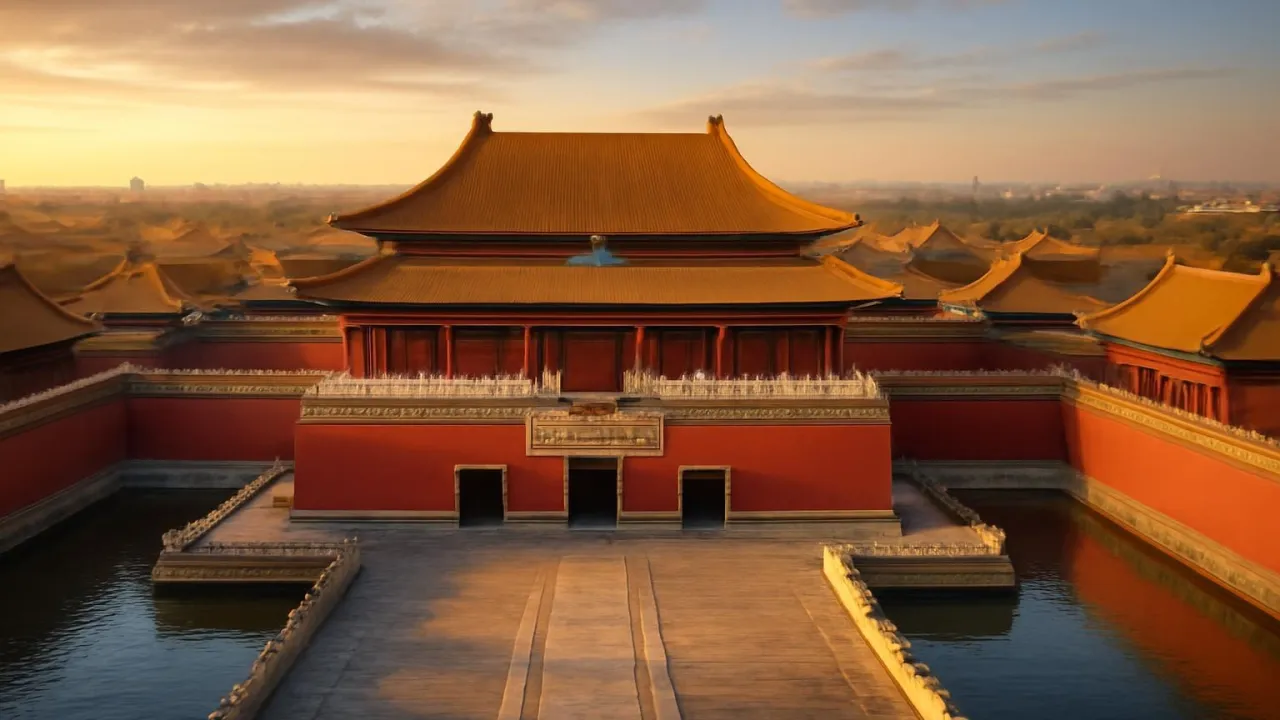
The Forbidden City was off-limits to most people for 500 years!
✨ Word Sparks (Grade 2 Glossary)
Tap 🔊 to hear
moat
A water ditch around a castle
tiles
Flat pieces on roofs or floors
guard
To watch and keep safe
🪝
What would it feel like to walk under golden rooftops?
1
A Hidden Palace
The Forbidden City is surrounded by tall red walls and a wide . Long ago, only the emperor and his family could enter. Today, many visitors come to see its beauty.
2
Golden Roofs and Dragons
The palace roofs are covered in golden that shine in sunlight. Stone dragons and lions the gates and rooftops. These animals were believed to protect the emperor.
3
A Place Full of Rooms
There are almost 9,000 rooms in the Forbidden City. Each room has its own special use and decorations. People now walk through the halls and imagine life long ago.
The Forbidden City’s main hall can fit over 10,000 people at once!
✨ Word Sparks (Grade 3 Glossary)
Tap 🔊 to hear
moat
A deep water trench for defense
symbolic
Stands for something special
architecture
The art of designing buildings
🪝
What secrets might echo through the Forbidden City’s ancient halls?
1
A City Within a City
The Forbidden City sits at the heart of Beijing, surrounded by a wide and towering red walls. For centuries, only emperors, royal families, and special guests could enter this hidden world. Today, it is a museum where millions come to explore its wonders.
2
Golden Roofs and Dragon Guardians
The palace roofs are covered with yellow glazed tiles that shimmer in the sun. Dragons, lions, and phoenix statues line the rooftops and gates, believed to bring good luck and protection. These decorations are examples of art from ancient China.
3
A Marvel of Wooden Architecture
The Forbidden City is the world’s largest wooden palace complex, built without nails. Wooden beams and columns fit together using special joints, creating strong, flexible buildings. This engineering helps the palace survive earthquakes and harsh weather.
4
Rooms Full of History
With over 8,700 rooms, each space once had a special purpose for the emperor’s life. Some halls were for grand ceremonies, while others were quiet gardens or private living quarters. Visitors today can see ancient treasures, paintings, and carved screens.
1. Why were the palace roofs built with yellow tiles?
2. How does the palace survive earthquakes?
🤯 Mind-Blowing Fact • Grade 4
The Forbidden City’s main gate, the Meridian Gate, stands 125 feet (38 meters) tall!
✨ Word Sparks (Grade 4 Glossary)
Tap 🔊 to hear
dynasty
A family that rules for many years
dougong
Special wooden brackets in buildings
imperial
Related to an emperor or empire
🪝
What if you could unlock the gates to the emperor’s secret city?
1
The Imperial Heart of China
Hidden behind red walls and a shimmering moat, the Forbidden City was the home of China’s emperors for nearly 500 years. This palace complex was the center of government and ceremony during the Ming and Qing dynasties. Only royal families, top officials, and special guests were allowed inside its mysterious gates.
2
Symbolic Colors and Mythical Creatures
Golden-yellow roof tiles, reserved for the emperor, gleam in the sunlight atop nearly 1,000 buildings. Dragons, lions, and phoenixes are carved and painted on rooftops, doors, and walls, each representing power, protection, and good fortune. These symbols reflect ancient Chinese beliefs and authority.
3
Ingenious Wooden Engineering
The Forbidden City’s buildings are masterpieces of wooden architecture, constructed without a single nail. Artisans used interlocking wooden brackets and beams, called , to create flexible structures that can withstand earthquakes. This engineering marvel helped preserve the palace through centuries of storms and seismic activity.
4
A Living Museum of History
With 980 buildings and more than 8,700 rooms, the Forbidden City is now one of the world’s largest museums. Visitors can explore throne rooms, gardens, and ancient halls filled with priceless art, jade carvings, and silk robes. The site is a UNESCO World Heritage treasure, teaching people about China’s culture and history.
1. What special engineering helps the palace survive earthquakes?
2. Why are dragons and phoenixes used in palace art?
🤯 Mind-Blowing Fact • Grade 5
The Forbidden City was built by over one million workers and used more than 100 million bricks!
✨ Word Sparks (Grade 5 Glossary)
Tap 🔊 to hear
feng shui
Ancient rules for building harmony
auspiciousness
Brings good luck and success
resilience
Strong and able to recover
🪝
Imagine stepping through ancient gates into a city built for emperors—what secrets would you discover?
1
A Fortress of Power and Mystery
The Forbidden City, constructed from 1406 to 1420 during the Ming Dynasty, served as the imperial palace for 24 emperors over nearly five centuries. Encircled by a 26-foot-high (8-meter) red wall and a 171-foot-wide (52-meter) moat, this vast complex was designed to symbolize the emperor’s supreme authority and the cosmic order of ancient China. Its layout follows strict principles, aligning buildings along a north-south axis to reflect harmony with the universe.
2
Architectural Marvels and Symbolic Design
Nearly 1,000 buildings are topped with yellow glazed tiles, a color reserved exclusively for the emperor, signifying royalty and power. The palace complex features intricate dougong—interlocking wooden brackets—that distribute weight and allow the wooden structures to flex during earthquakes. Mythical creatures such as dragons, phoenixes, and lions adorn the roofs and gates, each representing imperial protection, virtue, and in Chinese culture.
3
Engineering Without Nails: The Science of Survival
The Forbidden City’s wooden halls were constructed entirely without nails, relying on joinery techniques perfected by ancient Chinese craftsmen. These interlocking components not only provide remarkable seismic resistance but also allow the buildings to expand and contract with changing weather. The main hall, the Hall of Supreme Harmony, stands 115 feet (35 meters) tall and could historically accommodate over 10,000 officials during imperial ceremonies.
4
A Living Archive of Art and History
With 980 surviving buildings and more than 8,700 rooms, the Forbidden City houses countless treasures, including porcelain, jade, ancient scrolls, and ceremonial robes. The site’s layout reflects Confucian ideals of order and hierarchy, with the most important halls located on the central axis. Today, it is one of the world’s most visited museums, attracting over 14 million people annually and serving as a symbol of Chinese heritage and global cultural exchange.
5
Legacy and Global Impact
The Forbidden City’s preservation as a UNESCO World Heritage Site has inspired restoration techniques for wooden architecture worldwide. Its influence can be seen in palaces and temples across East Asia, and its design principles are studied by architects and engineers for their ingenuity and . The palace’s enduring legacy continues to connect people to the artistry, science, and philosophy of ancient China.