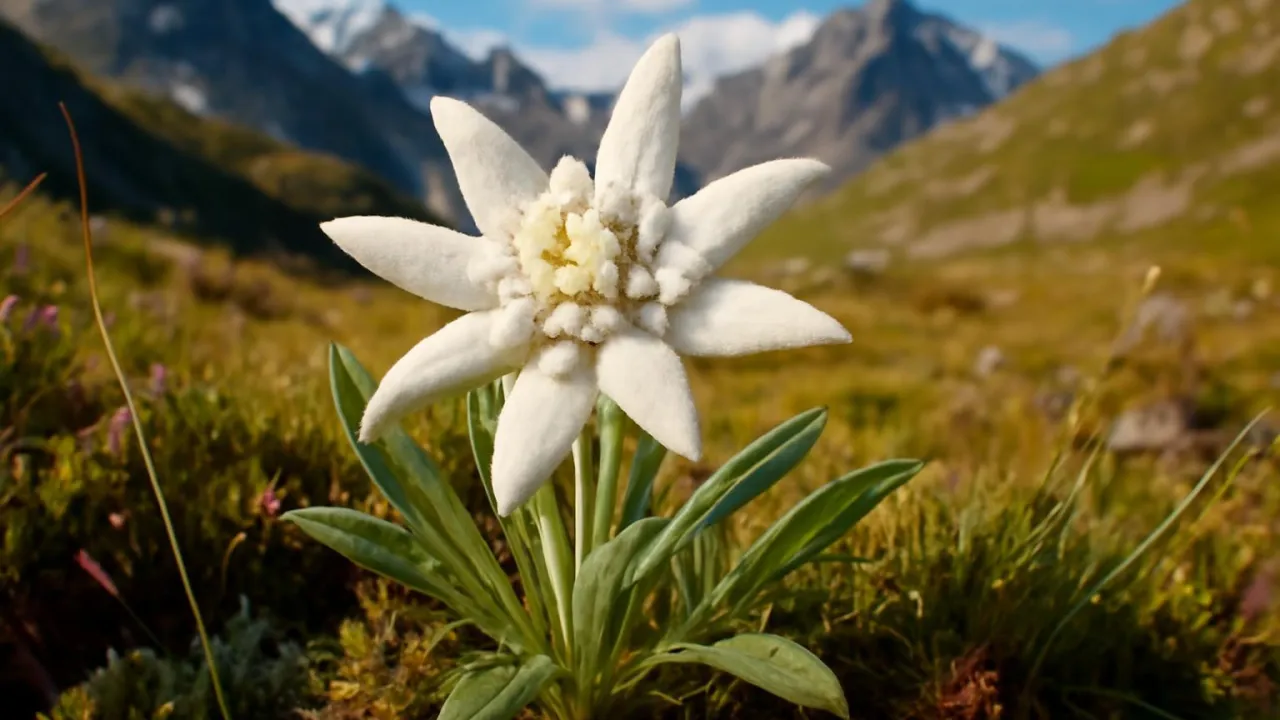
Edelweiss can survive freezing mountain weather because of its fuzzy petals!
✨ Word Sparks (Grade 2 Glossary)
Tap 🔊 to hear
petals
The soft, colorful parts of a flower
bitter
A taste that is sharp and not sweet
symbol
A thing that stands for a special idea
🪝
Have you ever seen a flower that looks like a soft, white star?
1
What Edelweiss Looks Like
Edelweiss flowers have fuzzy white that look like stars in the sky. The soft hairs help protect them from cold mountain winds. They grow close to the ground to stay safe.
2
Where Edelweiss Grows
Edelweiss grows in cold mountain places where snow covers the ground most of the year. It likes sunny spots and rocky soil that drains water well. These flowers bloom in summer when the snow melts.
3
Why Edelweiss Is Special
The fuzzy hairs on edelweiss help keep the flower warm in freezing weather. Animals usually do not eat this flower because it tastes . People think it is a of courage and love.
Edelweiss’s fuzzy hairs not only keep it warm but also help it save water in dry air!
✨ Word Sparks (Grade 3 Glossary)
Tap 🔊 to hear
adaptation
A change that helps a plant or animal survive
insulation
Something that keeps heat from escaping
predator
An animal that eats other animals or plants
🪝
Did you know edelweiss uses fuzzy hairs to survive freezing mountain winds?
1
Edelweiss’s Unique Look
Edelweiss flowers have star-shaped petals covered in tiny white hairs. These hairs act like , protecting the flower from cold mountain air. This helps the plant survive in harsh alpine environments.
2
Mountain Home and Growth
Edelweiss grows in rocky alpine regions where few plants can live. It thrives in well-drained soil and full sunlight. Growing low to the ground helps it avoid strong winds and reduces water loss.
3
Survival and Protection
The fuzzy hairs also help reduce water loss by trapping moisture near the petals. This protects edelweiss from drying out in the dry mountain air. Its bitter taste discourages from eating it.
4
Edelweiss in Culture
People have long admired edelweiss as a symbol of bravery and love in mountain cultures. It appears in songs and stories as a special flower. Its rarity makes it a treasured part of alpine ecosystems.
Edelweiss’s woolly hairs reflect sunlight and keep the flower safe from harmful ultraviolet rays.
✨ Word Sparks (Grade 4 Glossary)
Tap 🔊 to hear
pollinator
An animal that helps flowers make seeds
erosion
When wind or water wears away soil or rock
conservation
Protecting nature and plants from harm
🪝
How does edelweiss’s fuzzy star shape help it survive in cold mountain ecosystems?
1
Physical Adaptations for Cold
Edelweiss’s fuzzy white hairs act as insulation, reducing heat loss in freezing alpine temperatures. The star-shaped flower grows close to the ground, which shields it from harsh mountain winds and frost damage. These adaptations allow it to thrive where few plants survive. Its woolly hairs also reflect sunlight, protecting it from strong ultraviolet rays.
2
Role in Mountain Ecosystems
Edelweiss plays an important role in alpine food webs by providing nectar for like bees and butterflies during summer. Its bitter taste protects it from herbivores, maintaining plant diversity. It also helps stabilize soil on rocky slopes, preventing . This makes it a key species for mountain ecosystem health.
3
Geographic Distribution and Habitat
This flower is native to the European Alps and Carpathian Mountains, where it grows between 4,000 and 10,000 feet elevation. It prefers sunny, rocky areas with well-drained soil. Human activities like hiking and picking flowers can threaten its fragile habitat, so efforts protect these areas carefully.
4
Cultural Importance and Conservation
Edelweiss has been a symbol of courage and purity in alpine folklore for centuries. Its rarity and beauty inspired protection laws to prevent overpicking and habitat destruction. Today, it remains a treasured emblem in mountain communities and a focus of ongoing programs.
2. What role does edelweiss play in its ecosystem?
🤯 Mind-Blowing Fact • Grade 5
Edelweiss can survive temperatures as low as minus 30 degrees Celsius high in the mountains!
✨ Word Sparks (Grade 5 Glossary)
Tap 🔊 to hear
ultraviolet
A type of light from the sun that can harm skin
herbivore
An animal that eats only plants
altitude
How high a place is above sea level
🪝
What makes edelweiss’s fuzzy star shape a remarkable adaptation for alpine survival?
1
Scientific Classification and Habitat
Edelweiss, scientifically named Leontopodium alpinum, belongs to the Asteraceae family and thrives in alpine environments. It is native to the European Alps and Carpathian Mountains, typically found at elevations between 1,200 and 3,000 meters where temperatures are low and conditions harsh. These regions experience intense sunlight, strong winds, and freezing temperatures for much of the year.
2
Physiological Adaptations for Cold and Dryness
The dense white hairs covering edelweiss petals serve as insulation, reducing heat loss and protecting against radiation at high . These hairs also minimize water loss by trapping moisture, an essential adaptation in the dry mountain air where humidity can be very low. Additionally, the plant’s low growth form reduces exposure to wind and conserves energy.
3
Ecological Role and Conservation Challenges
Edelweiss contributes to alpine ecosystems by offering nectar to specialized pollinators such as bees and butterflies during the short summer season. Its bitter chemical compounds deter , helping maintain plant community balance. However, habitat disturbance from tourism, climate change, and overcollection pose significant threats to its survival, prompting conservation efforts.
4
Cultural Significance and Botanical History
Historically, edelweiss has symbolized courage and purity in European mountain cultures, inspiring folklore, art, and music. It was once collected extensively, leading to protective legislation to prevent its decline. Botanical studies have documented its unique adaptations, making it a subject of alpine botanical research and conservation.
5
Quantitative Comparisons and Growth Characteristics
Edelweiss plants typically grow between 5 to 20 centimeters tall and can survive temperatures as low as minus 30 degrees Celsius. Their star-shaped flowers measure about 3 to 5 centimeters across. Compared to other alpine plants, edelweiss’s dense hairs provide superior insulation, enabling survival in extreme conditions. Its growth cycle is adapted to short growing seasons with rapid flowering.