1. What swirls deep inside Earth to make our giant magnetic shield?
2. What colorful lights appear near the poles when Sun particles meet Earth's shield?
🤯 Mind-Blowing Fact • Grade 2
On the side facing away from the Sun, Earth's magnetic bubble stretches out into a giant invisible tail longer than a million miles!
✨ Word Sparks (Grade 2 Glossary)
Tap 🔊 to hear
Magnetosphere
Earth's protective magnetic bubble in space
Solar Wind
Fast stream of particles from the Sun
Aurora
Glowing colorful curtains in polar night skies
🪝
How does swirling metal thousands of miles underground guard astronauts and air above us?
1
A Churning Metal Engine
Stick a magnet onto your kitchen refrigerator and feel its invisible pull! Deep beneath Earth's rocky crust and mantle lies a scorching outer core of liquid iron and nickel. As Earth spins, that liquid metal churns and creates electric currents.
2
Meet the Magnetosphere
Those currents send giant loops of magnetic force arching out into space, building a protective bubble called the . Every day, the Sun blows a fast stream of charged particles called the , and our magnetosphere steers most of it safely around Earth.
3
Compasses and Animal Travelers
On the ground, hiker compass needles line up with this invisible field. Even salmon, monarch butterflies, and sea turtles sense it like a built-in map!
1. What does the magnetosphere protect Earth from?
2. Which animals can sense Earth's magnetic field to navigate long trips?
🤯 Mind-Blowing Fact • Grade 3
Baked clay pots and cooled volcanic lava lock tiny magnetic minerals in place like frozen compasses, recording how strong Earth's magnetic field was thousands of years ago!
✨ Word Sparks (Grade 3 Glossary)
Tap 🔊 to hear
Outer Core
Earth's swirling layer of hot liquid iron
Geodynamo
Churning core engine creating Earth's magnetic field
Dipole
A magnet having two opposite poles
🪝
Why did ancient Mars lose most of its air while Earth kept thick blue skies and sparkling oceans?
1
Sprinkling Iron Filings Around a World
If you place a bar magnet under paper and sprinkle tiny iron filings on top, neat curved loops appear from one pole to the other. Planet Earth creates that exact same pattern on a colossal scale, reaching tens of thousands of miles into space!
2
Powered by the Outer Core
Earth's solid inner core is as hot as the surface of the Sun, heating a 1,400-mile-thick ocean of liquid iron and nickel around it. Rising heat and Earth's daily rotation twist those molten metals into a giant generator called the .
3
Guarding Our Atmosphere
Billions of years ago, smaller Mars cooled inside, lost its global magnetic shield, and watched solar winds strip away most of its air. Earth's strong magnetosphere still stands guard, keeping our oxygen and water safe!
4
Northern and Southern Lights
Where magnetic field lines dip down near the Arctic and Antarctic, solar particles excite high-altitude oxygen and nitrogen gases, painting dazzling aurora borealis and aurora australis displays.
1. What happened to Mars after its interior cooled and its global magnetic field faded?
2. Which two metals make up most of Earth's churning liquid outer core?
🤯 Mind-Blowing Fact • Grade 4
America's very first science satellite, Explorer 1 in 1958, discovered the Van Allen radiation belts—two giant donut-shaped zones of solar particles trapped safely high inside Earth's magnetosphere!
✨ Word Sparks (Grade 4 Glossary)
Tap 🔊 to hear
Magnetite
Naturally magnetic iron mineral in volcanic rocks
Magnetotail
Long nightside tail of Earth's magnetic bubble
Reversal
Flip where north and south magnetic poles swap
🪝
How do sea-floor volcanic rocks prove that Earth's magnetic north and south poles have traded places hundreds of times?
1
Inside the Geodynamo
Nearly 2,900 kilometers beneath Virginia's Blue Ridge Mountains, solid silicate mantle rock gives way to Earth's molten outer core. Driven by heat escaping the solid inner core and twisted into corkscrew currents by the Coriolis effect of Earth's spin, electrically conductive liquid iron generates self-sustaining electric currents and a planetary magnetic field.
2
Teardrop Shape in the Solar Wind
In empty space, Earth's magnetic field would look symmetrical like a butterfly's wings. Instead, supersonic solar wind streaming off the Sun at 400 kilometers per second squashes the sunward magnetosphere to roughly ten Earth radii (~65,000 kilometers) while stretching the nightside far past the Moon's orbit!
3
Seafloor Stripes and Pole Reversals
When magma erupts along mid-ocean ridges and cools into basalt rock, microscopic crystals align with Earth's current magnetic field. In the 1960s, oceanographers towing magnetometers discovered alternating zebra stripes of normal and reversed magnetism on both sides of the Mid-Atlantic Ridge—proving both seafloor spreading and that Earth's poles flip every few hundred thousand years!
4
Space Weather Protection
During powerful solar storms, engineers monitor the magnetosphere closely so satellites, GPS signals, and power grids stay protected while skywatchers enjoy vivid auroras.
1. Why is Earth's magnetosphere squashed on the daytime side and stretched out on the nighttime side?
2. What major Earth science discovery came from studying magnetic stripes in seafloor basalt rock?
🤯 Mind-Blowing Fact • Grade 5
During a geomagnetic pole reversal, Earth's magnetic shield does not vanish to zero—instead it morphs into multiple weaker poles over several thousand years while the thick atmosphere still blocks harmful radiation at the ground!
✨ Word Sparks (Grade 5 Glossary)
Tap 🔊 to hear
Curie Temperature
Heat level where permanent magnets lose magnetism
Magnetopause
Outer boundary where solar wind meets magnetosphere
Paleomagnetism
Ancient magnetic field history preserved in rocks
🪝
Why does a bar magnet lose its magnetism inside a hot furnace, making a swirling liquid geodynamo the only way to explain Earth's field?
1
Beyond the Curie Temperature
In 1600, royal physician William Gilbert published De Magnete, proposing that Earth itself is a giant spherical lodestone. Yet modern physics uncovered a puzzle: above about 580 to 770 degrees Celsius—the —heat shakes atoms so violently that solid iron loses permanent magnetism! Because Earth's outer core blazes between 4,000 and 5,500 degrees Celsius, our geomagnetic field cannot come from a solid permanent magnet.
2
Magnetohydrodynamics of the Outer Core
Instead, Earth operates a self-exciting fluid geodynamo. As the solid iron-nickel inner core slowly crystallizes, latent heat and buoyant light elements drive vigorous convection currents through the 2,260-kilometer-thick liquid outer core. Planetary rotation organizes those rising plumes into helical columns; moving conductive fluid cuts across existing magnetic lines, inducing electric currents that continually regenerate a surface field of 25 to 65 microteslas.
3
Bow Shock, Magnetopause, and Van Allen Belts
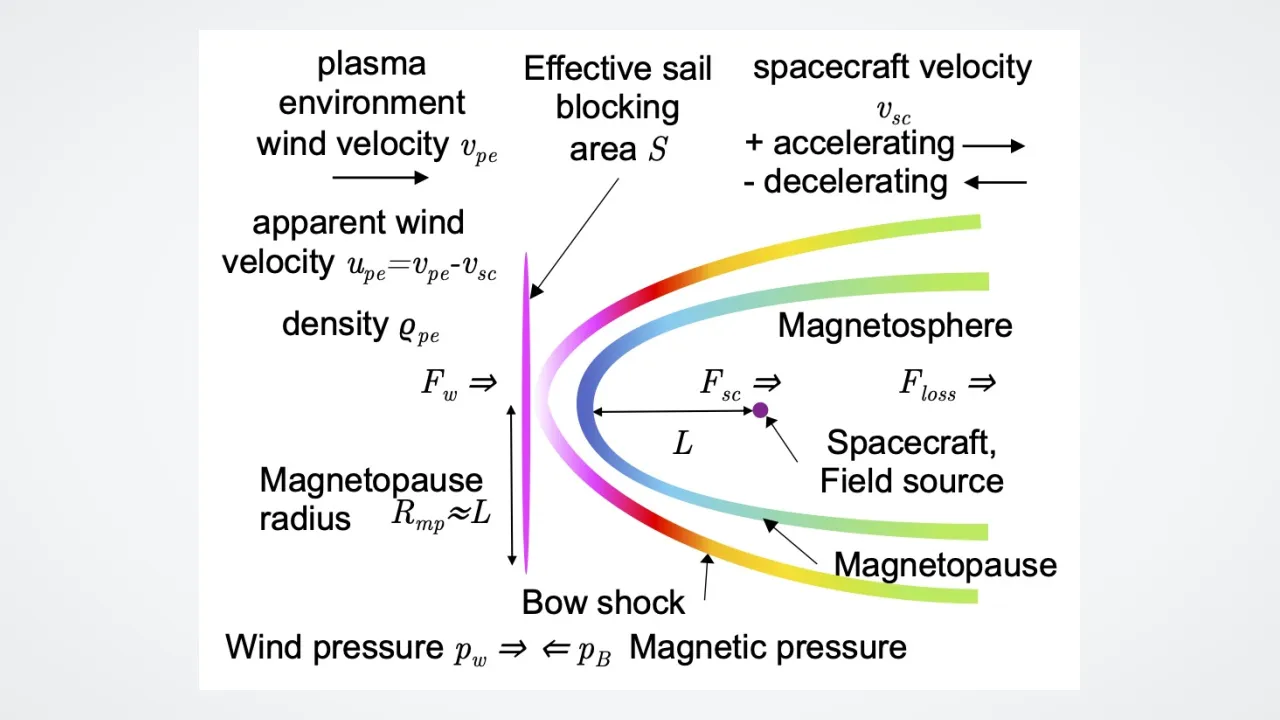
Where magnetized solar-wind plasma slams into Earth's field, a standing bow shock forms ahead of a boundary called the . Charged protons and electrons that leak inward become trapped spiraling along field lines within the inner and outer Van Allen belts, while geomagnetic storms occasionally trigger magnetic reconnection in the magnetotail.
4
Auroral Spectroscopy and Paleomagnetism
Accelerated electrons guided into polar ovals collide with upper-atmosphere atoms: excited atomic oxygen at 100–150 kilometers altitude emits emerald-green 557.7-nanometer light, whereas higher oxygen glows crimson and lower nitrogen glows violet. Meanwhile, paleomagnetic records locked in volcanic basalts document irregular polarity reversals—the last full flip, the Brunhes-Matuyama reversal, occurred ~780,000 years ago.
5
Monitoring Secular Variation from Orbit
Today, multi-satellite missions like ESA's Swarm constellation map subtle shifts—including the South Atlantic Anomaly, a region where field intensity dips—helping engineers harden spacecraft electronics and safeguard continental power transformers during coronal mass ejections.