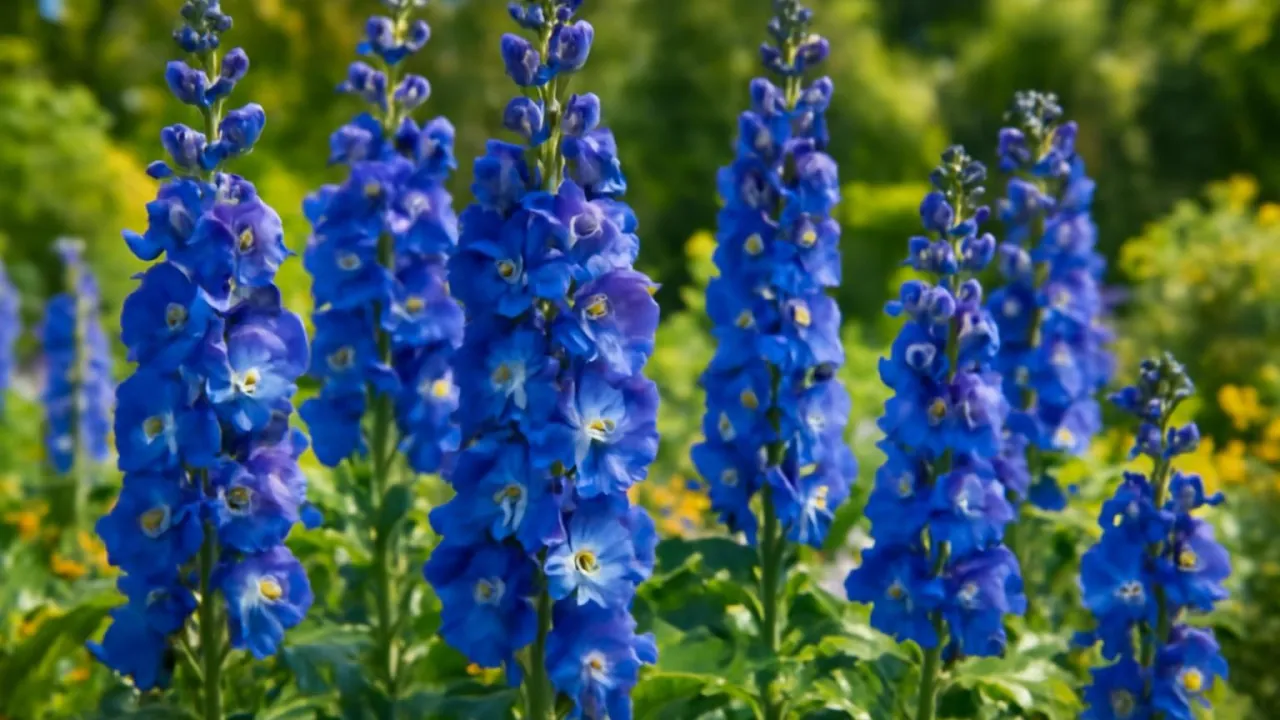
Delphiniums can grow up to six feet tall in the right conditions!
✨ Word Sparks (Grade 2 Glossary)
Tap 🔊 to hear
pollinators
Animals that help flowers make seeds
temperate
Places with mild weather, not too hot or cold
soil
The dirt where plants grow
🪝
Did you know some flowers grow taller than you do?
1
Delphiniums Grow Tall and Bright
Delphiniums grow tall in gardens and fields. Their bright blue flowers bloom in summer. Bees and butterflies visit these flowers often. The tall spikes help the flowers reach sunlight.
2
Where Delphiniums Live and Grow
These flowers like sunny places with good and water. They grow in regions around the world. Gardeners plant them to add color and height. Delphiniums need water but not too much.
3
Special Features of Delphiniums
Delphinium flowers have many petals that look like stars. Their tall spikes help them stand above other plants. The blue color attracts like bees and butterflies. These flowers bloom best in warm weather.
Delphiniums use their tall flower spikes to outgrow nearby plants and attract more pollinators.
✨ Word Sparks (Grade 3 Glossary)
Tap 🔊 to hear
adaptation
A change that helps plants survive better
pollination
When pollen moves to help make seeds
nutrients
Food that plants get from soil
🪝
How do delphiniums use their tall spikes to survive?
1
Delphinium’s Tall Spikes and Bright Colors
Delphiniums have tall spikes covered with bright blue flowers that attract pollinators. The bright color helps bees and butterflies find nectar easily. Their petals form a star shape that stands out in gardens. This helps the plant reproduce by spreading pollen.
2
Where Delphiniums Grow and Thrive
These flowers grow mainly in temperate regions with mild weather and good soil. They prefer full sun to get enough energy for growth and flowering. Delphiniums need regular water but can suffer if soil is too wet. Their roots absorb that help the tall stems stay strong.
3
Pollination and Plant Survival
Pollinators like bees visit delphiniums to collect nectar, helping with . This process allows the plant to produce seeds and grow new plants. The tall spikes help the flowers avoid being shaded by other plants. This increases their chances of survival in crowded gardens.
4
Delphinium’s Role in Nature
Delphiniums provide food for pollinators and add beauty to their ecosystems. They also help support biodiversity by attracting many insects. Gardeners use them as ornamental plants because of their striking appearance. Their presence can improve the health of nearby plants by attracting helpful insects.
Delphiniums help support ecosystems by feeding pollinators and adding shelter for small animals.
✨ Word Sparks (Grade 4 Glossary)
Tap 🔊 to hear
photosynthesis
How plants make food using sunlight
biodiversity
Many different kinds of living things
habitat
The place where a plant or animal lives
🪝
What makes delphiniums important in their ecosystems and gardens?
1
Delphinium’s Growth and Adaptations
Delphiniums grow tall spikes covered with bright blue flowers that attract many pollinators like bees and butterflies. Their height allows them to outcompete nearby plants for sunlight, which is crucial for and growth. The star-shaped petals serve as visual signals that guide pollinators to nectar sources. These adaptations improve their chances of successful pollination and seed production.
2
Ecosystem Roles and Food Webs
Delphiniums play an important role in food webs by providing nectar to pollinators, which in turn support other animals higher in the food chain. By attracting insects, delphiniums help maintain and ecosystem health. Some birds and small animals also use these plants for shelter or resting places. Human gardeners cultivate delphiniums to enhance garden beauty and support local wildlife.
3
Geographic Distribution and Habitat
Delphiniums naturally grow in temperate regions across the Northern Hemisphere, including North America, Europe, and Asia. They thrive in well-drained soils with moderate moisture and prefer full sun exposure. These flowers are commonly found in meadows, gardens, and mountain slopes where conditions suit their growth needs. Their adaptability allows them to survive in a range of temperate climates.
4
Human Impact and Conservation
Gardeners propagate delphiniums through seeds and cuttings to maintain their populations and vibrant colors. While not endangered, loss and climate changes can affect wild delphinium populations. Responsible gardening practices help protect these plants and their pollinators. Conserving natural habitats ensures delphiniums continue to support ecosystems and bring beauty to gardens worldwide.
Delphinium’s tall flower spikes and vivid blue color evolved to maximize pollination success in diverse ecosystems.
✨ Word Sparks (Grade 5 Glossary)
Tap 🔊 to hear
taxonomy
How scientists group living things by traits
vascular
Tissues that move water and food in plants
genetic diversity
Different traits in plants that help survival
🪝
How do delphiniums fit into the scientific world of plants and ecosystems?
1
Scientific Classification and Taxonomy
Delphinium belongs to the Ranunculaceae family, which includes many flowering plants with diverse forms. The genus Delphinium contains over 300 species, mostly native to temperate Northern Hemisphere regions. Botanists classify these plants by their distinctive tall spikes and deeply lobed leaves. Understanding their helps scientists study their evolution and ecological roles.
2
Physiological Mechanics of Growth and Flowering
Delphiniums grow tall stems supported by strong tissues that transport water and nutrients efficiently. Their flowers develop in dense clusters called racemes, maximizing pollinator attraction. Photosynthesis in their broad leaves produces energy required for rapid growth during the growing season. The plant’s deep roots anchor it firmly and absorb minerals from well-drained soils.
3
Conservation and Botanical History
Delphiniums have been cultivated for centuries for ornamental use, prized for their vibrant blue flowers. While not currently endangered, wild populations face threats from habitat loss and climate change effects. Botanical gardens and seed banks help conserve by preserving rare species. Sustainable gardening practices promote healthy delphinium populations and support pollinator communities.
4
Quantitative Comparisons and Environmental Needs
Delphinium plants can reach heights from two to six feet, depending on species and growing conditions. They require full sun exposure for at least six hours daily and moderate watering to avoid root rot. Optimal soil temperatures range from 60 to 75 degrees Fahrenheit for best growth. Their flowering period typically lasts six to eight weeks during summer months.
5
Ecological Importance and Human Benefits
Delphiniums contribute to ecosystem stability by supporting pollinator populations critical for many crops and wild plants. Their tall flowers provide shelter and food sources for insects and small animals, enhancing biodiversity. Humans benefit from their use in ornamental horticulture, adding aesthetic value to gardens worldwide. Research into their chemical compounds also explores potential medicinal uses.