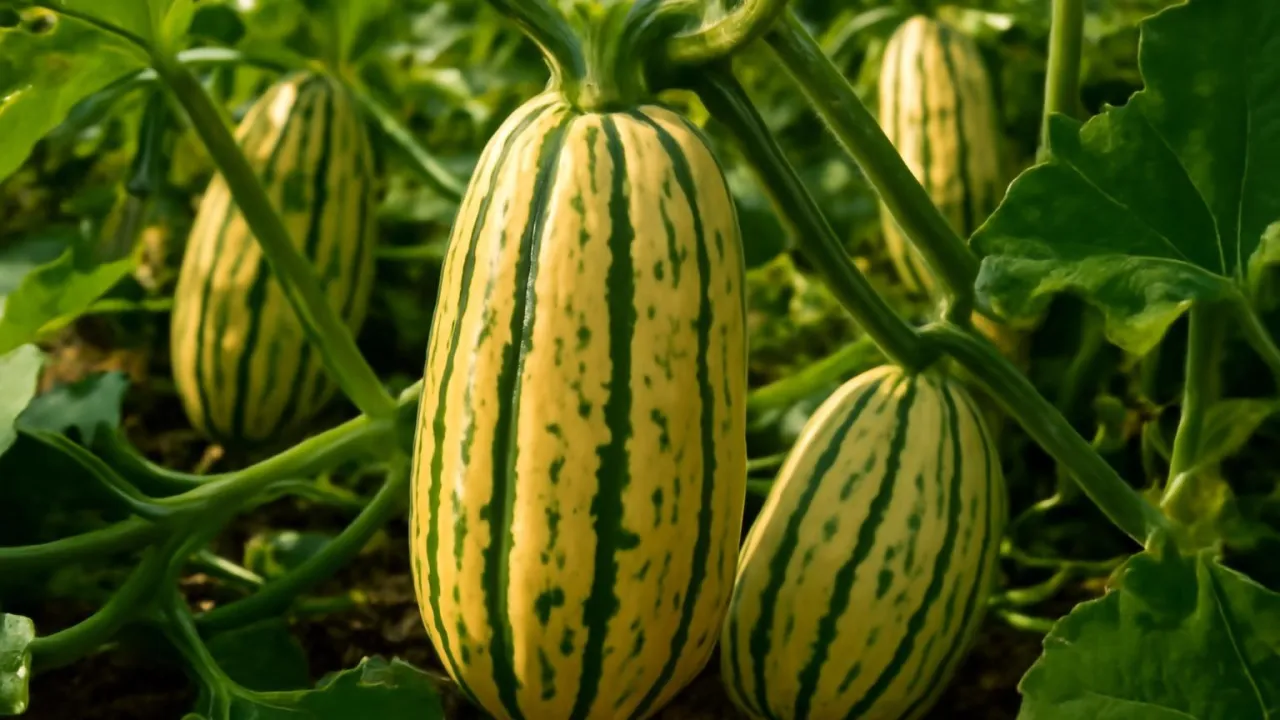
Delicata squash’s skin is so soft that it does not need peeling before eating!
✨ Word Sparks (Grade 2 Glossary)
Tap 🔊 to hear
vine
A plant stem that grows along the ground or climbs
harvest
To gather ripe fruits or vegetables from plants
flesh
The soft inside part of a fruit or vegetable
🪝
Have you ever seen a squash that looks like a striped melon?
1
Striped Appearance
Delicata squash has yellow skin with green stripes running all around it. Its shape is long and oval, like a small melon. The stripes make it easy to spot in gardens or markets.
2
Where It Grows
This squash grows on that spread across warm garden soil. It needs full sunlight and regular watering to grow healthy and strong. Farmers often plant it in late spring to in fall.
3
Sweet and Edible
Inside, delicata squash has soft, sweet that tastes like a mix of sweet potato and pumpkin. Unlike many squashes, you can eat its thin skin after cooking. This makes it easy to prepare and enjoy.
1. What kind of sunlight does delicata squash need?
2. What makes delicata squash easy to prepare?
🤯 Mind-Blowing Fact • Grade 3
Delicata squash’s striped skin helps it hide from animals that might eat it.
✨ Word Sparks (Grade 3 Glossary)
Tap 🔊 to hear
camouflage
Colors or patterns that help hide plants or animals
pollination
When pollen moves to help plants make seeds
nutrients
Good stuff in food that helps us grow strong
🪝
Did you know delicata squash has a natural striped camouflage?
1
Striped Camouflage
Delicata squash’s yellow skin with green stripes helps it blend into garden vines. This protects it from some predators. The stripes break up its shape among leaves and shadows. This is an important adaptation for survival.
2
Growth and Pollination
Delicata grows on long vines that spread across the soil. Bees pollinate its bright yellow flowers to help it produce fruit. is the transfer of pollen that allows seeds to form inside the squash. Healthy pollination leads to better crops.
3
Edible Skin and Nutrients
Unlike many squashes, delicata has a thin, edible skin that cooks quickly. The skin contains and fiber that help digestion. The sweet flesh inside is rich in vitamins like A and C. These nutrients support healthy bodies.
4
Harvest and Uses
Farmers harvest delicata squash in the fall when the skin hardens slightly. It can be roasted, baked, or steamed for meals. Its sweet flavor makes it popular in soups and side dishes. This squash is a tasty and nutritious food source.
Delicata squash helps pollinators and animals while hiding from predators with its stripes.
✨ Word Sparks (Grade 4 Glossary)
Tap 🔊 to hear
herbivores
Animals that eat plants for food
ecosystem
All plants and animals living together in one place
decompose
When dead plants or animals break down into soil
🪝
How does delicata squash’s striped skin help it survive in gardens?
1
Camouflage and Protection
Delicata squash’s yellow and green striped skin provides natural camouflage that helps protect it from and other predators in its environment. This pattern breaks up the squash’s shape, making it harder for animals to spot it among leaves and vines. As a result, the squash has a better chance of maturing fully and producing seeds for the next generation.
2
Role in the Ecosystem
This squash plays an important role in garden by providing food for pollinators like bees and butterflies through its bright yellow flowers. The fruit also feeds animals such as squirrels and deer, which can help spread seeds. Additionally, delicata squash supports soil health by contributing organic matter when vines and fruits .
3
Growth Needs and Farming
Delicata squash requires full sun exposure and consistent watering to grow well in temperate climates. Farmers plant the squash in late spring and harvest it in early fall after the skin hardens slightly. Proper watering and sunlight help the plant develop sweet, tender flesh and maintain its characteristic striped appearance.
4
Geographic Distribution
Originally native to North America, delicata squash is now grown in many temperate regions worldwide. It thrives in garden beds and small farms where warm summers provide ideal growing conditions. Its popularity has increased because of its sweet flavor and easy-to-eat skin, making it a favorite in home gardens and farmers markets.
1. What does delicata squash’s striped skin help it do?
2. How does delicata squash support pollinators?
🤯 Mind-Blowing Fact • Grade 5
Delicata squash’s thin, edible skin is a rare trait among winter squashes worldwide.
✨ Word Sparks (Grade 5 Glossary)
Tap 🔊 to hear
taxonomy
How scientists group and name living things
photosynthesis
How plants use sunlight to make food
heirloom
Old plant types saved and grown for many years
🪝
What makes delicata squash scientifically unique among winter squashes?
1
Taxonomy and Botanical Context
Delicata squash belongs to the species Cucurbita pepo, a diverse group of squashes native to North America. It is classified as a winter squash because it matures fully in late season and stores well. Unlike summer squashes, delicata develops a tougher skin that protects the fruit during storage but remains thin enough to eat.
2
Physiological Mechanics and Adaptations
The plant produces long vines with large leaves that maximize by capturing sunlight efficiently. Its striped skin pattern is an adaptive camouflage that reduces predation by herbivores. Additionally, the thin skin contains nutrient-dense compounds and fiber, aiding digestion and nutrient absorption in consumers.
3
Conservation and Agricultural History
Historically, delicata squash was cultivated by Native American tribes who valued its sweet flavor and edible skin. Modern agriculture has revived interest in this variety due to its unique taste and ease of preparation. Conservation efforts focus on preserving heirloom seeds to maintain genetic diversity and cultural heritage.
4
Quantitative Comparisons and Growth Conditions
Delicata squash typically grows 6 to 8 inches long and weighs about 1 to 2 pounds. It requires temperatures between 70 and 85 degrees Fahrenheit for optimal growth and needs full sun exposure with moderate watering. Compared to other winter squashes, delicata’s thinner skin reduces cooking time and enhances culinary versatility.
5
Nutritional Value and Culinary Uses
Rich in vitamins A and C, delicata squash provides antioxidants that support immune health. Its sweet, creamy flesh contains dietary fiber that aids digestion and maintains blood sugar levels. Culinary uses include roasting, baking, and stuffing, with the edible skin adding texture and nutrients to dishes.