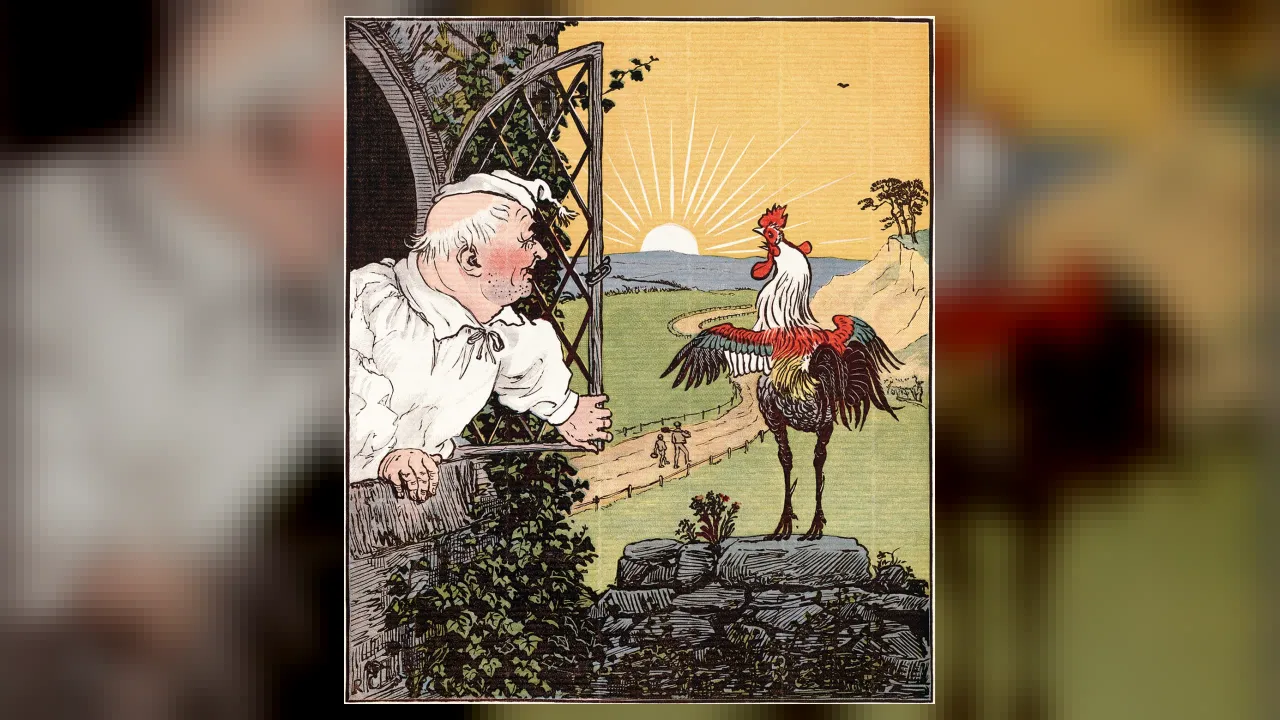
1. What is the main job of a children's book illustrator?
2. How did artist Eric Carle create 'The Very Hungry Caterpillar'?
🤯 Mind-Blowing Fact • Grade 2
Do authors and illustrators sit in the same room? Usually not—publishers pair them up so the illustrator has creative freedom to surprise everyone!
✨ Word Sparks (Grade 2 Glossary)
Tap 🔊 to hear
character
A person or animal in a story
dummy
A small rough practice booklet planning pages
palette
The group of colors chosen for art
🪝
How does an illustrator make sure a puppy looks like the exact same character on all 32 pages?
1
Practicing Every Expression
Before painting page one, an artist fills whole sketchbooks with practice drawings! Drawing a puppy happy, sleepy, surprised, and muddy from every side helps keep the matching from start to finish.
2
Making a Tiny Dummy Book
Most picture books have exactly 32 pages. Illustrators fold plain paper into a miniature test booklet called a '' to plan when exciting surprises appear as you turn each page.
3
Hiding Fun Easter Eggs
Look closely at picture-book backgrounds! Illustrators love hiding tiny side stories—like a curious ladybug or a mischievous cat—for sharp-eyed readers to spot.
1. How many pages long is a standard hardcover picture book?
2. What is a book 'dummy' in an illustrator's studio?
🤯 Mind-Blowing Fact • Grade 3
Ezra Jack Keats won the 1963 Caldecott Medal for 'The Snowy Day,' using patterned collage paper and splatters from an old toothbrush to paint Peter's snowy neighborhood!
✨ Word Sparks (Grade 3 Glossary)
Tap 🔊 to hear
gutter
Center fold where two book pages meet
medium
Art supplies used like watercolor or collage
spread
Two facing pages viewed side by side
🪝
Why must an illustrator leave calm, open space in every painting for the printed words?
1
Partnering With an Art Director
across a sunlit drafting table lie watercolor tubes, colored pencils, and a printed manuscript. Working alongside a publisher's art director, a children's book illustrator plans how words and pictures will dance together without crowding each other.
2
Watch the Gutter!
Open any hardcover book wide and notice the crease down the middle where pages are stitched—that fold is called the ! Smart illustrators never paint a character's nose right in the gutter where it would get swallowed by the fold.
3
Color Moods and Mediums
Warm golden yellows and oranges make a family kitchen scene feel cozy, while cool twilight blues and purples whisper bedtime quiet. Artists experiment with ranging from watercolor, gouache paint, cut-paper collage, and carved woodblocks to pressure-sensitive digital tablets.
4
Celebrating Great Picture Books
Every single year since 1938, the American Library Association's Randolph Caldecott Medal has honored the illustrator of the year's most distinguished American picture book for children!
1. Why do illustrators avoid placing a character's face right in the book's 'gutter'?
2. Which famous medal honors the illustrator of the year's best American picture book?
🤯 Mind-Blowing Fact • Grade 4
Legendary illustrator Jerry Pinkney won the Caldecott Medal for 'The Lion & the Mouse,' a breathtaking picture book told almost entirely through watercolor paintings with zero spoken sentences!
✨ Word Sparks (Grade 4 Glossary)
Tap 🔊 to hear
thumbnail
Tiny rough sketch planning layout and motion
contrast
Noticeable difference between words, light, or colors
proof
Test print checked for accurate ink colors
🪝
How do illustrators tell a second secret story in the pictures that never appears in the text?
1
Visual Counterpoint in Storytelling
In unforgettable picture books, illustrations never merely repeat what the printed sentences already tell you. Suppose the author's text reads, 'Sammy assured his mother the backyard camping trip was completely peaceful,' while the painting reveals a curious raccoon tiptoeing off with Sammy's marshmallows! That playful counterpoint between calm words and lively art sparks laughter and rewards observant young readers.
2
Scientific and Historical Accuracy
When illustrating nonfiction books about prehistoric fossils, Atlantic coral reefs, or George Washington's Mount Vernon estate in Virginia, illustrators become dedicated visual historians and naturalists. They consult museum curators, sketch real botanical leaves, and verify eighteenth-century tools and clothing so every feather, cloud formation, and coat button teaches trustworthy facts.
3
Thumbnails to Final Color Proofs
Illustrating a single 32-page hardcover picture book often requires six to twelve months of studio focus. Artists start with postage-stamp-sized sketches to balance page-turn suspense, refine full-scale pencil drawings with the art director, paint final artwork, and inspect printer color before binding.
4
Mirrors and Windows for Readers
Celebrated illustrators like Jerry Pinkney, Kadir Nelson, Christian Robinson, and Grace Lin craft luminous picture books that serve as both mirrors—reflecting children's own loving families and neighborhoods—and welcoming windows into diverse cultures around the globe.
1. What happens when an illustration shows funny action that contrasts with calm text?
2. What made Jerry Pinkney's Caldecott-winning 'The Lion & the Mouse' special?
🤯 Mind-Blowing Fact • Grade 5
Nineteenth-century British artist Randolph Caldecott—for whom the Caldecott Medal is named—revolutionized children's books by putting lively, galloping motion into illustrations instead of stiff, posed portraits!
✨ Word Sparks (Grade 5 Glossary)
Tap 🔊 to hear
signature
Folded printed sheet forming multiple book pages
bleed
Artwork extending past page trim edges
sequential
Arranged in a connected step-by-step order
🪝
How do printing physics, CMYK ink chemistry, and sequential pacing shape every picture book?
1
The Engineering of 32-Page Signatures
Have you ever wondered why hardcover picture books almost always contain multiples of eight pages—most commonly 32, 40, or 48? Commercial offset printing presses feed massive parent sheets of archival paper that are printed simultaneously on front and back, folded in half repeatedly, trimmed cleanly on three sides, and sewn into sturdy bundles called . Children's book illustrators choreograph every story beat—from decorative endpapers and half-title vignettes to the dramatic wordless double-page spread—around this exact physical architecture.
2
Directing the Reader's Eye Across Spreads
In books read from left to right, visual momentum flows naturally toward the lower-right page corner where a reader's fingers reach to turn the page. Master illustrators compose diagonal forest paths, soaring birds, and characters' eye gazes rightward to propel narrative curiosity forward—or turn a hero abruptly leftward to signal a sudden obstacle, mystery, or cozy return home.
3
RGB Screens vs. CMYK Printing Ink
Whether drum-scanning traditional watercolor, oil, scratchboard, or collage artwork at 600 dots per inch (DPI) or painting in layered digital brushes, illustrators must understand optical color science. Studio monitors shine additive Red, Green, and Blue (RGB) light, whereas offset presses layer microscopic halftone dots of subtractive Cyan, Magenta, Yellow, and Key black (CMYK) ink—requiring extra outer '' margins so no white slivers show after trimming.
4
Portfolios, Literary Agents, and Copyright
Professional illustrators build cohesive portfolios showcasing character consistency across multiple lighting moods and camera angles. Working with illustration agents and publishing art directors, they negotiate advances and per-copy royalties while retaining legal copyright ownership over their original paintings for museum exhibitions.
5
Foundation of Visual Literacy
Years before young children decode complex chapter books on their own, picture-book illustrators cultivate visual inference, emotional empathy, and fine-art appreciation—serving as every child's very first art museum curator.