1. What have clever chemical engineers used to make eco-friendly spoons and wrappers?
2. What do engineers wear over their eyes inside laboratories and pilot plants?
🤯 Mind-Blowing Fact • Grade 2
Until chemical engineers scaled up penicillin production in giant fermentation tanks in the 1940s, doctors could barely make enough of the life-saving antibiotic to treat a handful of patients!
✨ Word Sparks (Grade 2 Glossary)
Tap 🔊 to hear
scale up
Growing a tiny lab recipe for big production
molecule
Tiny building blocks joined together making materials
membrane
A thin sheet letting pure water pass through
🪝
Why is baking ten thousand loaves of bread so much trickier than baking just one loaf in your kitchen?
1
Scaling Up Great Discoveries
Imagine inventing a delicious new berry smoothie in your kitchen blender—now imagine making fifty thousand gallons of it every morning without burning or spilling a drop! Solving giant 'scale-up' puzzles like that is the job of a chemical engineer.
2
Turning Raw Ingredients Into Everyday Wonders
When a chemist discovers a life-saving medicine inside one tiny glass test tube, chemical engineers design the stainless-steel pumps, heaters, and mixers that produce millions of safe doses for hospitals everywhere.
3
Cleaner Planet Solutions
They also invent recycled paper processes, longer-lasting electric car batteries, and special that turn salty ocean water into fresh drinking water!
1. What does 'scaling up' mean when a new medicine is discovered in a tiny test tube?
2. How do special membranes designed by chemical engineers help dry coastal towns?
🤯 Mind-Blowing Fact • Grade 3
Tiny honeycomb ceramic blocks coated with metal catalysts inside a car's exhaust pipe turn ninety-eight percent of harmful exhaust gases into harmless water vapor and nitrogen in a split second!
✨ Word Sparks (Grade 3 Glossary)
Tap 🔊 to hear
bioreactor
A temperature-controlled tank growing helpful cells or medicines
catalyst
A helper material speeding up chemical reactions cleanly
desalination
Removing salt from ocean water for fresh drinking
🪝
What is the difference between a laboratory chemist and a chemical engineer?
1
Test Tubes Versus Giant Bioreactors
Step into a science center and you will meet two close teammates: a chemist often invents a brand-new molecule inside a small glass beaker, while a chemical engineer combines chemistry, physics, and math to manufacture that discovery safely, cleanly, and affordably by the ton!
2
Why Big Tanks Behave Differently
Stirring a teacup cools hot cocoa in seconds, yet a ten-thousand-gallon steel reactor traps heat inside like a thermos! Engineers calculate exact pipe flows, cooling jackets, and pressure valves so reactions stay calm and pure.
3
Catalysts: Molecular Matchmakers
To save energy, engineers use special helper materials called . Catalysts speed up chemical reactions at lower temperatures without getting used up themselves—helping car exhaust filters clean air and factories make eco-friendly fabrics.
4
Zero-Waste Green Engineering
Modern process teams recycle leftover water and heat inside closed loops, turning agricultural waste into clean biofuels and compostable packaging.
1. Why can't engineers simply pour a test-tube recipe into a giant tank without recalculating heat?
2. What helpful superpower does a 'catalyst' bring to a chemical reaction?
🤯 Mind-Blowing Fact • Grade 4
Margaret Hutchinson Rousseau not only engineered the deep-tank penicillin process that saved millions of lives, she also became the very first woman elected to the American Institute of Chemical Engineers!
✨ Word Sparks (Grade 4 Glossary)
Tap 🔊 to hear
fermentation
Using helpful microbes in tanks to make medicines
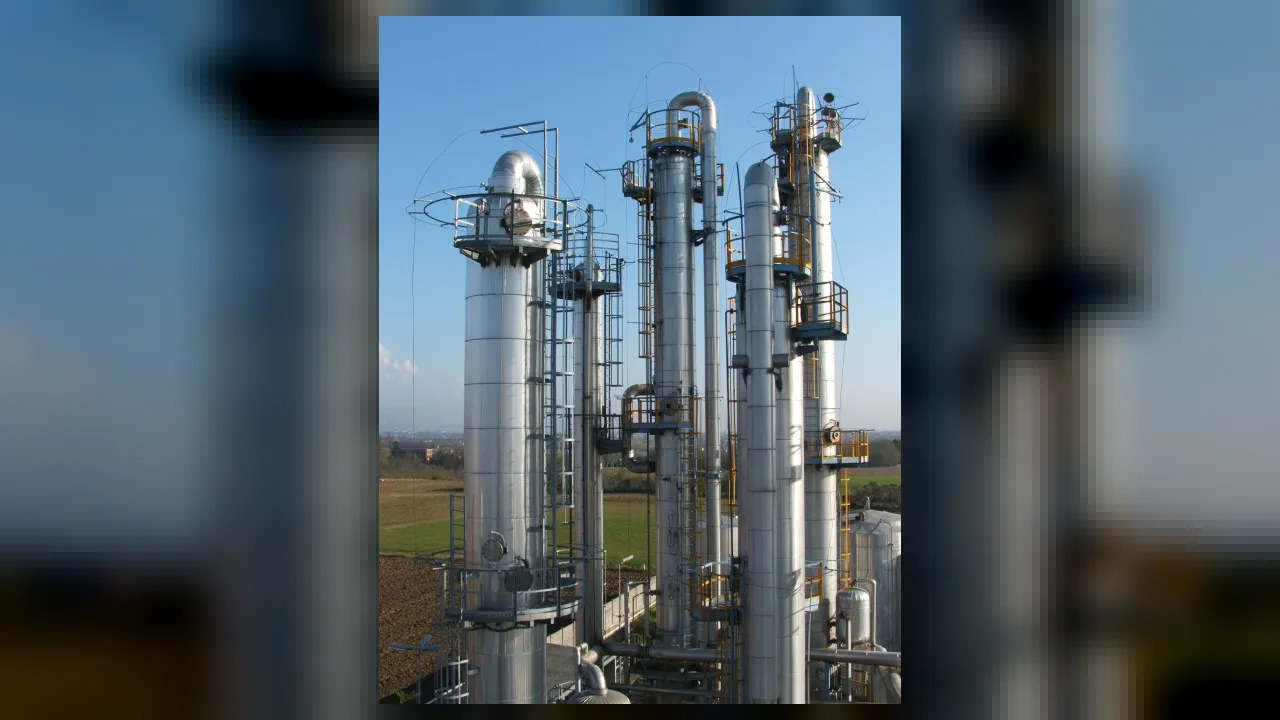
distillation
Separating mixed liquids using different boiling temperatures
biodegradable
Able to break down naturally by harmless microbes
🪝
How did scaling up one moldy cantaloupe from a grocery market save hundreds of millions of lives worldwide?
1
The Great Penicillin Scale-Up
After Alexander Fleming noticed bread-like mold stopping bacteria in a petri dish, scientists still faced a huge roadblock: growing shallow trays of mold took weeks to make a single dose! In the 1940s, chemical engineer Margaret Hutchinson Rousseau designed America's first deep-tank plant—bubbling sterile oxygen through corn-steep broth around a hardy mold found on a Peoria cantaloupe—unlocking mass-produced antibiotics for the world.
2
Mass Balance and Unit Operations
Every factory or biotech plant designed by a chemical engineer follows conservation of mass and energy: every gram of atoms entering a pipe network must be accounted for at the end! Engineers link building blocks called 'unit operations'—mixing, heating, (separating liquids by boiling points), crystallization, and ultra-fine membrane filtration.
3
Batteries, Semiconductors, and Vaccines
Look inside almost any modern technology and chemical engineering is hidden right inside. Chemical engineers formulate high-density lithium battery electrolytes, purify silicon wafers for computer chips, and run sterile bioreactors producing insulin and vaccines.
4
Green Chemistry in Virginia and Beyond
At advanced pharmaceutical manufacturing hubs in Petersburg and Richmond, Virginia, continuous-flow reactors make essential medicines inside compact, automated tubes—slashing waste, water use, and costs for patients nationwide.
1. How did chemical engineer Margaret Hutchinson Rousseau make penicillin available to millions of people?
2. How does the 'unit operation' of distillation separate mixed liquids?
🤯 Mind-Blowing Fact • Grade 5
Reverse-osmosis desalination membranes contain pores less than one nanometer wide—small enough to block dissolved salt ions and viruses while letting tiny H2O water molecules squeeze right through!
✨ Word Sparks (Grade 5 Glossary)
Tap 🔊 to hear
exothermic
A chemical reaction releasing heat energy outward
reverse osmosis
Pressurizing water through nanopore membranes to remove salt
electrolyzer
Device using clean electricity to split water molecules
🪝
Why does doubling the width of a chemical reactor multiply its volume eightfold while only quadrupling its cooling surface—and why does life depend on that math?
1
Mastering the Square-Cube Law
When a bench chemist mixes two reagents in a ten-milliliter vial, gentle heat escapes instantly through the glass walls. Scale that exact geometry up tenfold in width, however, and reactor volume jumps a thousand times while outer wall surface area grows only a hundred times! Preventing thermal runaway while maximizing molecular yield is the mathematical specialty of a chemical engineer.
2
Transport Phenomena and Reaction Kinetics
Chemical engineering unites chemical reaction kinetics with 'transport phenomena'—the physics governing how momentum (fluid flow), thermal energy (heat transfer), and molecules (mass diffusion) move through space and time. Using computational simulations and P&ID schematics, engineers thread internal cooling coils, baffle mixers, and automated pressure-relief interlocks through continuous-flow plants.
3
Feeding Billions and Purifying Oceans
Two chemical-engineering breakthroughs reshaped modern history. High-pressure catalytic ammonia synthesis enabled global crop fertilizers that today sustain nearly half of humanity's food supply, while reverse-osmosis polyamide membranes push seawater past microscopic pores at fifty-plus atmospheres of pressure—producing hundreds of millions of gallons of pure drinking water daily for arid regions.
4
Green Hydrogen, Carbon Capture, and Biomanufacturing
Today's chemical engineers are re-architecting industry around circular atom economy: splitting water in proton-exchange using solar power to make clean 'green hydrogen' fertilizer, engineering enzymes that unzip discarded PET plastic bottles back into virgin monomers, and designing sorbent towers that capture carbon dioxide directly from smokestacks.
5
Inherent Process Safety
Guided by strict process-safety ethics—substituting nontoxic water-based solvents, shrinking hazardous inventories through micro-reactors, and automating triple-redundant sensors—chemical engineers transform molecular science into clean water, medicine, and sustainable materials for our planet.