1. What do the soft felt hammers strike inside a celesta when you press the keys?
2. What does the French root of the name 'celesta' mean?
🤯 Mind-Blowing Fact • Grade 2
In 1891, composer Pyotr Ilyich Tchaikovsky ordered a celesta shipped secretly from Paris to Russia so rival composers wouldn't hear its magical sound before The Nutcracker premiered!
✨ Word Sparks (Grade 2 Glossary)
Tap 🔊 to hear
upright
Standing tall and straight rather than lying flat
cushions
Softens a bump or tap gently
premiere
The very first public performance of music
🪝
Why did a famous Russian composer smuggle this brand-new instrument out of France in total secrecy?
1
Dewdrops Made of Sound
Plink-ting-plonk! Think of the famous 'Dance of the Sugar Plum Fairy' from The Nutcracker ballet, or the mysterious opening notes of Harry Potter's theme! That sparkling, silvery sound comes from a keyboard instrument called the celesta.
2
A Secret Inside the Piano Case
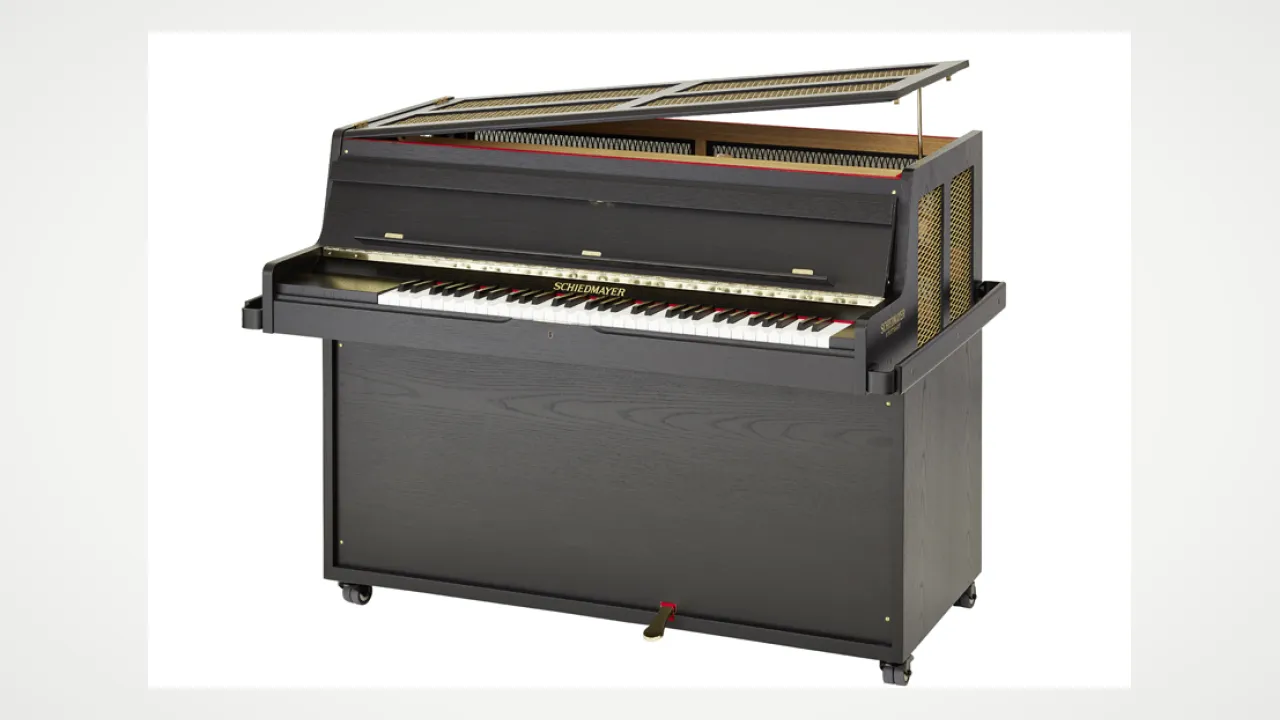
From across the stage, a celesta looks like a small piano with a wooden music desk and a foot pedal. Peek under the lid, however, and there are zero strings! Instead, pressing a key lifts a soft felt hammer against a metal bar resting over its own hollow wooden box.
3
Soft and Silvery
Because plush felt every tap, the metal bars never clang harshly—they glow like gentle silver bells!
1. Which famous holiday ballet made the celesta an instant sensation in 1892?
2. Why does a celesta sound gentler and warmer than a mallet-struck glockenspiel?
🤯 Mind-Blowing Fact • Grade 3
Even though the celesta sits in the percussion family because hammers hit metal bars, orchestras usually hire a skilled pianist to play its tricky ten-finger parts!
✨ Word Sparks (Grade 3 Glossary)
Tap 🔊 to hear
levers
Pivoting bars that transfer motion when pressed
chord
Several musical notes played together in harmony
mutes
Quiets or softens harsh musical vibrations
🪝
How does combining a piano's hammers with a glockenspiel's steel bars unlock ten-finger bell chords?
1
Ten Fingers Playing Bell Chords
Ting-chime-glow! On an ordinary glockenspiel, a percussionist holding two or four mallets can only strike a few bars at once. Put a full piano keyboard in front of steel bars, though, and suddenly all ten fingers can ripple through dazzling waterfalls of bell-like !
2
Inside Auguste Mustel's Invention
French instrument builder Auguste Mustel invented the celesta in Paris in 1886, building upon an earlier tuning-fork keyboard created by his father, Victor Mustel. Whenever a player presses a key, wooden toss a felt-wrapped hammer against a steel alloy plate suspended above a carefully sized wooden resonator box.
3
Filtering Out the Clang
Hard mallets make steel ping sharply, whereas soft felt spreads out the moment of impact. That gentle cushion shrill upper frequencies while each hollow pine box amplifies the pure main note, creating a round, dreamy timbre.
4
Star of Ballet, Symphony, and Film
After Tchaikovsky enchanted audiences in 1892 with the 'Sugar Plum Fairy,' composers from Gustav Holst (Neptune in The Planets) to Béla Bartók and John Williams ('Hedwig's Theme') turned to the celesta whenever music needed mystery or wonder.
2. What did Victor Mustel—Auguste's father—use inside an earlier cousin of the celesta before steel bars?
🤯 Mind-Blowing Fact • Grade 4
Composer Pyotr Ilyich Tchaikovsky described the celesta's tone in an 1891 letter as 'divinely wonderful—something midway between a tiny piano and a glockenspiel'!
✨ Word Sparks (Grade 4 Glossary)
Tap 🔊 to hear
escapement
Mechanism letting hammers bounce back immediately after striking
translucent
Clear, delicate, and letting light shine through
register
A low, middle, or high pitch zone
🪝
Why is the celesta classified as percussion by scientists, played by pianists in orchestras, and built with miniature wooden air chambers inside?
1
A Hybrid Marvel of Wood, Felt, and Steel
Walk past the back corner of a symphony stage and you might mistake the celesta for a parlor harmonium or miniature spinet piano. Yet the instant a keyboardist's fingers brush its keys—floating through John Williams's 'Hedwig's Theme' or Mahler's symphonies— droplets of metallic sound shimmer across the auditorium.
2
Helmholtz Boxes and Soft Hammer Physics
Acoustically, the celesta is a keyboard-operated struck metallophone. Pressing a key activates an action—so the hammer rebounds immediately instead of resting against the metal—and drives a thick wool-felt hammer downward or upward onto a tempered steel bar resting on nodal felt pins. Why doesn't it pierce the ears like a glockenspiel? First, thick compressed felt lengthens contact time to several milliseconds, suppressing piercing high-frequency partials at birth. Second, directly beneath or behind each steel bar sits an individual closed wooden box with a tuned sound hole—a Helmholtz resonator—whose trapped air vibrates purely at the bar's fundamental frequency, wrapping every note in velvety warmth.
3
Octave Transposition and Modern Range
Original four-octave French celestas began at middle C (C4) and sounded one octave higher than written, earning the Italian score marking celesta. Modern five- and five-and-a-half-octave German concert models extend all the way down to C3, adding rich lower- chimes controlled by a single sustain damper pedal.
4
Parisian Craft to Cinema Magic
Following Auguste Mustel's 1886 patent and Tchaikovsky's covert 1891 purchase for St. Petersburg, the celesta captivated Ravel, Bartók (Music for Strings, Percussion and Celesta), jazz legend Thelonious Monk, and generations of film composers.
1. What acoustic device sits beside or beneath each steel bar inside a celesta to warm up its fundamental pitch?
2. Why does a celesta action need an 'escapement' mechanism like a piano?
🤯 Mind-Blowing Fact • Grade 5
Inside a five-octave concert celesta sit sixty-one separate, individually hand-tuned wooden Helmholtz boxes—meaning every single note has its own miniature acoustic 'guitar body' calibrated to the millimeter!
✨ Word Sparks (Grade 5 Glossary)
Tap 🔊 to hear
compliant
Yielding softly under pressure before springing back
aperture
A carefully sized opening that lets waves pass
sinusoidal
Shaped like a smooth, pure single-frequency wave
🪝
How do compliant felt-hammer mechanics and individual Helmholtz air cavities strip harsh metallic transients from steel bars to create the celesta's pure fundamental glow?
1
Engineering Ethereal Pure Tones
When five solo notes tiptoe out of darkness to open 'Hedwig's Theme' or shimmer through Bartók's nocturnal scores, listeners encounter one of the purest -like timbres in the acoustic orchestra. Neither plucked wire nor hard-struck bell, the celesta marries grand-piano escapement mechanics with precision metallophone acoustics.
2
Compliant Impact Filtering and Helmholtz Coupling
Classified in Hornbostel-Sachs organology as a keyboard struck metallophone (111.222), a concert celesta spans four octaves (C4–C8, 261.6 to 4,186 hertz), five octaves (C3–C8), or five-and-a-half octaves (F2–C8). Unlike a glockenspiel struck by rigid brass spheres, celesta plates of alloyed steel are struck from above (in classic Schiedmayer/Mustel down-striking actions) by wooden hammers crowned with graded wool felt. Longer Hertzian contact duration acts as a mechanical low-pass filter: before the hammer rebounds via double-escapement leverage, it dampens discordant upper flexural modes (2.76f and 5.40f) while transferring clean kinetic energy into the fundamental bending mode. Coupled directly beneath each bar's central antinode sits a sealed pine or beechwood cavity pierced by a calibrated —an individual Helmholtz resonator tuned precisely to 1f, radiating a round, flute-pure decay.
3
Notation Conventions and Dynamic Envelope
Because early four-octave Mustel instruments sounded one octave above written notation (transposing like a xylophone), historical scores from Tchaikovsky to Ravel write celesta an octave lower, whereas modern five-octave German instruments are frequently notated at concert pitch. Operating within an intimate dynamic ceiling from ppp to mf, a foot-operated damper rail lifts felt pads simultaneously across all plates for shimmering arpeggiated sustain.
4
Action Touch and Orchestral Seating
Seated beside the piano and harp, keyboard specialists regulate finger velocity carefully so delicate rapid passages articulate cleanly without bottoming out the compact upright keybed.
5
From Victor Mustel's Typophone to Symphonic Icon
Evolving from Victor Mustel's 1865 tuning-fork typophone, Auguste Mustel's 1886 Parisian celesta enchanted Ernest Chausson and Pyotr Ilyich Tchaikovsky, whose secret 1891 commission for The Nutcracker launched a global sensation embraced by Mahler, Richard Strauss (Der Rosenkavalier), Bartók, jazz innovators Earl Hines and Thelonious Monk, and modern cinema.