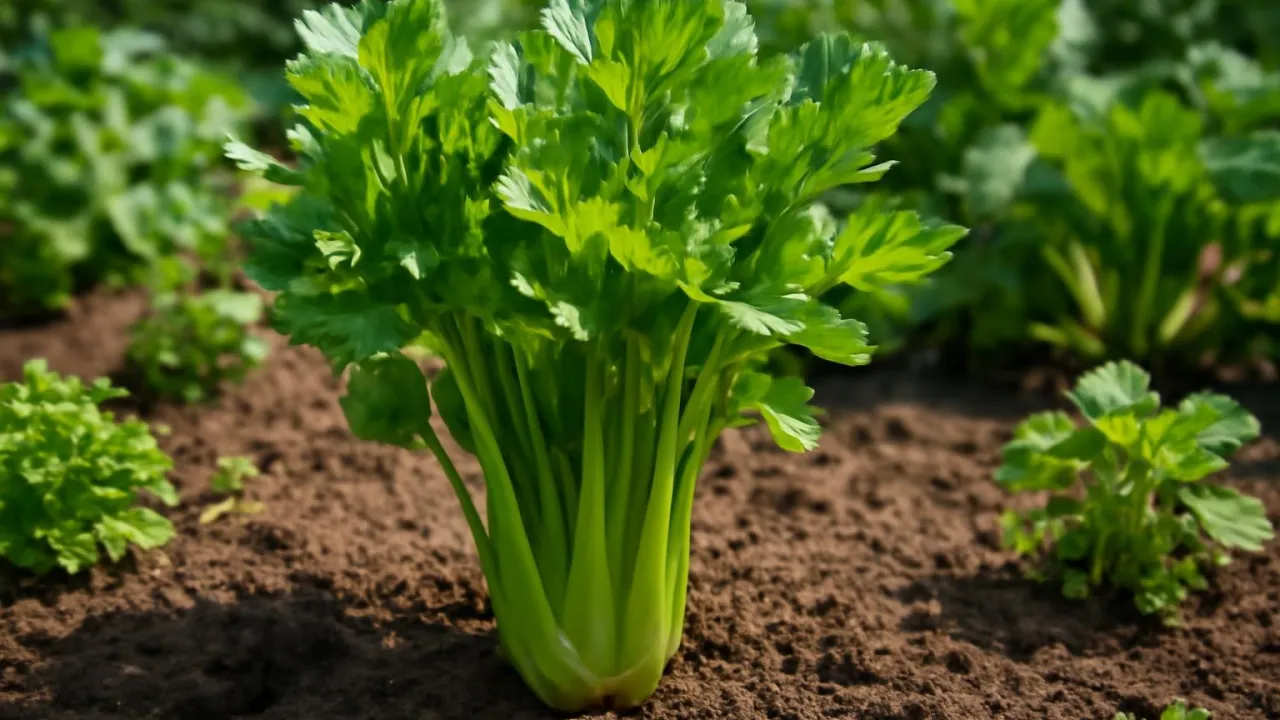
Celery stalks are mostly water, which is why they snap and crunch so well!
✨ Word Sparks (Grade 2 Glossary)
Tap 🔊 to hear
stalk
The long part of a plant you can hold
snap
To break quickly with a sharp sound
garden
A place where people grow plants and vegetables
🪝
Have you ever snapped a crunchy celery stalk in half?
1
Celery’s Crunchy Stalks
Celery has long, green that easily when bent. These stalks are full of water and taste fresh. People often eat celery raw as a healthy snack.
2
Where Celery Grows
Celery grows best in with plenty of sun and water. It needs cool weather to grow well and can be found in many countries. Bugs sometimes try to eat the leaves and .
3
Celery’s Special Feature
Celery are about ninety-five percent water, which makes them very crunchy. This water content helps celery stay fresh and crisp for a long time.
Celery’s stalks are about 95% water, which keeps them crunchy and fresh for days.
✨ Word Sparks (Grade 3 Glossary)
Tap 🔊 to hear
adaptation
A change that helps plants survive better
nutrients
Food that helps plants and animals grow
habitat
The natural place where a plant or animal lives
🪝
Did you know celery’s crunchy stalks help it survive in nature?
1
Celery’s Crunchy Stalks
Celery has long, green stalks filled with water that give it a crunchy texture. This crunchiness helps protect celery from some animals that might want to eat it. The stalks also help the plant stay upright and reach sunlight.
2
Celery’s Growing Habitat
Celery grows best in cool, moist soil with plenty of sunlight. It is often grown in gardens or farms where it can get enough water and . The plant’s roots absorb water to keep the stalks juicy and fresh.
3
How Celery Grows
Celery starts as a small seed and grows into a tall plant with many stalks. The stalks grow from the base and develop ribs that give them strength. This structure is an to help celery survive wind and rain.
4
Celery’s Role and Uses
Celery is an important vegetable in many food webs because animals and humans eat it. It provides and water to those who consume it. Celery also helps farmers by being a crop that grows quickly and easily.
1. What helps celery stalks stay crunchy and fresh?
2. Why do celery stalks have ribs?
🤯 Mind-Blowing Fact • Grade 4
Celery’s ribs and high water content work together to keep stalks crisp and strong in many environments.
✨ Word Sparks (Grade 4 Glossary)
Tap 🔊 to hear
ecosystem
All plants and animals living together
producer
A plant that makes its own food
pollinator
An animal that helps plants make seeds
🪝
Have you ever wondered why celery stays so crisp and fresh for days?
1
Celery’s Water-Filled Stalks
Celery’s stalks are about ninety-five percent water, which causes them to snap and crunch when bent. This high water content is an adaptation that helps celery survive in dry conditions by storing moisture. The ribs along the stalks provide structural support to keep the plant upright in windy environments.
2
Celery’s Role in Ecosystems
Celery plays an important role in food webs as both a and a food source for animals and humans. It provides essential nutrients and water to herbivores that feed on it. Farmers cultivate celery in temperate regions, which impacts local by supporting and soil health.
3
Growing Conditions and Distribution
Celery thrives in cool, moist soils with full sunlight, commonly found in Mediterranean and temperate climates worldwide. Its growth depends on regular watering and nutrient-rich soil to develop crisp stalks. Human agricultural practices have spread celery cultivation globally, making it a common vegetable in many diets.
4
Human Uses and Impact
People use celery in cooking, eating it raw or cooked to add flavor and crunch to meals. Its cultivation requires significant water, which can impact local water resources if not managed carefully. Sustainable farming practices help reduce environmental effects while maintaining celery production for food markets.
1. How does celery’s water content help it survive?
2. What role does celery play in ecosystems?
🤯 Mind-Blowing Fact • Grade 5
Celery’s ribbed stalks and vascular system create a natural hydraulic structure that keeps it crisp and strong.
✨ Word Sparks (Grade 5 Glossary)
Tap 🔊 to hear
vascular bundles
Tubes that carry water and food in plants
turgor pressure
Water pressure inside plant cells that keeps them firm
adaptation
A change that helps plants survive better
🪝
What makes celery’s crunchy stalks a fascinating example of plant adaptation and physiology?
1
Taxonomy and Scientific Classification
Celery belongs to the Apiaceae family, scientifically named Apium graveolens, closely related to carrots and parsley. This classification helps scientists understand its evolutionary traits and relationships with other plants. The plant is divided into varieties, including stalk celery, leaf celery, and celeriac, each with unique characteristics and uses.
2
Physiological Mechanics of Celery Stalks
Celery stalks contain that transport water and nutrients throughout the plant, maintaining for crispness. The high water content, about ninety-five percent, combined with rigid cell walls and ribbed structure, enables celery to resist bending and snapping under stress. This mechanical design is an to withstand environmental challenges like wind and herbivory.
3
Conservation and Agricultural History
Celery was first cultivated in the Mediterranean region over three thousand years ago, evolving from wild forms into the stalky vegetable known today. Modern agricultural practices have increased yield but also require careful water management to prevent resource depletion. Conservation efforts focus on sustainable farming to balance production with environmental impact.
4
Quantitative Comparisons and Growth
Celery plants typically grow to heights between one and two feet, with stalks reaching lengths of up to eighteen inches. The plant requires temperatures between fifty-five and seventy-five degrees Fahrenheit for optimal growth. Compared to other vegetables, celery’s water content is exceptionally high, contributing to its unique texture and nutritional value.
5
Celery’s Role in Nutrition and Economy
Celery provides dietary fiber, vitamins A, C, and K, and antioxidants, making it a valuable component of healthy diets worldwide. Economically, celery is a significant crop in many countries, supporting farmers and markets. Its versatility in culinary uses, from raw snacks to cooked dishes, highlights its cultural and nutritional importance.