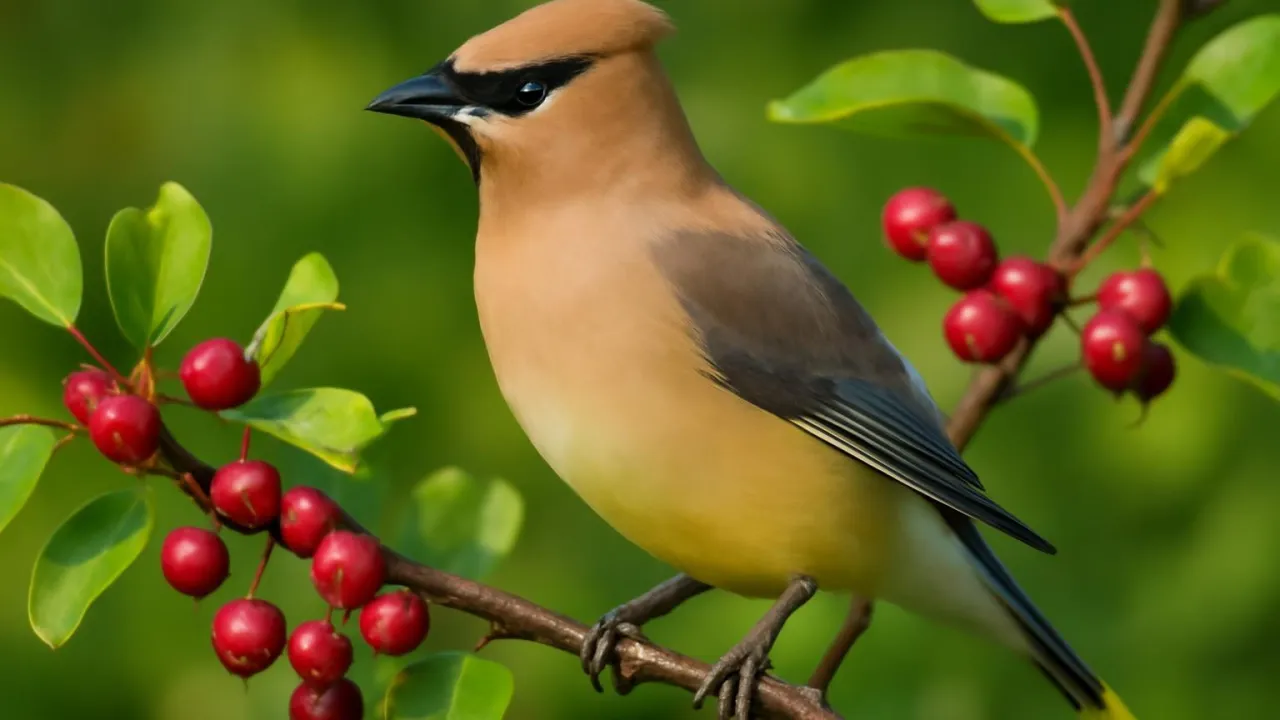
Cedar waxwings can eat whole berries and fly with the fruit in their beaks without dropping it!
✨ Word Sparks (Grade 2 Glossary)
Tap 🔊 to hear
crest
Feathers that stand up on a bird's head
flock
A large group of birds flying together
insects
Small animals like bugs that birds eat
🪝
Have you ever seen a bird with a shiny black mask on its face?
1
The Fancy Mask and Crest
The cedar waxwing has a smooth brown body and a black mask on its face. It also has a soft that sticks up on its head. This bird looks very sleek and shiny when it flies in the sun.
2
Fruit and Bug Eater
Cedar waxwings eat many kinds of berries and fruits, and they swallow them whole. They also catch small to eat when they need protein. These birds often feed in groups, sharing their tasty treats.
3
Flying and Singing Together
These birds fly in that can be very large and noisy. They make soft, high-pitched calls to talk to each other while they fly. Staying in groups helps them find food and stay safe from danger.
1. What helps cedar waxwings stay safe while flying?
2. What do cedar waxwings eat besides berries?
🤯 Mind-Blowing Fact • Grade 3
Cedar waxwings can eat whole berries and fly fast without dropping the fruit in their beaks!
✨ Word Sparks (Grade 3 Glossary)
Tap 🔊 to hear
adaptation
A body change that helps animals survive
predator
An animal that hunts other animals
nutrients
Food parts that help animals grow strong
🪝
Did you know cedar waxwings have a special way to eat fruit whole and fly fast?
1
Smooth Mask and Crest
The cedar waxwing wears a sleek black mask across its eyes, helping it blend into shadows. Its soft crest feathers stand up, which may signal other birds during flight. These features help it survive in open woodlands and gardens.
2
Eating Fruits and Insects
This bird mainly eats berries and fruits, swallowing them whole to avoid wasting energy. It also catches insects for extra , especially during breeding season. This diet helps the waxwing get enough energy to fly long distances.
3
Flocking and Communication
Cedar waxwings fly in large flocks that help protect them from . Their soft, high-pitched calls allow them to communicate while searching for food. This social behavior is an important for survival.
4
Body Adaptations for Survival
Their smooth feathers reduce air resistance, allowing quick flight when escaping danger. The strong beak lets them pick fruit easily, and their feet help perch on thin branches. These help cedar waxwings thrive in their habitats.
By eating berries and spreading seeds, cedar waxwings help forests grow and thrive!
✨ Word Sparks (Grade 4 Glossary)
Tap 🔊 to hear
camouflage
Colors that help animals hide from enemies
ecosystem
A place where plants and animals live together
symbiosis
A close relationship where both animals help each other
🪝
How does the cedar waxwing’s mask and flocking help it survive in North America?
1
Mask and Crest for Camouflage
The cedar waxwing’s black mask helps it blend into shaded tree branches, making it less visible to predators. Its raised crest serves as a visual signal to other waxwings during flight, strengthening social bonds. This and signaling are vital for survival in open woodlands and suburban areas. These features help the bird avoid danger and stay connected with its group.
2
Role in Ecosystems and Food Webs
Cedar waxwings play a key role by eating berries and dispersing seeds, helping plants grow in their habitats. They also consume insects, which controls pest populations and benefits the . Their presence supports balanced food webs and healthy environments across North America, making them important members of many habitats.
3
Flocking Behavior and Communication
Flying in large flocks allows cedar waxwings to reduce predation risk through safety in numbers. Their soft, high-pitched calls maintain group cohesion during flight and while searching for food. This social behavior is an important adaptation to changing environments and helps the birds survive harsh seasons.
4
Geographic Range and Human Impact
Cedar waxwings are found throughout North America, from Canada to Mexico, favoring open woodlands and suburban gardens. Human planting of berry-producing trees has expanded their food sources, but habitat loss and pesticide use can threaten local populations. Conservation efforts focus on preserving native plants that support waxwings and other wildlife.
Cedar waxwings can eat dozens of berries each minute and help forests regrow by spreading seeds far and wide!
✨ Word Sparks (Grade 5 Glossary)
Tap 🔊 to hear
plumage
The feathers covering a bird’s body
aerodynamic
Shaped to move easily through the air
seed dispersal
Spreading seeds to grow new plants
🪝
What unique features and behaviors make the cedar waxwing a master of fruit eating and social flying?
1
Taxonomy and Scientific Classification
The cedar waxwing, scientifically named Bombycilla cedrorum, belongs to the family Bombycillidae. This family includes birds known for their silky and waxy wing tips. The species name 'cedrorum' refers to their fondness for cedar berries, a key food source during winter months. Their classification helps scientists understand their evolutionary history.
2
Physiological Adaptations for Feeding
Cedar waxwings have a short, wide beak adapted to pluck and swallow whole berries quickly, minimizing energy use. Their digestive system efficiently processes fruit sugars, allowing rapid energy gain. They can also consume insects, especially during breeding, to obtain necessary proteins for growth. These adaptations enable them to thrive in varied environments.
3
Social Behavior and Flight Mechanics
These birds exhibit complex flocking behavior, flying in coordinated groups that reduce individual predation risk. Their smooth, feathers reduce drag, enabling agile flight during foraging. High-pitched vocalizations maintain flock cohesion and facilitate communication over long distances. This social structure is vital for survival and efficient food gathering.
4
Conservation and Habitat Influence
Cedar waxwings inhabit diverse North American environments, including woodlands, orchards, and urban gardens. Human planting of ornamental berry-producing shrubs has expanded their food availability. However, habitat destruction and pesticide use pose threats, making conservation of native berry plants essential. Protecting these habitats supports waxwing populations and biodiversity.
5
Quantitative Comparisons and Ecological Impact
Measuring approximately 7 inches (18 cm) long and weighing about 30 grams, cedar waxwings can consume up to 40 berries per minute. Their supports forest regeneration across large areas. Flight speeds reach up to 30 miles per hour (48 km/h), enabling quick escapes from predators and efficient foraging. These numbers highlight their important ecological role.