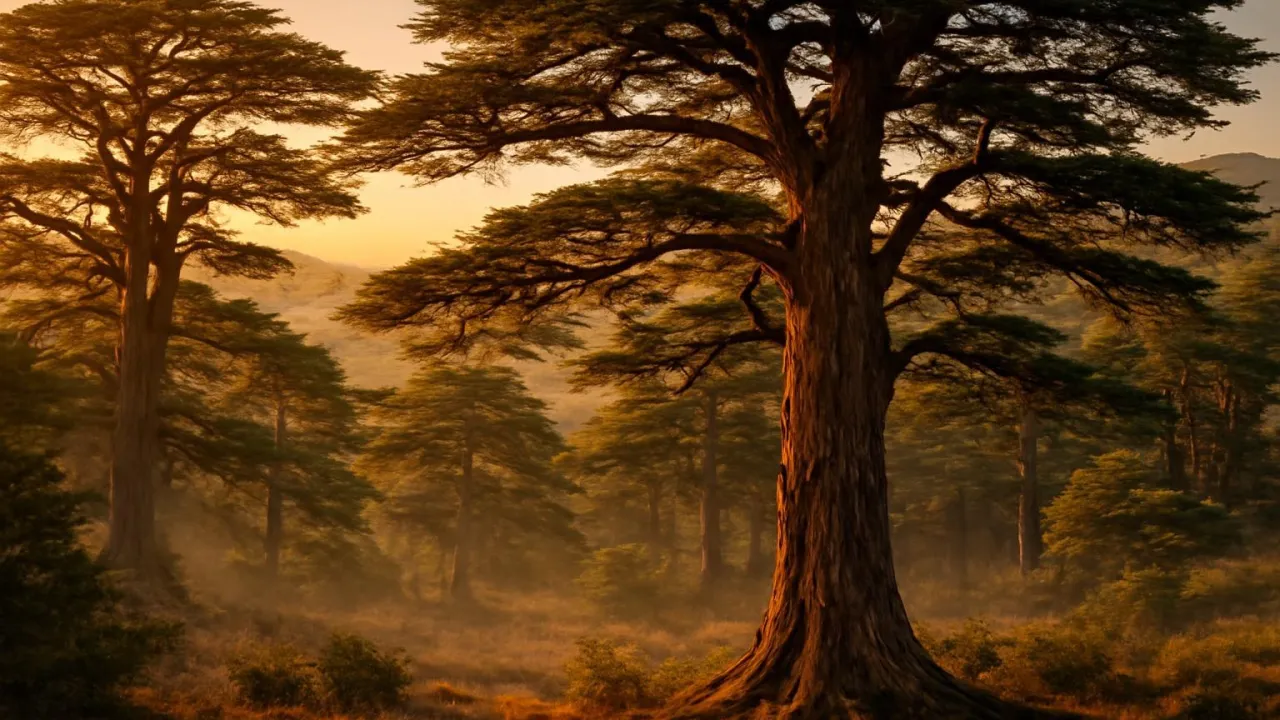
Some cedar trees in Lebanon are over 1,000 years old!
✨ Word Sparks (Grade 2 Glossary)
Tap 🔊 to hear
ancient
Very, very old
shade
Cool place out of the sun
treasure
Something very special and valuable
🪝
Have you ever wondered how old a tree can be?
1
A Forest of Giants
The cedar forest in Lebanon is full of giant, trees. Some trees are taller than a house, and their branches reach out like arms. The air smells fresh and earthy, and the trees give cool .
2
A Place Full of Life
Birds, bugs, and animals live in the forest and make it lively. The wind rustles the leaves, and sunlight dances on the ground. People walk along trails and listen to guides tell stories about the trees.
3
Special Trees for People
Long ago, people used cedar wood to build strong ships and big temples. Today, visitors come to see the old trees and help keep the forest safe. The cedar forest is a for Lebanon and the world.
Cedar wood was used to build King Solomon’s Temple in Jerusalem!
✨ Word Sparks (Grade 3 Glossary)
Tap 🔊 to hear
erosion
When soil is washed away by rain
habitat
A home for animals and plants
heritage
Something important from the past
🪝
What secrets might the oldest trees in the world remember?
1
A Living Legend in Lebanon
Deep in the mountains of Lebanon, ancient cedar trees grow tall and strong. Their trunks are thick, and their dark green needles fill the air with a sweet scent. The forest floor is soft with fallen needles, making each step quiet and gentle. Visitors feel like they are walking through history.
2
Nature’s Home and Playground
The cedar forest is a for many animals, including birds, insects, and small mammals. The branches provide shelter, while the roots hold the soil and prevent . Sunlight filters through the leaves, creating a patchwork of light and shadow. The forest is alive with the vibration of nature’s sounds.
3
Wood Fit for Kings and Temples
Thousands of years ago, people prized cedar wood for its strength and pleasant smell. Kings used it to build palaces, temples, and ships that sailed the Mediterranean Sea. Ancient builders chose cedar because it resists rot and lasts for centuries. Today, only small parts of the original forest remain, carefully protected by law.
4
A Heritage Worth Protecting
The cedar forest is a UNESCO World Site, meaning it is important to the whole world. Scientists and rangers study the trees and plant new ones to help the forest grow. Visitors learn about the forest’s history and why it must be saved. The cedar tree is even on Lebanon’s flag, showing its special place in the country’s heart.
2. What does the cedar tree on Lebanon’s flag mean?
🤯 Mind-Blowing Fact • Grade 4
Some living cedars in Lebanon are estimated to be over 1,500 years old!
✨ Word Sparks (Grade 4 Glossary)
Tap 🔊 to hear
biodiversity
Many different living things in one place
conservation
Caring for and protecting nature
canopy
The leafy roof made by tree tops
🪝
Imagine standing beneath a tree that has witnessed the rise and fall of empires—what stories could it tell?
1
The Ancient Cedars of Lebanon
High in the Mount Lebanon range, the cedar forest stands as one of the world’s oldest living landmarks. These majestic trees, with their broad trunks and sweeping branches, have survived for thousands of years. Their aromatic needles and reddish wood have inspired poets, kings, and travelers alike. Walking beneath them, you sense the deep time woven into every ring of wood.
2
A Vital Ecosystem and Natural Fortress
Cedar forests provide critical habitat for birds, insects, and mammals, creating a complex web of life. The massive root systems of the trees prevent soil erosion, protecting the mountain slopes from landslides. Rainwater is captured by the thick , helping to supply fresh water to streams below. This natural fortress also shields rare plants and animals, making the forest a hotspot.
3
Timber for Temples, Ships, and Legends
Throughout history, cedar wood was highly valued for its durability, pleasant aroma, and resistance to decay. Ancient Egyptians imported cedar for tombs and ships, while Phoenicians built legendary fleets from its timber. King Solomon’s Temple in Jerusalem was famously built with Lebanese cedar, making the forest renowned across civilizations. Overharvesting, however, nearly wiped out these forests, so strict protection laws now help them recover.
4
A Symbol of Heritage and Hope
Today, the Cedar Forest of Lebanon is a UNESCO World Heritage Site, celebrated for both its natural beauty and cultural significance. Scientists, conservationists, and local communities work together to plant new saplings and study the forest’s changing climate. The cedar tree remains a symbol of resilience, appearing on Lebanon’s flag as a sign of hope and national pride. Visitors from around the world come to learn, explore, and help protect this living treasure.
2. Why is the cedar forest important for scientists?
🤯 Mind-Blowing Fact • Grade 5
Phoenician cedar ships helped spread the world’s first alphabet and trade networks across three continents!
✨ Word Sparks (Grade 5 Glossary)
Tap 🔊 to hear
microclimate
Special weather in a small area
photosynthesis
How plants make food from sunlight
stewardship
Caring for and protecting something important
🪝
If you could travel back thousands of years, what would you witness in the shade of Lebanon’s ancient cedar giants?
1
A Timeless Forest at the Crossroads of History
Nestled in the Mount Lebanon range, the Cedar Forest of Lebanon has stood as a living witness to human civilization for over six millennia. These monumental coniferous trees, some reaching 130 feet (40 meters) in height and over 2,500 years in age, have shaded the footsteps of Phoenician traders, Egyptian pharaohs, and biblical kings. The forest’s unique , shaped by mountain mists and Mediterranean rainfall, allows the cedars to thrive where few other trees can survive. Every ring in their wood records centuries of droughts, storms, and human activity, making them natural historians of the region.
2
Ecological Marvel: Structure and Survival
Lebanese cedars (Cedrus libani) are adapted to harsh mountain conditions, with deep, wide-spreading roots that anchor them against fierce winds and stabilize steep slopes. Their dense canopies intercept rainfall, reducing soil erosion and maintaining the delicate water balance of the ecosystem. The thick, resinous bark protects the trees from insect pests and fungal diseases, while their evergreen needles maximize year-round. This complex structure supports a rich biodiversity, including rare orchids, endemic insects, and migratory birds that depend on the forest’s shelter and food.
3
The Cedar’s Role in Ancient Engineering and Culture
Throughout antiquity, cedar wood was prized for its straight grain, aromatic oils, and remarkable resistance to rot and insects. Phoenician shipbuilders constructed massive trading vessels from cedar, enabling maritime trade across the Mediterranean as early as 1200 BCE. Egyptian tombs, Assyrian palaces, and the legendary Temple of Solomon were all built with Lebanese cedar timber, which was transported in enormous rafts downriver to distant lands. This demand led to the earliest known forest management practices, as ancient rulers issued edicts to protect and regulate cedar groves.
4
Conservation, Climate, and Global Significance
Centuries of overharvesting, combined with climate change and grazing, reduced the once-vast cedar forests to a fraction of their original range. Today, the remaining groves are strictly protected as UNESCO World Heritage Sites, and scientists monitor their health using satellite imagery, genetic studies, and climate models. Conservationists plant thousands of saplings each year, experimenting with drought-resistant varieties to ensure the forest’s survival. The cedar remains a symbol of resilience, featured at the heart of Lebanon’s national flag and inspiring environmental action across the globe.
5
Legacy, Learning, and the Future
Visiting the Cedar Forest offers a living classroom for students, ecologists, and history lovers alike. Guided walks reveal the intricate relationships between soil, water, and tree, while interpretive centers share stories of ancient trade, myth, and scientific discovery. The forest’s preservation depends on international cooperation, sustainable tourism, and local , as new generations learn the value of protecting irreplaceable natural wonders. In every towering cedar, we glimpse both the fragility and the enduring strength of Earth’s living heritage.