1. What tiny fuel sugar does your tummy make from oats, apples, and bread?
2. Which hungry organ uses huge amounts of glucose even while you sit still and read?
🤯 Mind-Blowing Fact • Grade 2
Even though your brain makes up only about two percent of your body weight, it gobbles up nearly half of all the glucose fuel in a kid's body!
✨ Word Sparks (Grade 2 Glossary)
Tap 🔊 to hear
Starch
Long chain of glucose rings in plants
Simple Carb
Quick-digesting sugar made of one or two rings
Complex Carb
Slow-digesting long carb chain giving steady energy
🪝
Why does a bowl of oatmeal keep you energized all morning while a lollipop fades fast?
1
Fast Sparks vs. Steady Logs
Imagine building a campfire! Thin dry twigs flare up bright and burn out fast, while thick wooden logs glow warmly for hours. like candy and soda act like quick twigs, while in oats, brown rice, potatoes, and beans act like steady logs!
2
Unzipping Starch Chains
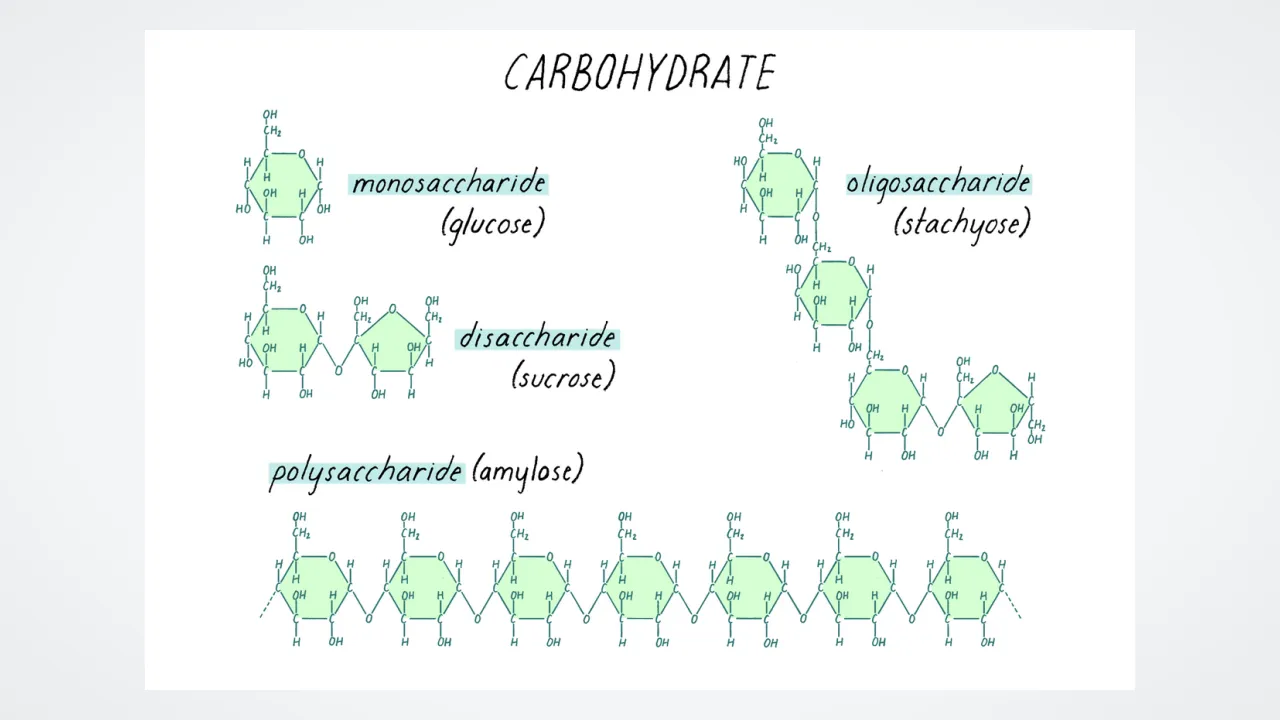
Starchy foods like whole-wheat pasta are actually long chains of thousands of glucose rings holding hands. Digestive enzymes snip those long chains one by one, trickling steady glucose into your blood so your energy stays smooth.
3
Insulin Opens the Cell Doors
Once glucose floats in your bloodstream, an organ called the pancreas sends out a helper hormone named insulin. Insulin acts like a friendly doorkeeper, unlocking muscle and brain cells so glucose can step inside!
1. Why do complex carbs like oatmeal give steadier energy than sugary candy?
2. What acts like a key unlocking cell doors so blood glucose can enter?
🤯 Mind-Blowing Fact • Grade 3
Hummingbirds sip flower nectar carbs so fast that they burn through their entire blood glucose supply in minutes while hovering at fifty wingbeats per second!
✨ Word Sparks (Grade 3 Glossary)
Tap 🔊 to hear
Glycogen
Stored bundles of backup glucose in liver
Pancreas
Organ releasing insulin and glucagon hormones
Polysaccharide
Long carbohydrate chain of many sugar rings
🪝
Where does your body hide spare glucose fuel so you don't run out of energy while sleeping all night?
1
Carbon Plus Water
Look closely at the word carbohydrate: 'carbo' means carbon and 'hydrate' means water! Green plants build carbohydrates during photosynthesis using carbon dioxide, water, and sunlight, storing solar energy inside six-sided sugar rings like glucose.
2
Three Sizes of Saccharides
Scientists group carbs by ring count. Monosaccharides like glucose and fruit fructose are single rings. Disaccharides like table sucrose and milk lactose link two rings. like potato starch pack thousands of glucose rings together!
3
Glycogen Backup Batteries
What happens when you eat more glucose at dinner than your cells burn right away? Your liver and muscles link extra glucose into compact branching bundles called —like rechargeable fuel batteries!
4
Overnight Teamwork
While you sleep for ten hours without eating, your releases a second hormone called glucagon. Glucagon taps your liver's bank to trickle steady glucose to your dreaming brain until breakfast!
1. How do your liver and muscles store extra glucose for later sprints or overnight sleep?
2. Where did the energy locked inside an apple's carbohydrates originally come from?
🤯 Mind-Blowing Fact • Grade 4
Before Canadian researchers Frederick Banting and Charles Best purified life-saving insulin in 1921, doctors had no way to unlock cell doors for kids with Type 1 diabetes!
✨ Word Sparks (Grade 4 Glossary)
Tap 🔊 to hear
ATP
Tiny rechargeable energy molecule powering cell work
Mitochondria
Cell powerhouses turning glucose and oxygen into ATP
Glucagon
Hormone telling liver to release stored glucose
🪝
How do tiny power plants inside your cells turn one six-carbon glucose ring into thirty-plus rechargeable ATP energy coins?
1
From Dinner Plate to Cellular ATP
Digestion of complex carbohydrates begins the moment salivary amylase touches whole-grain bread in your mouth and finishes along the brush border of your small intestine, where enzymes clip disaccharides and starches into single monosaccharides—primarily glucose. Once inside a cell, glucose enters cellular respiration: first splitting in half in the cytoplasm, then heading into bean-shaped where oxygen helps unlock more than thirty molecules of , the universal energy currency powering every muscle twitch and nerve spark!
2
The Insulin–Glucagon Seesaw
Keeping blood glucose balanced—neither spiking too high nor dipping too low—is a masterclass in homeostasis led by pancreatic islet cells. After lunch, beta cells sense rising blood sugar and secrete insulin, prompting muscle and fat cells to pop glucose transporter doors onto their surfaces and pack away glycogen. Hours later between meals, alpha cells secrete , instructing the liver to unpack glycogen so blood sugar stays rock-steady for your brain.
3
Understanding Type 1 and Type 2 Diabetes
In Type 1 diabetes, the immune system mistakenly stops pancreatic beta cells from making insulin, so kids use smart insulin pumps or pens to unlock their cells' fuel doors! In Type 2 diabetes, cell doors grow sluggish at answering insulin's knock.
4
Whole Foods Over Added Sugars
Whole fruits, legumes, sweet potatoes, quinoa, and oats wrap their carbs alongside vitamins, minerals, and fiber—delivering calm, lasting fuel without sugary crashes!
1. Where inside your cells does oxygen help turn broken-down glucose into lots of ATP energy?
2. How do insulin and glucagon work together like a seesaw?
🤯 Mind-Blowing Fact • Grade 5
Red blood cells carry oxygen to your entire body yet never touch a single molecule of it themselves—they have zero mitochondria and run 100% on anaerobic glucose glycolysis!
✨ Word Sparks (Grade 5 Glossary)
Tap 🔊 to hear
Glycolysis
First cell step splitting glucose for quick ATP
GLUT4
Muscle cell doorway letting glucose rush inside
Islets of Langerhans
Hormone-making cell clusters inside the pancreas
🪝
Why does a child's developing brain burn twice as much glucose per gram as an adult's—accounting for up to half the body's resting energy?
1
Molecular Geometry of Saccharides
Synthesized by chloroplasts from atmospheric CO2 and H2O, carbohydrates follow the empirical formula Cn(H2O)n. Nutritional biochemistry distinguishes three classes: hexose monosaccharides—glucose, fructose, and galactose, which share the formula C6H12O6 yet differ in atomic arrangement; disaccharides such as sucrose (glucose + fructose) and lactose (glucose + galactose); and polysaccharides like amylose and amylopectin starches. Salivary and pancreatic alpha-amylases plus brush-border disaccharidases hydrolyze digestible carbs into monosaccharides absorbed into portal blood.
2
Glycolysis, Krebs Cycle, and ATP Yield
Inside somatic cells, cytosolic cleaves six-carbon D-glucose into two three-carbon pyruvates, netting 2 ATP quickly—ideal for explosive sprints! When oxygen is plentiful, pyruvate enters mitochondria for the citric acid cycle (mapped by Hans Krebs, 1953 Nobel laureate) and oxidative phosphorylation, harvesting roughly 30 to 32 ATP molecules per single glucose molecule while exhaling harmless CO2 and metabolic water.
3
Why Neurons Demand Steady Glucose
Red blood cells lack mitochondria entirely, relying 100% on glucose , while neurons cannot oxidize fatty acids efficiently across the blood-brain barrier. Anthropologist Christopher Kuzawa showed that in five-to-ten-year-old children, furiously wiring synapses consume roughly 120–140 grams of glucose daily—nearly fifty percent of resting metabolic expenditure!
4
GLUT4 Transporters and Glycemic Control
Pancreatic maintain fasting blood glucose near 70–99 mg/dL. Post-meal insulin triggers vesicles to fuse with skeletal muscle membranes—and remarkably, physical exercise also deploys GLUT4 channels independently of insulin! Between meals, hepatic glycogen (~100 g reserve) and gluconeogenesis sustain euglycemia, whereas muscle glycogen (~400 g in adults) stays reserved strictly for local muscle contractions.
5
Glycemic Index and Whole-Food Matrices
Intact whole grains, legumes, tubers, and fruits slow enzymatic digestion via cellular fiber walls, delivering sustained euglycemic energy without spiking insulin.